
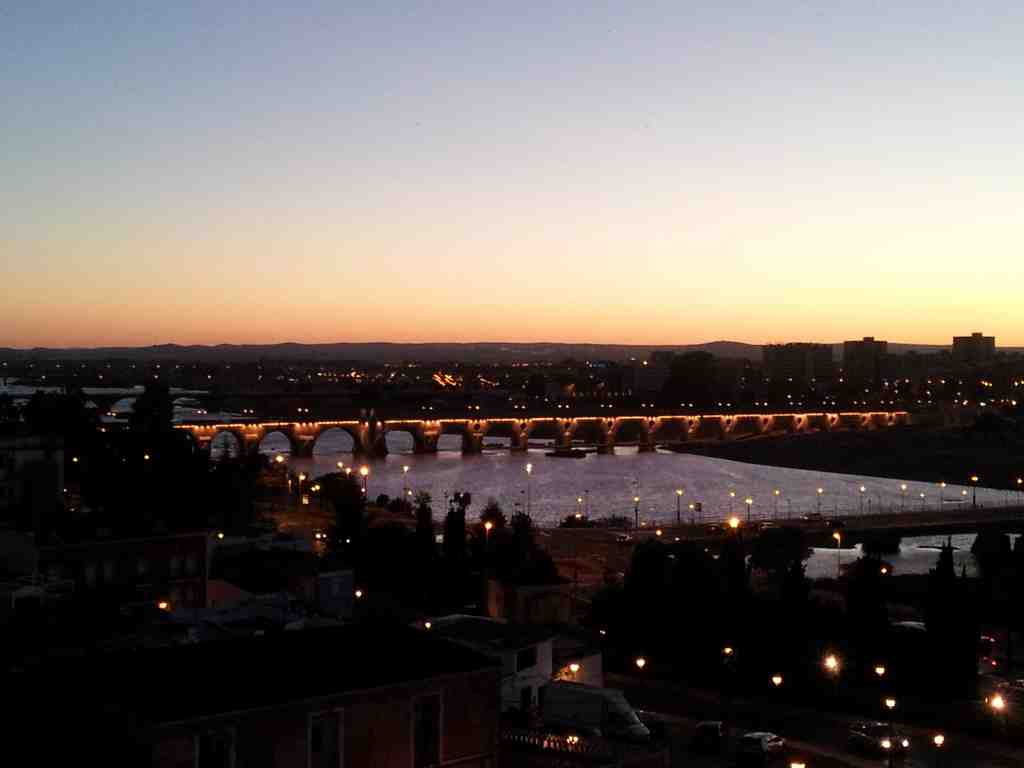
To spot the Palm Bridge, look out over the Guadiana River for a long, beautifully lit stone bridge with dozens of arches stretching gracefully across the water-especially eye-catching at dusk as the lights twinkle.
Welcome to the Palm Bridge! Imagine standing right where people have crossed between the heart of Badajoz and the boroughs of San Fernando and Santa Isabel for centuries. You’re looking at the city’s oldest bridge-older than most grandpas' favorite fishing stories. This isn’t just any bridge; it’s a true survivor, with 32 impressive arches spanning nearly 600 meters across the river. When you glance at the sturdy stonework, you can almost hear the echo of footsteps from travelers hundreds of years ago.
Now, picture yourself here in the wild 1500s. The river Guadiana sometimes behaved more like a wild bull than a calm stream. In 1460, there was a bridge here, but imagine the shock when a roaring flood in 1545 swept the original bridge away! For a while, the only way to cross was by hopping on boats bobbing under the sun-probably an adventure, but definitely not for the seasick. Finally, in 1596, after many arguments about what year things actually happened (historians are like that), the Palm Bridge took shape again, this time ready to withstand trouble and storms.
But the bridge couldn’t just rest easy. In 1603, King Philip III must have raised his royal eyebrows when another monster flood swept away 16 of the bridge’s arches! People scrambled to rebuild, working from 1609 to 1612, laying new stones and arches, making thirteen new pillars, and offering up a few prayers for drier days. Each time repairs were finished, another test seemed to come along. In 1876, the mighty Guadiana rose yet again, swallowing the bridge so completely that you can still find metal plaques showing how astonishingly high the water went-almost as if the river wanted to leave a mark for the ages.
With every disaster and repair, the bridge grew a bit more interesting. In 1833, iron railings were added-imagine a stylish new hat for a grand old lady. Later, in the late 1800s, engineer Cervera Royo added some dramatic, gothic-style “little castles” in the middle of the bridge, making things look a bit like a fairy tale gone urban. In the early 1900s, yet another engineer, José Eugenio Ribera, put in central towers, which sadly didn’t survive the bridge’s most recent facelift in 2003, but the spirit of innovation definitely lives on.
And did you know the bridge was once nicknamed “El Puente Bobo,” or “the Dumb Bridge”? Why? Because crossing it was free-nobody charged a toll, unlike the greedy bridges elsewhere! People probably lined up here with smug smiles, thinking, “I’ll show those toll bridges who’s boss.” Alongside the bridge, back in the day, trams clattered by, carrying travelers from the city to the busy railway station, and a special lane separated pedestrians from horses and carts-early traffic control, Badajoz-style.
As you stand here, feel the hum of history. This bridge isn’t just a physical link; it’s woven into every flood, every city expansion, every tale told by the riverbanks. On one end, you’ll find the grand Puerta de Palmas, once a principal city entrance, standing proudly as the gateway you’d pass through if you were a medieval merchant or an invading army. On the other, a hornwork fortification keeps watch, a silent reminder of the strategic importance of this exact spot.
So, take a slow stroll across these ancient stones, and imagine the centuries of laughter, panic, hope, and relief carried right over your head by the ever-watchful Guadiana. If you listen carefully to the river, maybe you’ll hear it plotting its next trick-just don’t tell the engineers!




