
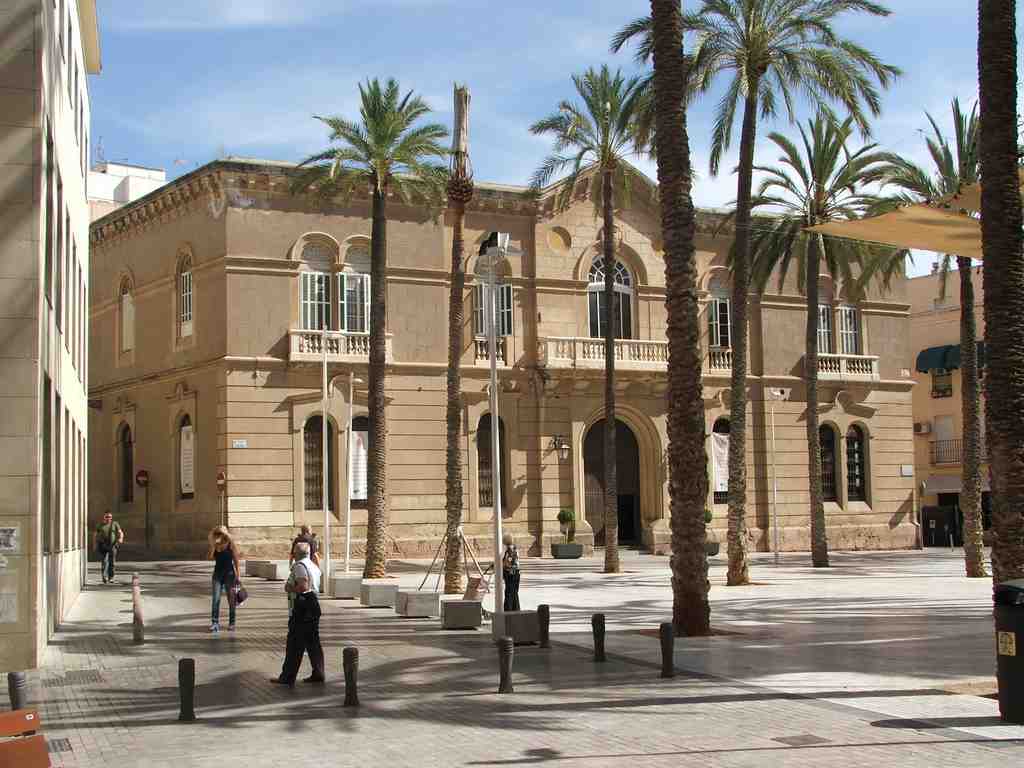
To spot the Episcopal Palace, look for a grand, sandy-colored building right across from the cathedral, with tall windows, elegant balconies, and a facade flanked by palm trees swaying in the breeze.
Now, imagine it’s the late 1800s in Almería. The streets are bustling, the sun is strong-naturally, it’s Almería-and a new palace is in the making right before your eyes. The site was once occupied by some rather tired old houses that, over centuries, saw bishops come and go. These houses had a two-story charm, with a central patio and a lush garden, but after a disastrous earthquake in 1804, they nearly collapsed in defeat. Rebuilding efforts seemed to be cursed: plans were made, but enthusiasm fizzled, budgets ran dry, and, well, centuries went by with not much happening except the slow creeping of disrepair.
But suddenly, thanks to a surprising twist in Spanish history-the warming relations between the Catholic Church and the freshly restored Bourbon monarchy-the bishop finally saw the chance to build a residence fit for a high-ranking church official. Enter two local architects, Trinidad Cuartara and Enrique López Rull. In 1894, under the determined eye of Bishop Santos Zárate y Martínez, they started the ambitious job. By 1896, the palace was ready for its ribbon cutting, though workers kept hammering away for three more years (everyone needs a deadline, right?).
The palace that now stands before you covers an entire block. It radiates a sort of cool medieval-classic charm with neo-Romanesque arches and strong, stately lines. If you squint, you might imagine bishops in long robes, gliding through those doors over a century ago, with a hint of drama and intrigue wafting through the halls. And of course, it’s always keeping a watchful eye on its neighbor, the cathedral-because even palaces like to gossip.




