
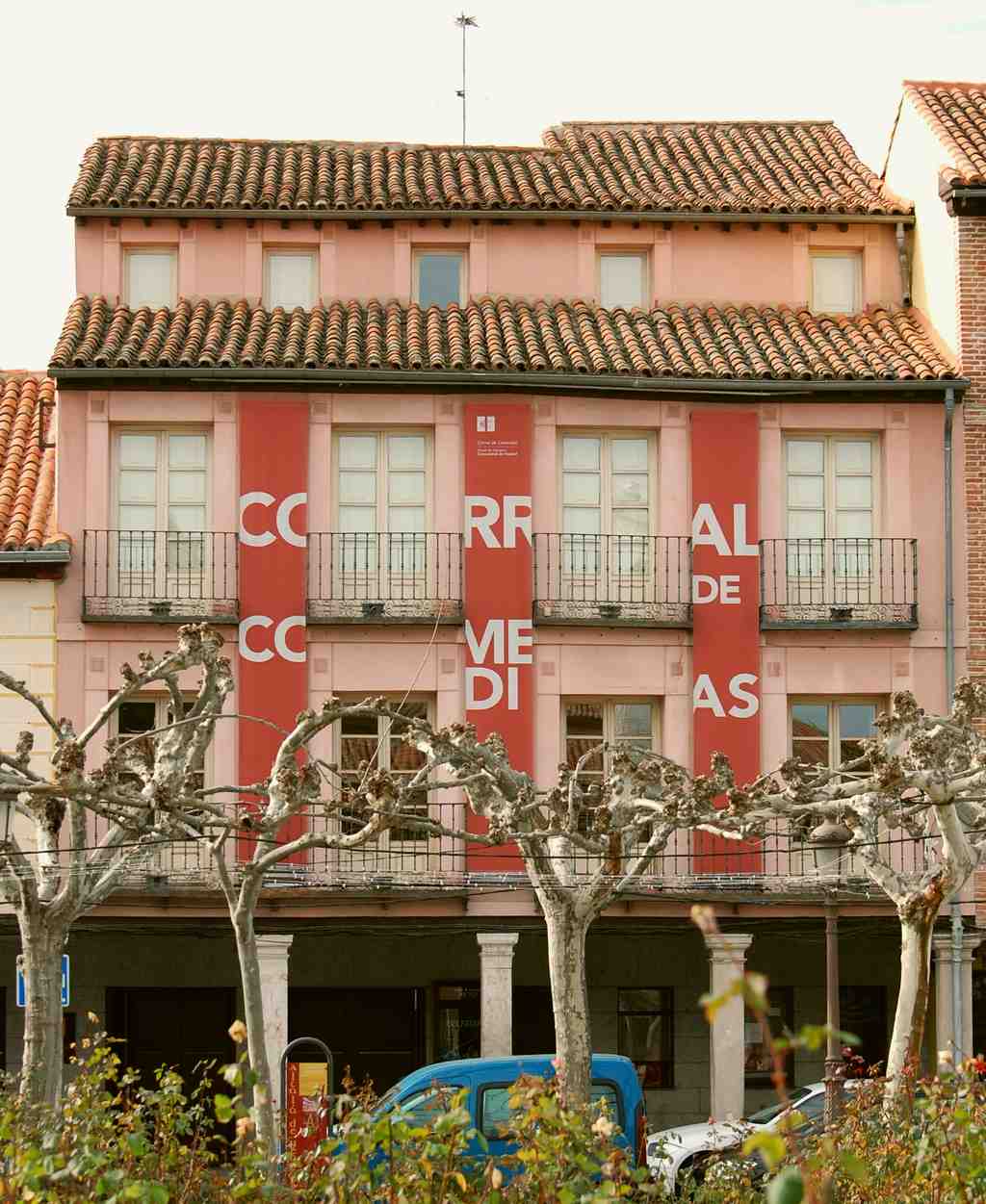
To spot the Alcalá Comedy Theatre, just look for the rosy-pink building with long vertical red banners that boldly spell out “CORRAL DE COMEDIAS” over tall balconies, standing right at the lively edge of Plaza de Cervantes.
Welcome to one of the oldest preserved playhouses in all of Europe! If these walls could laugh, they'd start right here in front of you. Imagine-back in 1601, when Alcalá decided that every town square could use a bit more drama (of the fun kind), a local carpenter named Francisco Sánchez was given the job of building this very corral right where the market once bustled with the cries of vendors. Now, take a deep breath-can you smell that faint whiff of history and old wood lingering in the air? Or maybe it’s the echoes of laughter and argumentative poets from long ago, drifting out from the stage doors.
The doors first opened in 1602, unveiling an open-air theatre with a stony floor, a central well, and an attic for the stage crew-classic Spanish “corral de comedias” style, where all kinds of comedies (and a bit of mischief) were ready to unfold. Just think: on warm evenings in the 17th century, the plaza would fill with curious townsfolk, students of the nearby university, and the echoes of great literary minds like Lope de Vega or Quevedo, who may have once squeezed in here as wide-eyed scholars before they became legends.
Every era brought its own makeover-and not just a touch of stage makeup. In 1670, records show they put on 15 comedies in a single year, keeping the mood lively. But things didn’t always go according to script! In 1704, some soldiers were lodged here (I wonder if they preferred sword fights onstage or off…). The place was frequently tweaked and patched, each change layering fresh secrets into the old stones.
Now, flash forward to a new act-the year 1769. Someone finally decided, “Let’s get a roof and some decent acoustics!” So up went wooden beams, transforming it into a neoclassical “coliseo,” perfect for musical spectacles that would ring off the new ceiling. During Spain’s Golden Age, perhaps tinged with the suspense of a stormy night, audiences shivered as a play’s villain crept across the boards or maybe filled the gallery.
Through the 19th century, the theatre swapped its stony ground for rows of seats; the horseshoe-shaped section called the “platea” was covered in elegant painted plaster and crowned by a faux ceiling rich with old frescos. Fashions changed-it was briefly the grand “Teatro Cervantes”-but the building kept its soul.
By 1927, spotlights gave way to film reels as the Corral became a movie theater, the “Cine Cervantes,” and folks lined up to see silent films where applause once echoed for live actors. Maybe, as films flickered across the screen, a mischievous breeze rattled through the old rafters, reminding movie-goers that drama never truly leaves its favorite haunts.
Sadly, success gave way to silence; in the 1970s, the place sat abandoned, filled only with dust and the faded posters of its former glory. Just when its final curtain seemed imminent, a trio of passionate locals-Miguel Ángel, Mercedes, and Juan-pulled off the ultimate comeback story. Their quest to revive the place led to a 20-year restoration adventure, complete with contests, blueprints, and an architect named Peridis whose vision helped peel back the layers of the centuries.
Now, thanks to their efforts, when you peek inside you might hear, or even the mysterious creak of ancient machines used for thunder and wind, still hidden below the boards-they even offer tours to uncover those backstage tricks! Restored and reopened in 2003, the Corral swings open its doors for classic dramas, fresh comedies, and music that bounces off walls rich with memory.
Today, this theatre balances past and present with a mix of tradition and innovation. Its programming-since 2005 managed in partnership with Teatro de La Abadía-is as alive and playful as the comedies staged centuries ago. Theatre lovers, history buffs, and the merely curious flock here, all drawn by the living heart of Spanish dramatic history. So as you stand here, imagine the applause, the gasps, the raucous laughter, and the endless creativity that fills the air-a place where, for over four centuries, the real show has always been the magic of storytelling.




