
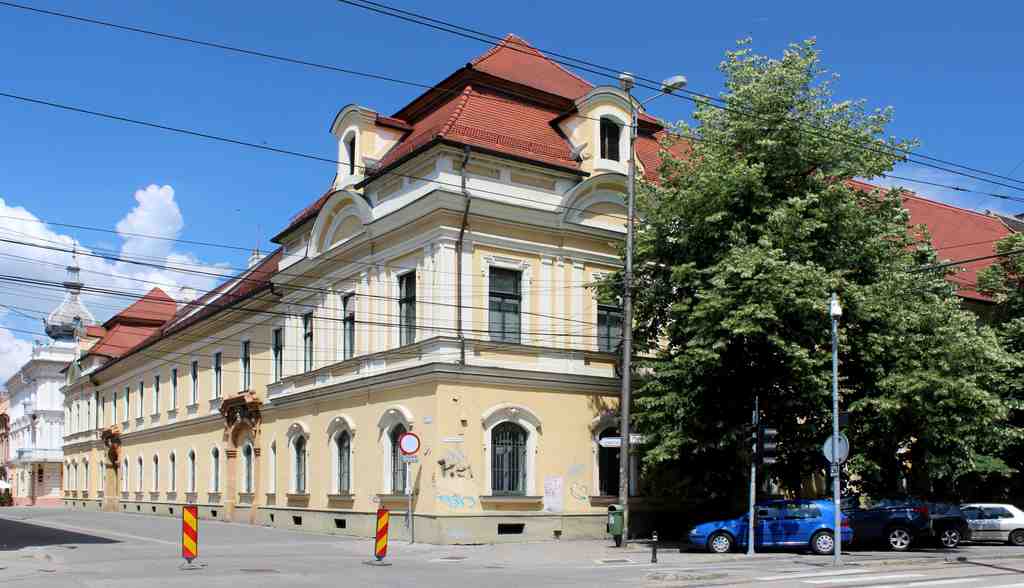
To spot the Roman Catholic Episcopal Palace, look for a large, elegant yellow building with a classic baroque style and red-tiled roof, it sits on the corner with arched windows all along its facade and two squared-off towers with curved tops at the corners.
Welcome to the Roman Catholic Episcopal Palace! Take a look at that distinctive roof and those grand windows-no, you haven’t walked into a historical movie set, although you might expect to see someone step out in powdered wig and robes at any moment! Now, let’s slip back in time and imagine the air filled with the scent of old books and candle wax, and carriages rattling by on these quiet city streets.
The story of this palace is as tangled as a priest’s laundry on a windy day. It all began in the days when Timișoara was just shaking off the dust of the Turkish occupation-a time of chaos and change. Back then, the Catholic diocese was like a traveler with nowhere to settle. The bishops bounced from town to town, always waiting for their promised home. It was only through the persistence of several bishops-and, rumor has it, imperial nagging-that things got moving. Empress Maria Theresa herself scratched her head and said, “Fine, build them a palace already!” Once completed in the mid-1700s, this very building became the heart of Catholic life in Banat.
Now, imagine the daily life here: bishops roaming the halls with rustling robes, the library overflowing with tomes, the kitchen bustling with clattering pots. Over the centuries, you might have bumped into Hungarian, German, Romanian, Croatian, Slovak, Bulgarian, Czech, and even Italian worshippers. The Catholic community here was-and still is-a tapestry of cultures.
But Timișoara’s Catholic bishops had it tough. The original diocese was founded way back in 1030-the first bishop, Gerard Sagredo, met a dramatic end, martyred by rebels in what is now Budapest. They named a hill in his honor; you can still visit Gellért-hegy if you ever get to Hungary. Centuries later, Catholic monks of all kinds-Franciscans, Jesuits, Piarists, and more-hustled through this neighborhood, shaping the city in everything from education to charity. Try to picture them in their habits, shuffling along these streets, perhaps trading stories or a bit of local gossip.
Dark days came with communism. Suddenly, this palace, once filled with prayer and song, saw Catholic priests chased away, and its rooms commandeered. Bishop Augustin Pacha, who dared speak his mind, was thrown in prison. The palace was seized by the authorities-imagine the sadness as cherished statues, stoves, and those beautiful carved doorways were chipped away by careless hands and newcomers.
Still, despite almost 50 years of tenants and bureaucrats, the spirit of this building was not lost. The baroque portal with that sneaky little mascaron above-the sculpted face in the keystone-survived to delight visitors. Next time you go inside, look for curiosity in its face, like it’s wondered who would live here next. And just think, all those years, inside its walls, priceless stained glass medallions created by Miksa Róth lay hidden, saved by clever priests from being melted down or sold during another round of state takeovers. When the palace was finally returned to the Church after 1990, these treasures re-emerged, restored to their proper home along with statues, paintings, and relics, now showcased in its own little museum for all the world to see.
Today, this palace is more than just a chunk of yellow stone and brick. It’s a monument to resilience-surviving occupation, war, communism, and a parade of changing fashions. You’d never guess it hosted Emperor Franz Joseph I himself for a stay. Through all these eras, its halls have been filled with Latin prayers, whispered fears, bursts of laughter, and probably a fumbled tray of soup or two.
Take one last look at its solemn face and listen-if the wind is just right, you might hear echoes of stirring sermons, shuffling monk robes, and maybe, just maybe, the soft laughter of children from one of the many cultures that called it home. That’s the Roman Catholic Episcopal Palace, keeper of secrets and silent witness to centuries of Timișoara’s drama and hope.




