
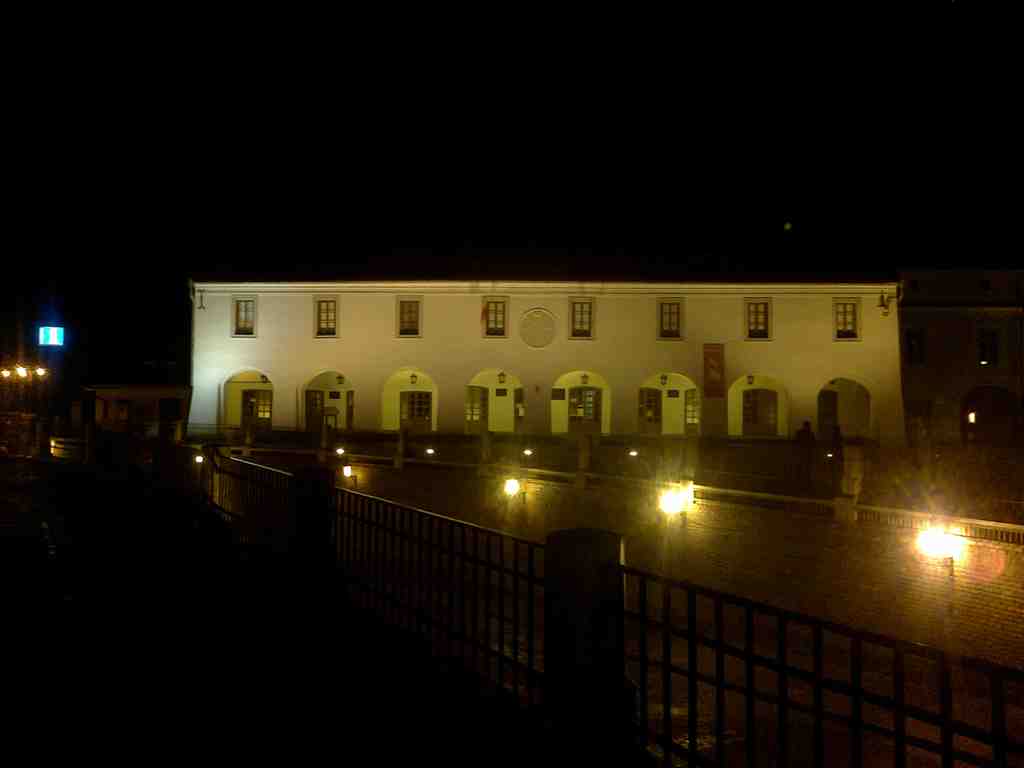
Just ahead, you’ll spot a long, luminous white building with a row of arched entrances along its base-look for the tall windows above and the warm glow from the lights guiding your way.
Welcome to the Museum of Ethnography and Saxon Folk Art "Emil Sigerus," which isn’t just a collection of old stuff-it’s a time machine wrapped inside the legendary House of Arts, whose vaulted arches have been standing watch since at least 1370. Imagine you’re walking into a place where over 8,900 treasures are tucked away: shining ceramics, intricate Saxon textiles, embroidered wonders, and painted furniture that looks almost too pretty to sit on. The museum was born in 1997, and like a detective story, its keepers have traveled far and wide, hunting for cultural gems, sometimes received as heartfelt donations and sometimes carefully tracked down and bought. You might say they’ve got the Sherlock Holmes of Saxon heritage on their team.
Wander a little further and you’ll be standing above an extraordinary vault-the museum’s original exhibition space was right here in the cellar, filled with the country’s most dazzling collection of tile stoves, some of which have cracked more than a few chilly Transylvanian winters. The entire stash moved up to the attic when the House of Arts was restored, leaving behind echoes of lively exhibitions about painted furniture, haban pottery, and the “morality tales” that once shaped daily Saxon life.
And the story doesn’t stop in Sibiu. The museum reaches out to fellow culture-lovers as far as Gundelsheim, Germany, swapping stories and launching all kinds of joint research adventures. Whether you’re imagining the vibrant lives of Saxons past or picturing the museum staff lugging heavy painted cabinets up to the attic, you’re seeing history handed from one generation to the next-sometimes as embroidered as a Saxon blouse, and just as full of surprises.


