
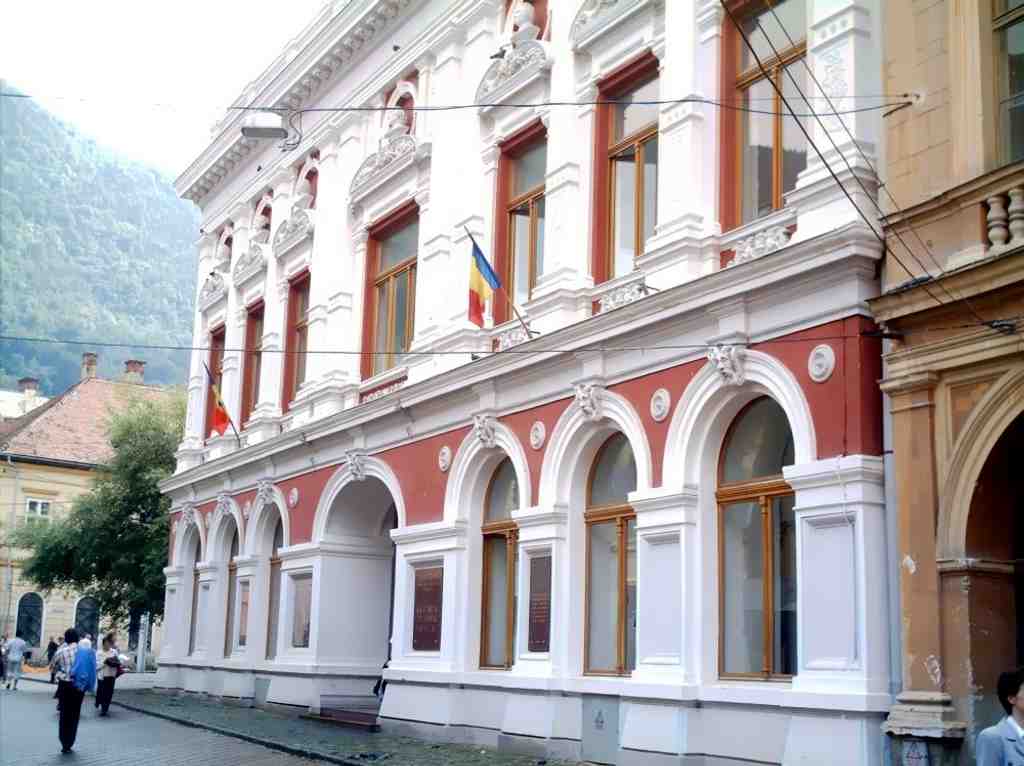
To spot the Centrul Cultural „Reduta” din Brașov, look for a grand two-story building with large arched windows framed by elegant columns and bright white and red detailing, standing proudly on your right, often flying the Romanian flag.
Now, take a deep breath and imagine yourself swept back in time right where you’re standing. In the late 1700s, this site teemed with excitement, as the original “Reduta” was the place to be for anyone who loved music, theater, or an elegant waltz. Picture people dressed in their finest, carriages pulling up with a rattle, laughter echoing from the grand halls within. Built in 1794 with late baroque and rococo flair, the old Reduta was both a ballroom and Brașov’s first real stage.
But the story doesn’t end there! Over the decades, the Reduta drew some of Europe’s brightest musical stars. Just think, in 1848 Johann Strauss himself played here - imagine the sparkling hum of violins, the swishing skirts of dancers. In 1879, giant talents like Johannes Brahms and violinist Joachim filled the hall with music that made the air practically shimmer. And if you listen closely, maybe you can still hear a faint note or two, floating out from the past.
But wait, there’s more drama than just music! This is where Romanian theater took its first bow in Brașov, powered by the passion of local artists. Even Romania’s beloved poet, Mihai Eminescu, took the stage as a prompter here. That’s right, Reduta holds echoes of poetry, secrets behind the curtain, and perhaps more than a little backstage gossip!
When the old building couldn’t contain all this excitement anymore, it was knocked down and rebuilt in 1893 as the stunning palace you see before you now. Those faces above the windows? Wagner, Schumann, Mozart, Beethoven, Goethe, Schiller, and Shakespeare - a real “who’s who” of art and genius, keeping a watchful eye on everyone coming in. Step even closer and you’ll sense the rich Renaissance-inspired style - if you feel like you’re in an Italian storybook, you’re on the right track!
After wars, revolutions, and reinventions, Reduta beat on as the city’s creative heart - home to festivals, ballets, music recitals, and every kind of performance you can imagine. Seriously, if these walls could talk, they’d probably ask for a spotlight and start singing!
Today, Reduta’s main performance hall seats 370 people, just waiting for the next act. Whether you love dance, music, or a bit of historic grandeur, you’re standing by a monument where every stone hums with applause. Why not give it a little round of your own right now?


