
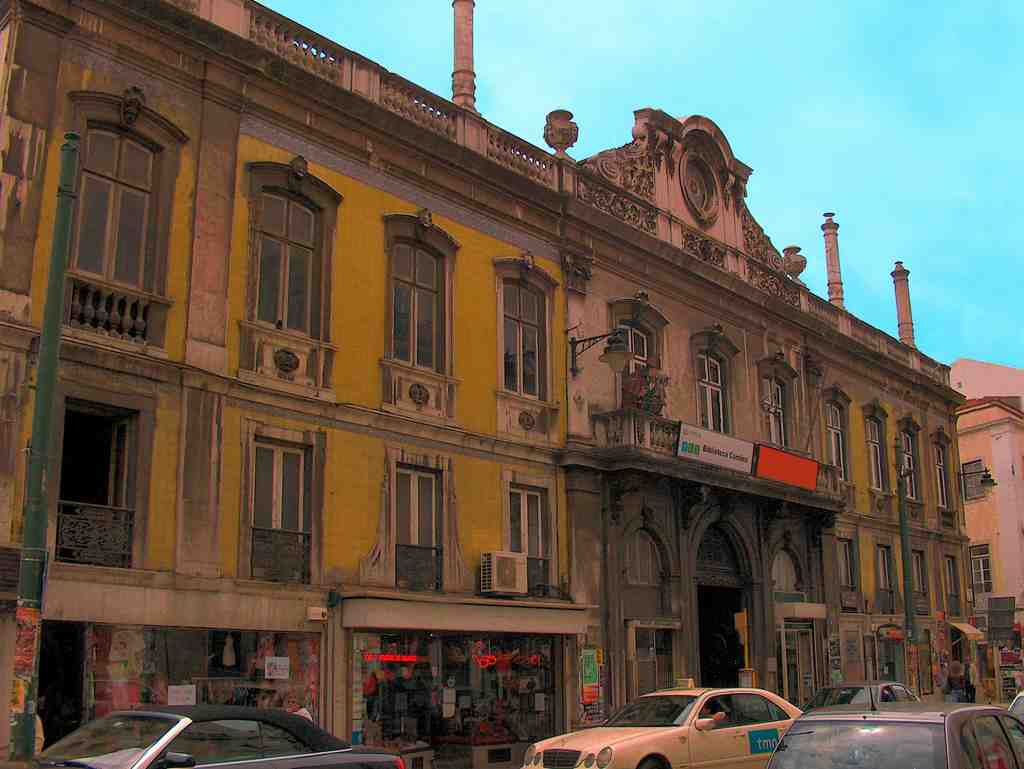
You’ll spot the Palace of the Counts of Azambuja by its elegant yellow façade, large windows with stone balcony railings, and the grand central entrance topped with intricate stonework-just look for the ornate triangular pediment right above the main doors.
Now imagine standing on this very spot in 1755, when a powerful earthquake shook Lisbon so fiercely that the original palace collapsed into dust and rubble. But like a character from a good soap opera, this place was too dramatic to disappear. It rose again, rebuilt, and welcomed a cast of colorful residents. The family of the 1st Marquess of Valada brought noble flair; later, the Countess of Azambuja left her mark, and over the years, its halls echoed with the rumors of high society, the chitchat of couriers, and-rather surprisingly-the hustle of newspaper journalists. By the 1920s, could you picture journalists from A Lucta dashing in and out with hot news, maybe dodging a disgruntled noble or two who wasn’t ready for their close-up?
If you could glimpse inside, you’d see stunning azulejo tile panels-one shows Saint Francis of Assisi looking like he’s pondering where all the birds went. The staircase? Marble, sweeping upward under a vaulted ceiling, decorated with stucco so delicate you might wonder if it was made from whipped cream. In recent years, the palace has transformed again; the grand halls have become chic apartments and probably witness a lot less royal drama and far more coffee mornings. From a site of tragedy to one of everyday life, the Palace of the Counts of Azambuja has worn many faces-and for a building that’s survived quakes, counts, and deadlines, it wears them all with style.


