
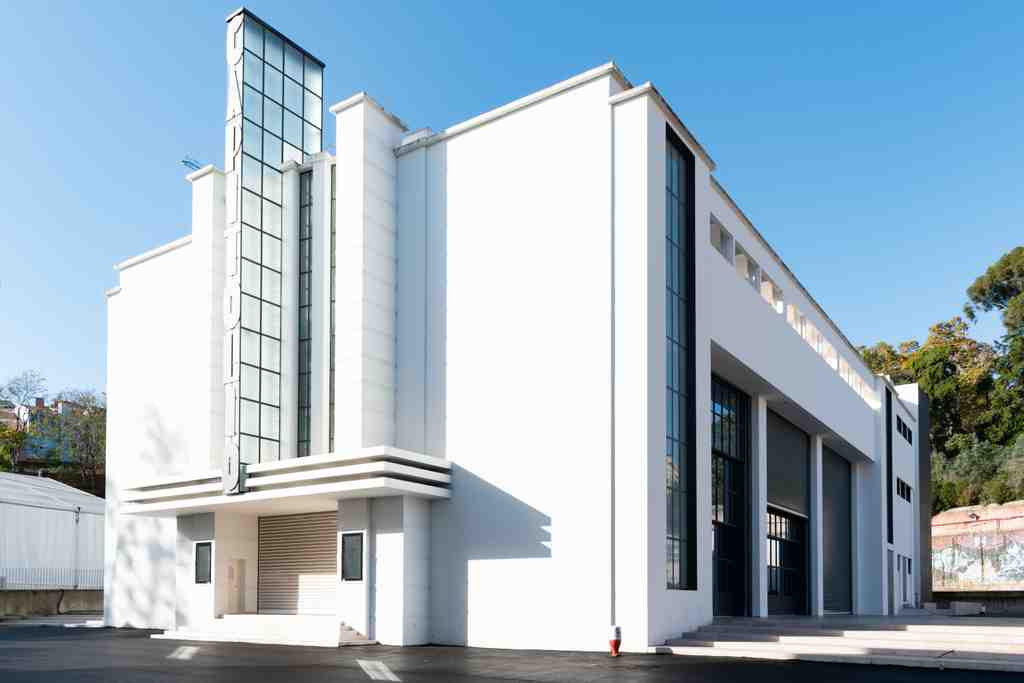
To spot the Capitol Theater, look for a striking white building with clean, geometric lines and a tall glass tower marked boldly with the word "CAPITOLIO" reaching up along the edge-if you see a shining glass structure popping up above a modern rectangular façade, you’ve made it!
Now, let me invite you into the extraordinary world behind these sleek white walls. Imagine the year is 1931. The world’s changing, jazz is in the air, and here in Lisbon, something completely new is about to burst onto the scene at Parque Mayer. This is no ordinary theater-it’s the Cineteatro Capitólio. Designed by the visionary architect Luís Cristino da Silva, it was built as Portugal’s answer to the international modernist movement, a bold break from old traditions. The façade you see before you-its crisp lines, daring geometry, and that shining glass tower-used to whisper rebellion, modernity, and maybe just a little bit of mischief.
When it first opened, Capitólio was a wonder: a place where theater, music-hall performances, and cinema collided. There’s a secret up top, too-the roof once held an open-air cinema! Imagine summer evenings with moviegoers lounging on the terrace, stars above, the hum of expectation rising with the music from inside. Technical innovations-like the extensive use of reinforced concrete-allowed for those spacious, flexible halls that could host anything from raucous concerts to elegant theater, and even, in later years, an ice skating rink that doubled as a roller disco. Yes, roller disco! I hope those dancers were careful on turns-one wrong move and that’s a performance no one would forget.
Capitólio quickly became one of Lisbon’s most beloved venues. Its stage saw every kind of spectacle: thunderous dramas, concerts that shook the city, wrestling bouts, boxing matches, and even glamorous skating performances. Legendary films played here-like “A Severa” and “A Canção de Lisboa”-and you could always count on a debut that would get the city’s artistic crowd buzzing. When the Teatro Nacional D. Maria II burned down, its famous company performed right here, saving the show and giving the Capitólio another moment in the spotlight.
As decades rolled by, trends changed, but Capitólio kept up. In the golden age of Portuguese theater revues, legends like Raul Solnado and Carlos Coelho stepped onto these boards. European cinema classics made their way to this screen, as well as blockbuster American hits-sometimes even controversial choices! After Portugal’s 1974 revolution, Capitólio was suddenly famous for something completely new: a run of “Deep Throat"-yes, THAT notorious film-marking the city’s embrace of newly-won freedom. The headlines practically wrote themselves, and for a little while, the program became a neon-colored parade of erotic films.
The rooftop skating rink got a high-energy update in the early 1980s, transforming into "Roller Magic"-a disco where you could shimmy on roller skates beneath spinning lights. Admit it, you’re picturing giant eighties hair and neon leg warmers, right?
Time wasn’t always kind to the building, but in 2016, the Capitólio was spectacularly reborn after an ambitious restoration led by architect Alberto de Souza Oliveira, restoring its Art Deco and Modernist magic. Today, it holds about 400 seats or can transform for standing crowds of up to 1,500! Its cultural spark is fully relit and, as of 2023, it’s managed by the city itself, promising vibrant shows and new stories for generations to come.
So as you look at those giant windows and pristine lines, picture the dazzling lights, echoes of laughter, gasps from the balcony, and maybe even the faint rumble of roller skates-Capitólio isn’t just a building; it’s Lisbon’s chameleon of entertainment, forever reinventing itself for its audience.


