
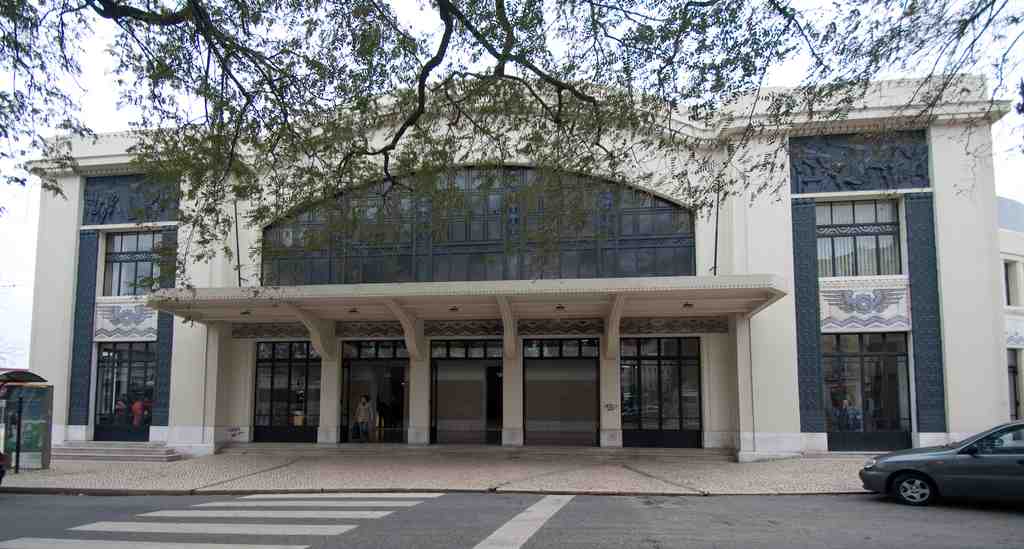
To spot the Cais do Sodré Train Station, look for a striking cream-colored building with a tall, arched glass facade, lots of geometric Art Deco details, and blue-and-white tiled panels, all right across the big square as you stand near the zebra crossing.
Welcome to Cais do Sodré Train Station, the final stop and, some would say, the most energetic gateway in Lisbon! Now, imagine the river breeze in the air and the steady clack of trains arriving and departing. This place isn’t just a building, it’s a living crossroads - the beating heart where Lisbon meets the sea, trains meet ferries, and dreams of a beach day meet their match in the “Linha de Cascais.”
But things didn’t always run as smoothly as the timetables promise today. Transport schemes for this area began way back in 1855, when the ambitious Count Clarange du Lucotte envisioned a railway running right here… but back then, if your commute was delayed, you could blame battles in Parliament, legal disputes, and even grumpy business rivals. The rails finally started to snake along the Tejo in the late 1800s, and by 1895 the first humble station opened at this very spot-just a wooden hut! It stuck around so long, locals almost thought “temporary” meant “forever.”
If we could rewind to the late 1800s, you'd see passengers crossing the river by steamboat to catch their train, dodging stacks of fish baskets and vegetable crates, and ducking under curious quayside kiosks selling everything from fruit to gossip. Then, as the 20th century arrived, the electric tram made its sparkling debut in 1901, rolling right up to the station, and Lisbon’s modern age started to sizzle.
There’s a great slice of drama too: in the early days, politicians grumbled in Parliament about how this provisional building hardly seemed fit for a capital city-“a station shameful for Lisbon!” complained one. Upgrades took years as grand plans kept getting tangled by bureaucracy and even, at times, by World War I. But finally, in the roaring 1920s, engineer Pardal Monteiro stepped in and brought this glorious Art Deco building to life in 1928-with curving lines, eye-catching tiles, and enough glamour to rival any Parisian station.
If you’re craning your neck, check out the patterned blue-and-white ceramic panels surrounding the windows-they come from the legendary Lusitânia Factory, and the motifs repeat across the station like a secret code known only to Lisbon’s commuters. And see how sunlight pours through the giant arched windows? It’s as if the building refuses to let travel ever feel gloomy, even on the rainiest Monday.
Through the decades, Cais do Sodré has seen it all: from electrification triumphs (with much ado and public ceremonies), to passengers in the 1940s hurrying off with crates of Algarve fruit, and, sadly, to moments of disaster-like the roof collapse in 1963 that led to a wave of improvements in railway safety. If these walls could blush, they’d do it every time someone remembers the wild proposals to connect all of Lisbon’s stations underground, or the time the platforms were finally raised and modernized-sometimes years behind schedule!
By the 1990s, this station was getting its Art Deco sparkle back, refreshed and restored for a bustling present. Today, it’s not just the final stop for the famous Linha de Cascais. It’s a tangled hub-trains, metro, buses, and the ferries all converge here. Step out, and you’re only minutes from the city’s grandest squares, the liveliest nightclubs, or a boat heading across the bright Tagus.
So here’s to Cais do Sodré, where every arrival feels like a new beginning and every departure carries a whiff of salt air, old stories, and modern energy. If you listen closely, you might just catch the sound of a hundred years of footsteps, rolling luggage, and even-on a lucky day-the whisper of history in the tiles.
Thank you for joining this Lisbon adventure. I hope you’ve enjoyed the walk, the wonders, and maybe even my jokes. Safe travels onward, wherever the rails (or your own two feet) may take you!


