
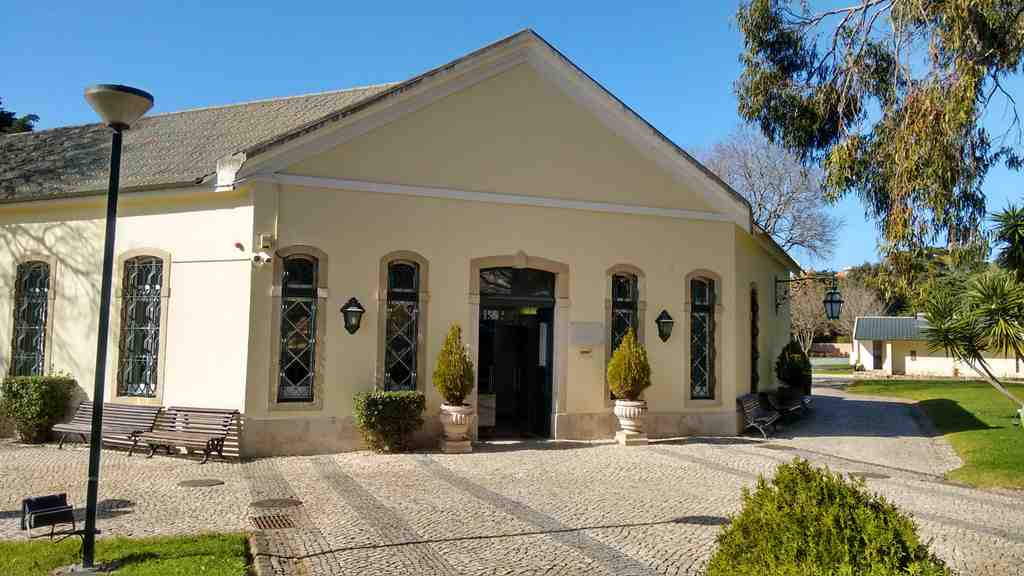
Directly ahead, you’ll spot a cheery pale yellow building with a triangle-shaped roof, tall windows with criss-crossed ironwork, and a pair of potted plants flanking the front door-just the place to pause for a story from Cascais’ glamorous past.
Welcome to the Sporting Club of Cascais, where, if these walls could talk, they’d probably whisper about secret duels in tennis whites-and maybe a royal scandal or two! Go on, take a breath, and imagine you’ve just traveled back in time to 1879. The scent of freshly cut grass drifts over from the old parade grounds of the citadel. Suddenly--that’s the sound of Portugal’s elite picking up a racquet for the very first time, with the future King Carlos even giving it a try.
This wasn’t your average sports club. Oh no, the Sporting Club was only for those with the right pedigree... and the right invitation! Royalty, politicians, and foreign ambassadors flocked here, eager to see and be seen, rather like the “Instagram Stories” of its era, but with more top hats and moustaches. The town of Cascais had just become the Royal Family’s summer playground, so anyone who was anyone wanted to be near the action-literally joining the parade, as these grounds were known.
Now, imagine standing here at the turn of the century. Women in lace and gentlemen in straw hats sip lemonade under the shade, while, nearby, aristocrats whisper about policy and poetry. Overhead, the sound of laughter and the occasional boom--from fans at an international tennis match. Guilherme Pinto Basto, the “father of Portuguese tennis,” turned these grounds into Portugal’s championships. Even Wimbledon champions made their mark here, and legends like Blanche Bingley and Noel Turnbull graced these courts. If tennis wasn’t your talent, you could always try pigeon shooting, archery, or-if you were feeling generous-attend a glamorous charity ball.
But the Sporting Club of Cascais had another first up its neatly tailored sleeve: football! In 1888, a group led by the energetic Pinto Basto brothers staged the very first football game ever played on the Portuguese mainland-right here, on grass they’d more likely watched the King’s horse trot over the year before. There’s even a plaque to prove it. The club flourished, rebranding itself as the Royal Sporting Club in 1910-just in time for “Royal” to go out of style when Portugal became a republic a few months later. Oops! Never mind, it remained a cherished spot for generations-at least until closing its doors in 1974 after nearly a century of stylish service.
But every great club deserves an encore! First, this building became a nursery, then an actual nursery school, and, finally, the Museum of the Sea in 1992. Even the old tennis courts were reborn in 2009 as the Casa das Histórias Paula Rego, a gallery celebrating Cascais’ most celebrated artist. If you listen closely, you might still hear--stories and sports echoing across these time-weathered grounds.
Who knows, maybe your story will become part of the legend of Cascais, too! Ready to move on?


