
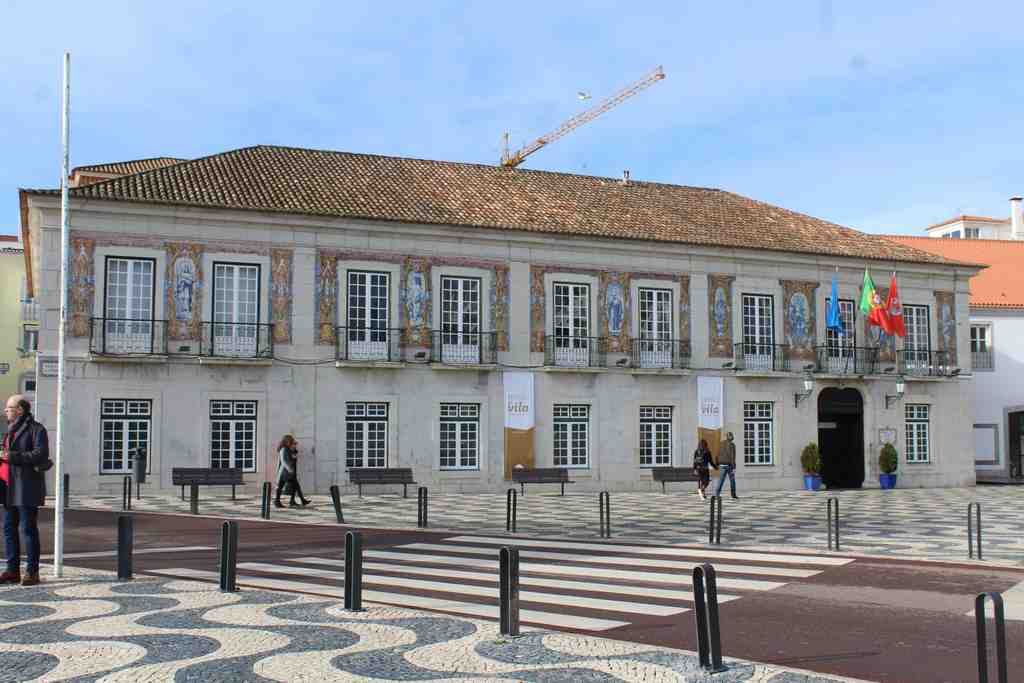
To spot the Palace of the Counts of Guarda, just look ahead for a large, stately two-story building with a tiled roof, neat rows of windows, and, most striking of all, a parade of blue and white religious tiles decorating the upper facade.
Now let’s step back, take a deep breath of that salty Atlantic air, and imagine yourself standing on this very square two centuries ago. This grand palace before you, now the lively seat of Cascais’ town hall, has been watching the tides turn since the late 1700s. Back then, imagine horses prancing past while local nobles in fine clothes stride up these steps, quite proud of their latest address!
Legend has it, Dona Inês Margarida da Cunha, a lady with quite the taste for grandeur, was the mastermind behind its creation. It served as her dazzling residence, later hosting the British Admiral Charles Cotton when Napoleon’s armies stalked the continent. Oh yes, this place has seen some hats with feathers!
Over the years, this palace changed hands, eventually landing in the lap of João Lopes Calheiros de Menezes. When his descendant was named the Count of Guarda in 1860, the palace’s most famous name-Palácio dos Condes da Guarda-was born. But don’t let the aristocratic past fool you; this building has had a wilder side too! Picture this: it became a bustling casino in the early 20th century, with laughter, music, and maybe a little bit of cheating at cards echoing through the grand halls. Afterwards, it housed everything from shops to a post office. They even tacked on some extra buildings for good measure, like a grocery or a restaurant, and one façade from an old eatery still peeks out from the southern side today.
But nothing about this building shouts louder than its tiles-azulejos! These treasures, some painted way back in 1790 at the famous Real Fábrica de Louça do Rato, turn the facade into a gallery of saints. Lean in close and you’ll spot Saint Sebastian, Saint Anthony, Saint John, and more-all lined up like they’re waiting for a group portrait. Fun fact: it holds the largest collection of saintly tile panels ever to decorate a single building in Portugal. Some even whisper that if you listen closely in the evening, you might hear faint, ghostly hymns from these painted figures. (Okay, that’s probably just the wind, but why not use your imagination?)
Inside, you’d find the place has changed a bit-a grand stone staircase, a fine neobaroque upper floor where the noble family once entertained guests, and a stunning tile panel of a halberdier welcoming you to the first floor. Today, the energy is all public life and culture, especially since the 2015 transformation of the ground floor into the Museu da Vila.
It’s less a building and more a living album of Cascais’ stories-noble feasts, military intrigue, wild parties, civic decisions, and even the odd postal delivery. And here you are, adding your own footsteps to the centuries-old parade!


