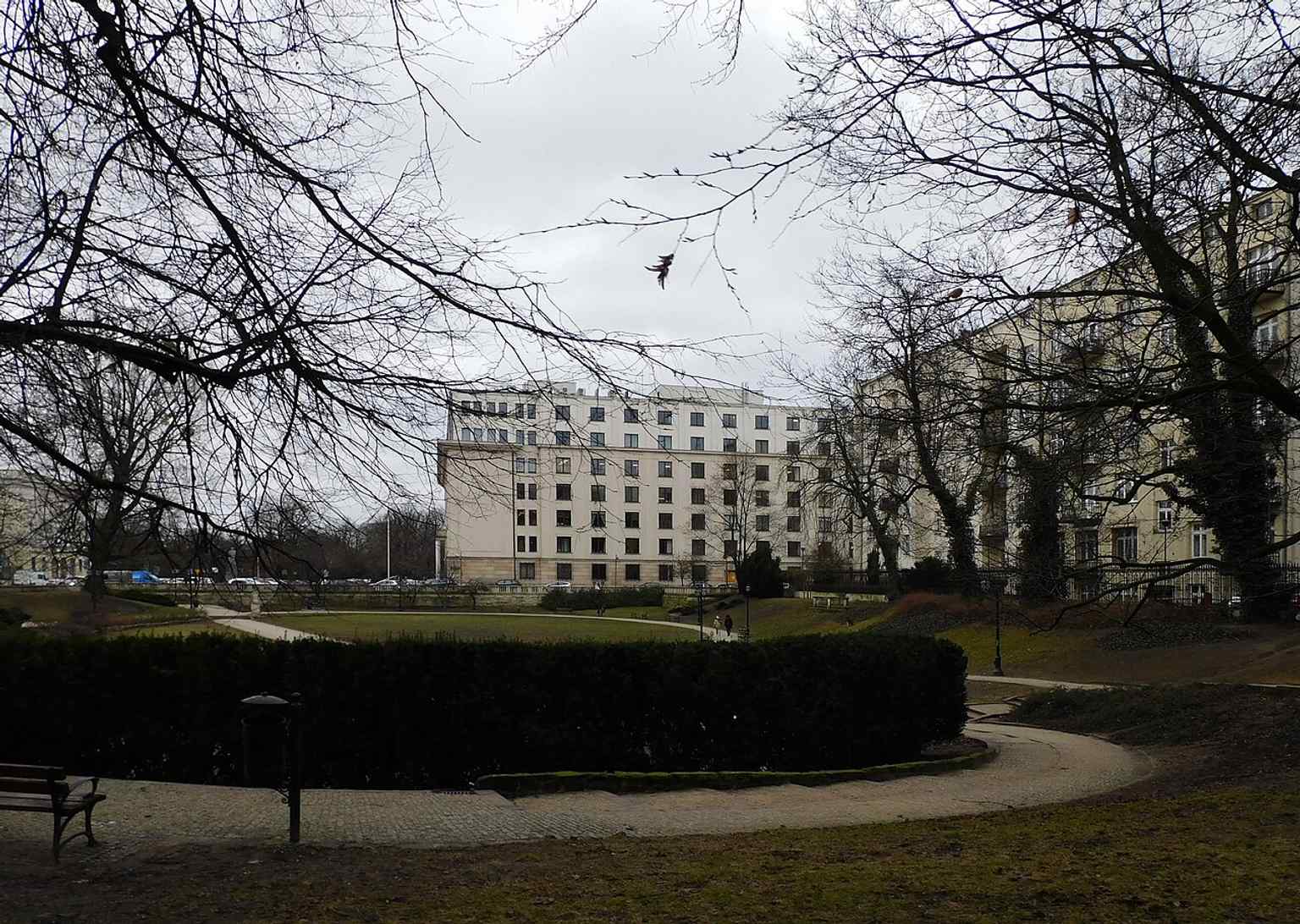
Look for a small terraced garden with stone retaining walls and steps dropping into a shallow hollow, marked by a fountain basin where the old concert stage once stood.
This is Dolina Szwajcarska, Swiss Valley... a lost pleasure garden, and one of the gentlest versions of old Warsaw still faintly visible. Before embassies, ministries, and parked cars claimed the edges, this was a place for strolling, music, coffee, flirtation, and the serious civic duty of being pleasantly idle.
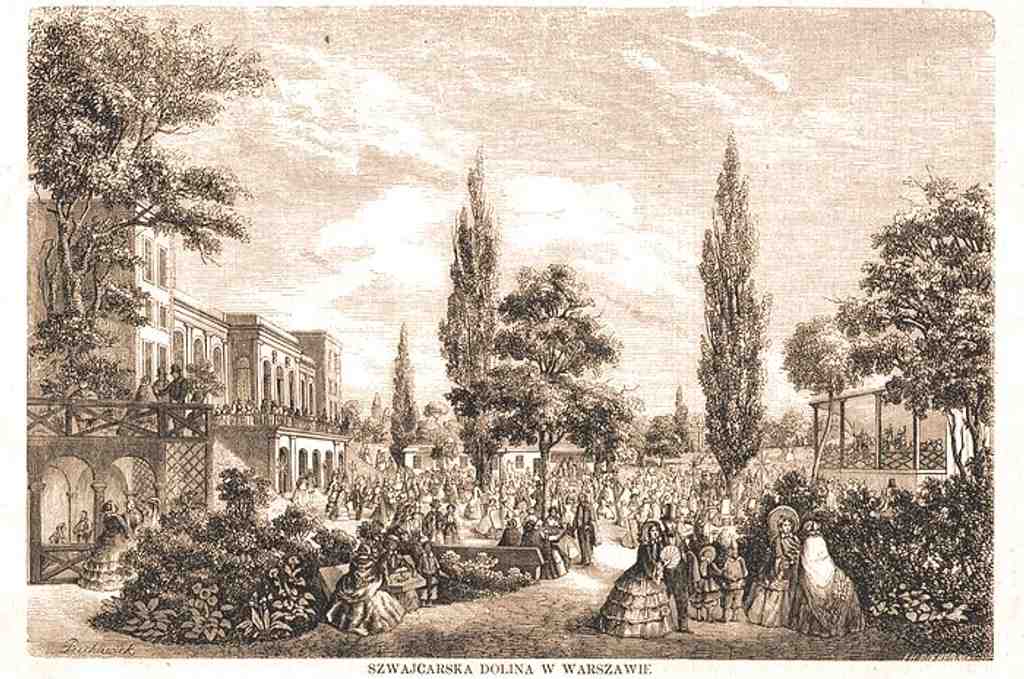
Its story began in the late eighteenth century, but the place found its real character after eighteen twenty-five, when Captain Stanisław Śleszyński took the land on perpetual lease. He and his wife opened it to the public in eighteen twenty-seven and filled it with Swiss-style wooden pavilions, flower beds, winding paths, and little café structures rented to sellers of beer, sweets, and sausage. Civilization, in other words.
If you glance at the image on your screen, you can see how little of that world survived, pressed up against later government-era architecture. In the nineteenth century, this was far larger. In eighteen fifty-five the owners added the Salon of the Great Avenue, then the biggest concert hall in Warsaw. Benjamin Bilse drew huge crowds here. Edward and Johann Strauss performed here. So did Ignacy Paderewski. There were garden theaters, masked balls, magicians, clairvoyants, fire-eaters, and by eighteen ninety-nine one of Poland’s earliest film screenings, organized by Bolesław Matuszewski. Not bad for a garden that began with wooden pavilions and ambition.
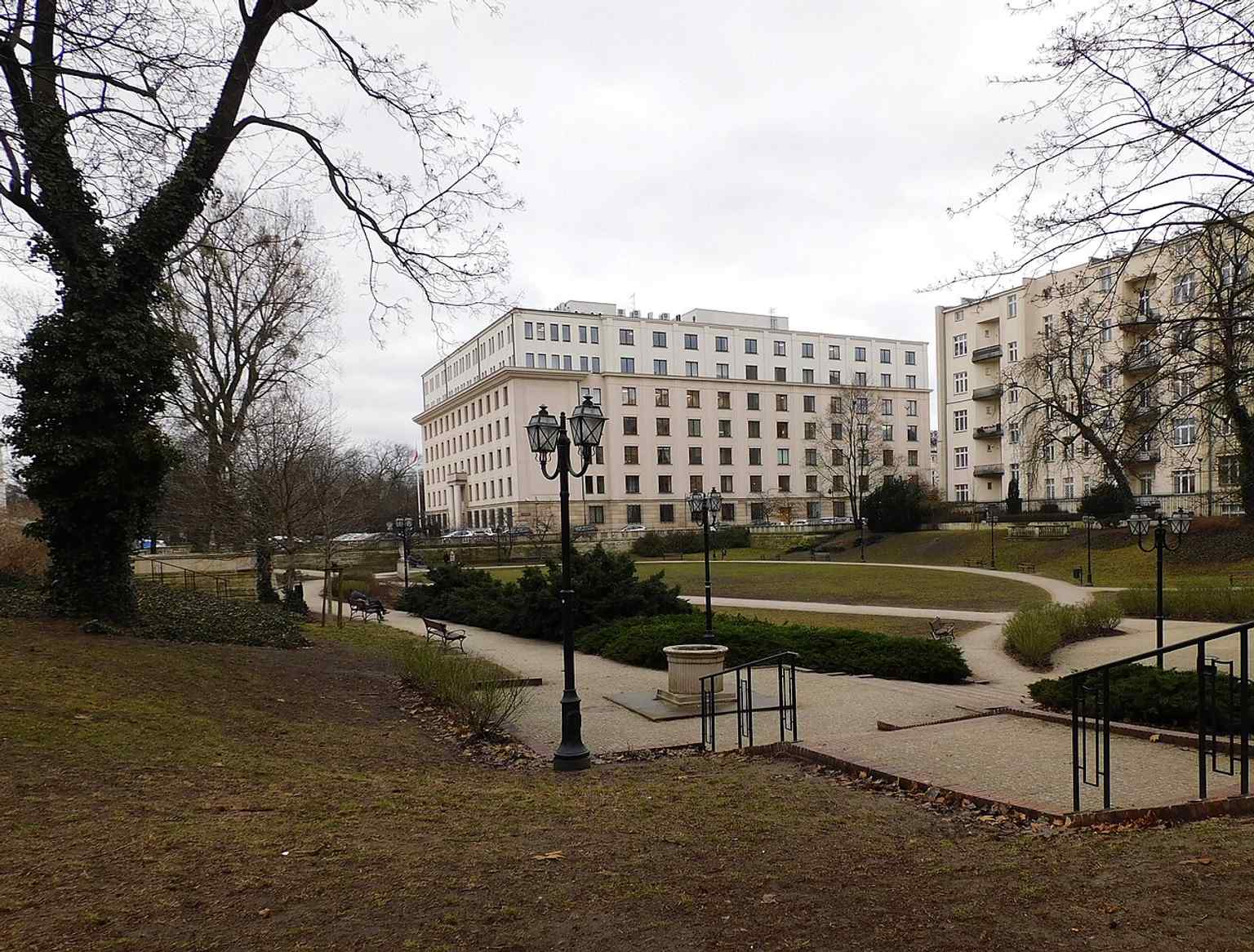
It also adapted with almost suspicious enthusiasm. In winter, from eighteen eighty-seven, it became one of Warsaw’s most fashionable skating rinks. There were tennis courts, a roller rink, flower parades, horticultural shows, and a children’s play garden called New Switzerland. Compared with the buying and rushing of Krucza, this was a city that once treated promenading and listening as valid use of an afternoon.
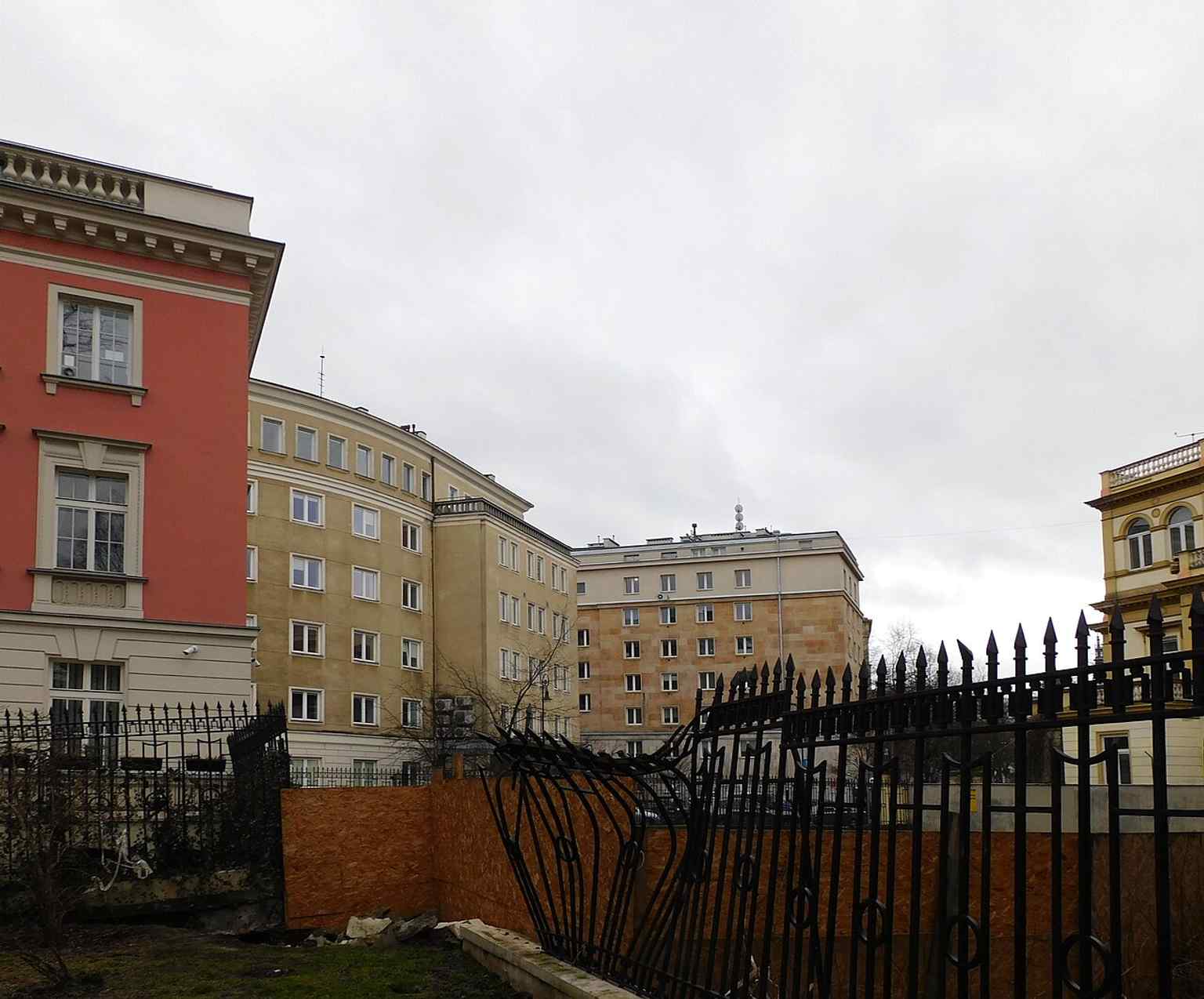
Then the space started shrinking. Aleja Róż cut through in the eighteen seventies. Chopin Street followed in the eighteen nineties. Buildings hemmed the garden in. A concert park turned into a tighter, noisier entertainment ground, then a sports and exhibition site, then a place for political rallies. By the war, its borders were already close to what you see now. The fighting of the Warsaw Uprising finished what parceling had begun.
After the war, planners kept only a fragment, about one sixth of Śleszyński’s original property. In nineteen fifty-one they redesigned this remnant with terraces, old trees, and a fountain set where the concert shell had stood. The rest sat behind new power: first a party headquarters, later state offices. Another look at the second image makes that compression painfully clear.
So here is the question this place leaves behind: if you could recover one layer of city life here... the concert garden, the promenade, the slower pace... what would you bring back, and what would you sacrifice to make room for it?
Not every vanished Warsaw disappeared in fire. Some of it was simply trimmed, reassigned, and fenced in. From here, Crossroads Square is about a nine-minute walk.