
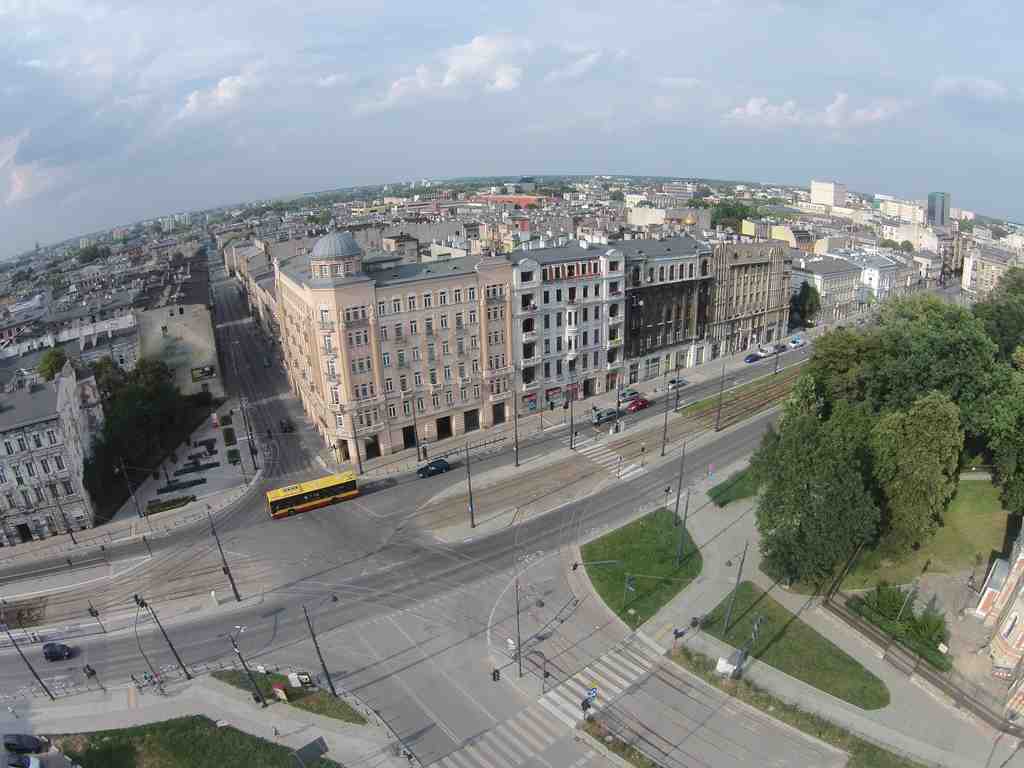
To spot Jana Kilińskiego Street, just look straight ahead for a long, wide street stretching into the distance, lined with impressive, historic tenement buildings and crisscrossed by tram tracks.
Alright, welcome to Jana Kilińskiego Street! If you take a deep breath, you might just smell a whiff of old-timey textile dust in the air-this street practically stitches together centuries of Łódź history. Imagine it: back in the 1820s, this wasn’t the bustling city artery you see today, but the spine of a tiny industrial settlement, where the rhythmic clatter of looms filled the air as linen and cotton weavers set up their new lives.
Originally it was called Widzewska Street-quite catchy, right? But around 1920, it got the name you see today, honoring Jan Kiliński, a shoemaker-turned-hero, whose legendary courage during Poland’s uprisings made him a local superstar, the kind of guy you’d trust to guard your last pair of socks.
As industries boomed in the late 1800s, trains from Koluszki would chug to the end of this very street, unloading heaps of fluffy cotton and carting out fine fabrics destined for the Russian Empire. Picture workers hustling and bustling, carts bumping over cobbles, the buzz of commerce everywhere. The city’s first major tram lines were laid here-an event so momentous that Łódź’s very first tram depot sat nearby on Tramwajowa Street, making this stretch the original “power lane” for those who wanted to go places-literally!
If you listen closely, you might hear an echo of tambourines or the hum of a choir, because this street is lined with cultural gems that would make any music lover swoon. There’s the majestic Alexander Nevsky Cathedral not far from where you’re standing, and if you peek down side streets, you’ll find parks named for Poland’s greatest composers and writers, like Stanisław Moniuszko and Henryk Sienkiewicz. Then there’s the proud Hotel Polonia, once the most exclusive address in Łódź, and the stately Main Post Office, a place where you’d hope your love letters would arrive on time.
During the Second World War, this place looked very different. The street was renamed Buschlinie under German occupation-Łódź itself fell under a thick, fearful hush, and every familiar sign seemed turned inside out. But when the city was liberated, the old name triumphantly returned, as if the spirit of Jan Kiliński himself had marched back and demanded his street with a stomp of his boot.
The old tram depot at number 245 is still standing-no longer housing rattling streetcars, but holding onto whispers of all the conductors and ticket-punchers who once called it home. And did you know overflowing with history also means spiritual diversity? The street was once dotted with synagogues, serving Łódź’s vibrant Jewish community. It’s as if every stone and window frame here has a secret to tell you.
So, as you stand on Jana Kilińskiego Street, try to imagine the sights, the sounds, and the sheer energy of each decade passing by, all layered into this one endlessly fascinating place. And be sure to look both ways-you never know if a tram, a memory, or even a heroic shoemaker might be coming around the corner.


