
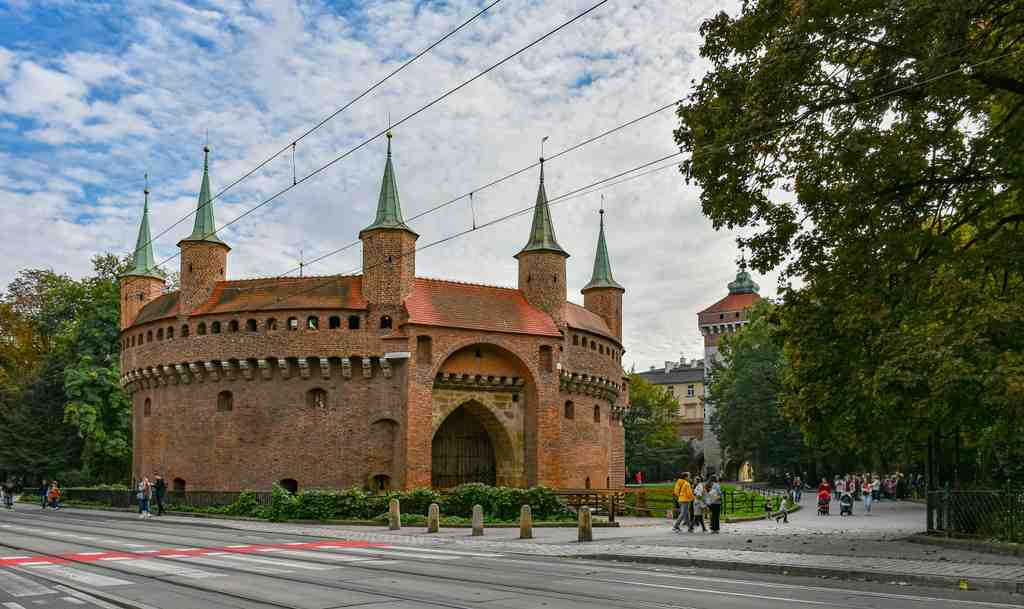
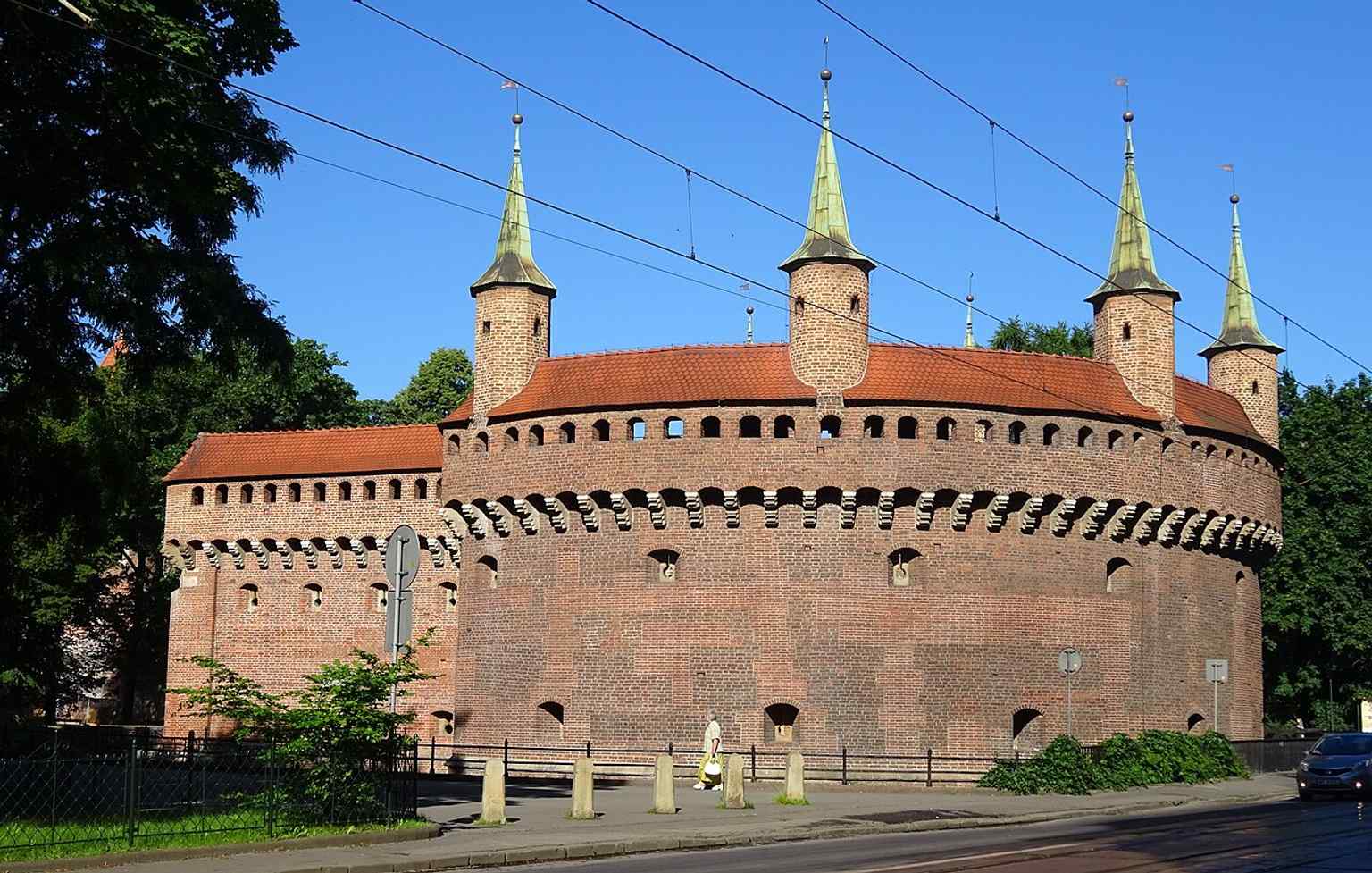
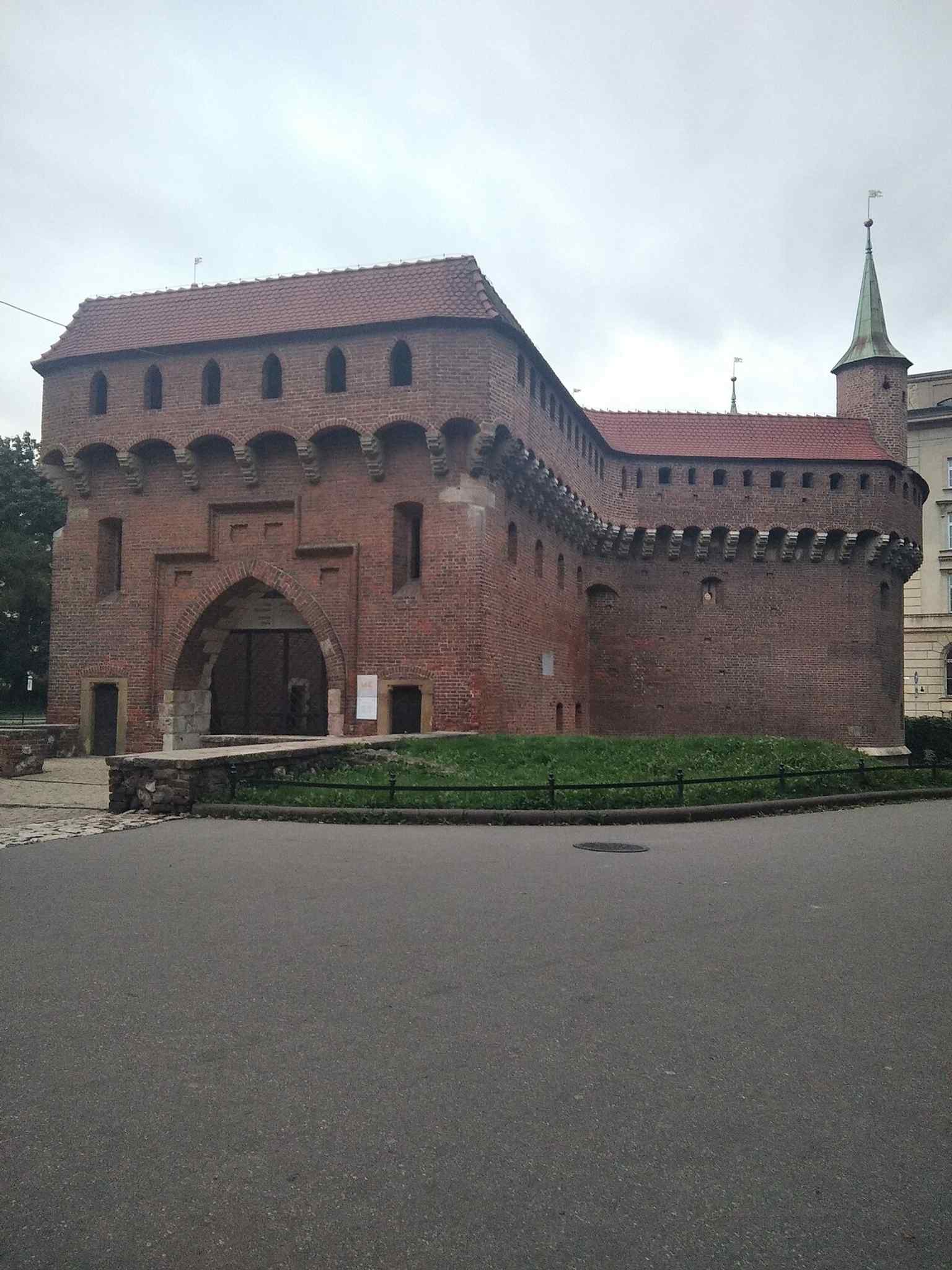
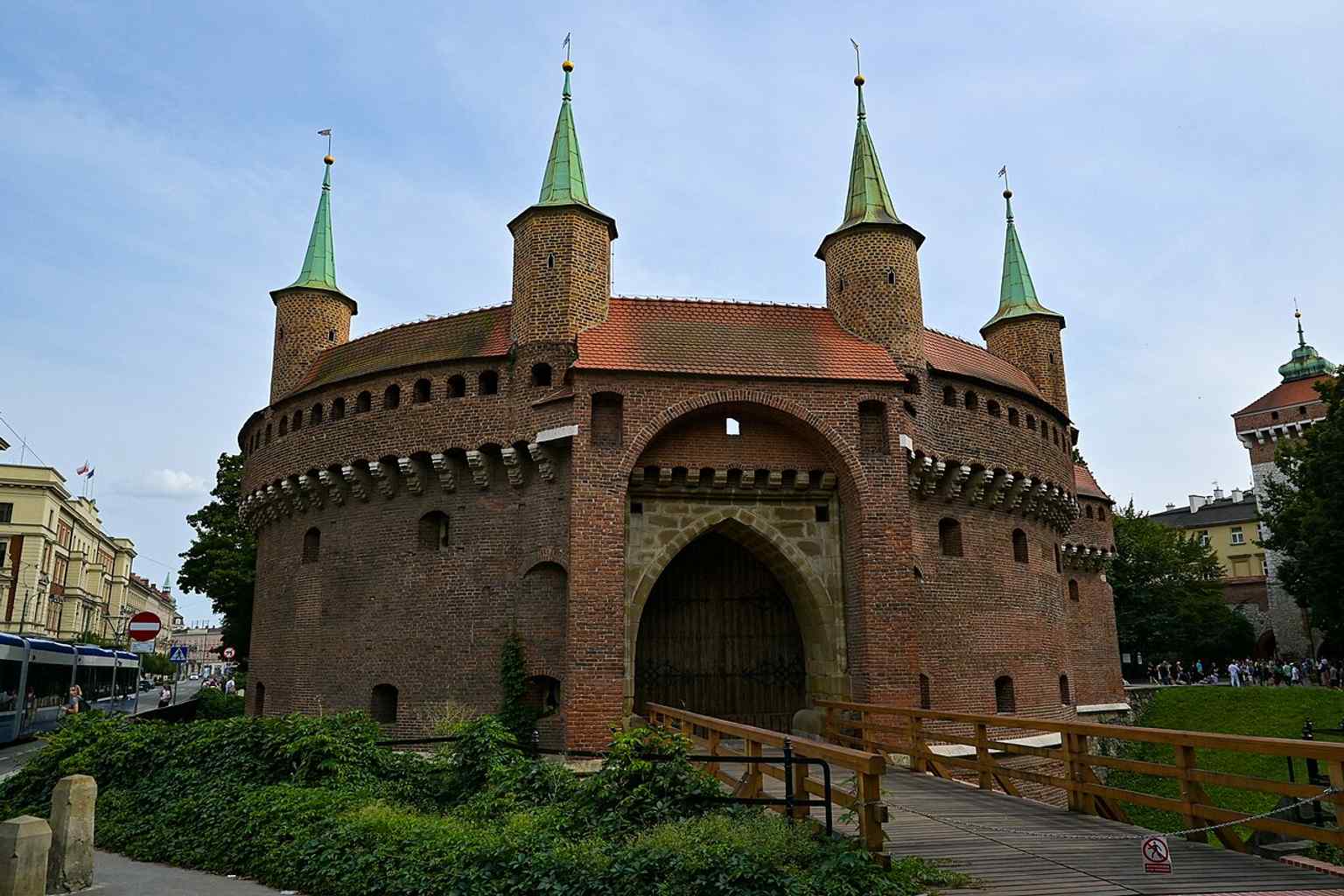
On your right, look for a round red-brick fortress with a drum-like body, a ring of small turrets, and rows of narrow firing slits cut into its thick walls.
This is the Cracovia Barbican, and frankly, it looks like a castle turret that hit the gym and refused to skip leg day. Built around fourteen ninety-eight, it guarded the road into Kraków’s Old Town as a fortified outpost linked to the city walls. Only three Gothic barbicans of this kind still survive in Europe, and this one is the best preserved, which is Kraków’s way of saying, “We keep our old troublemakers.”
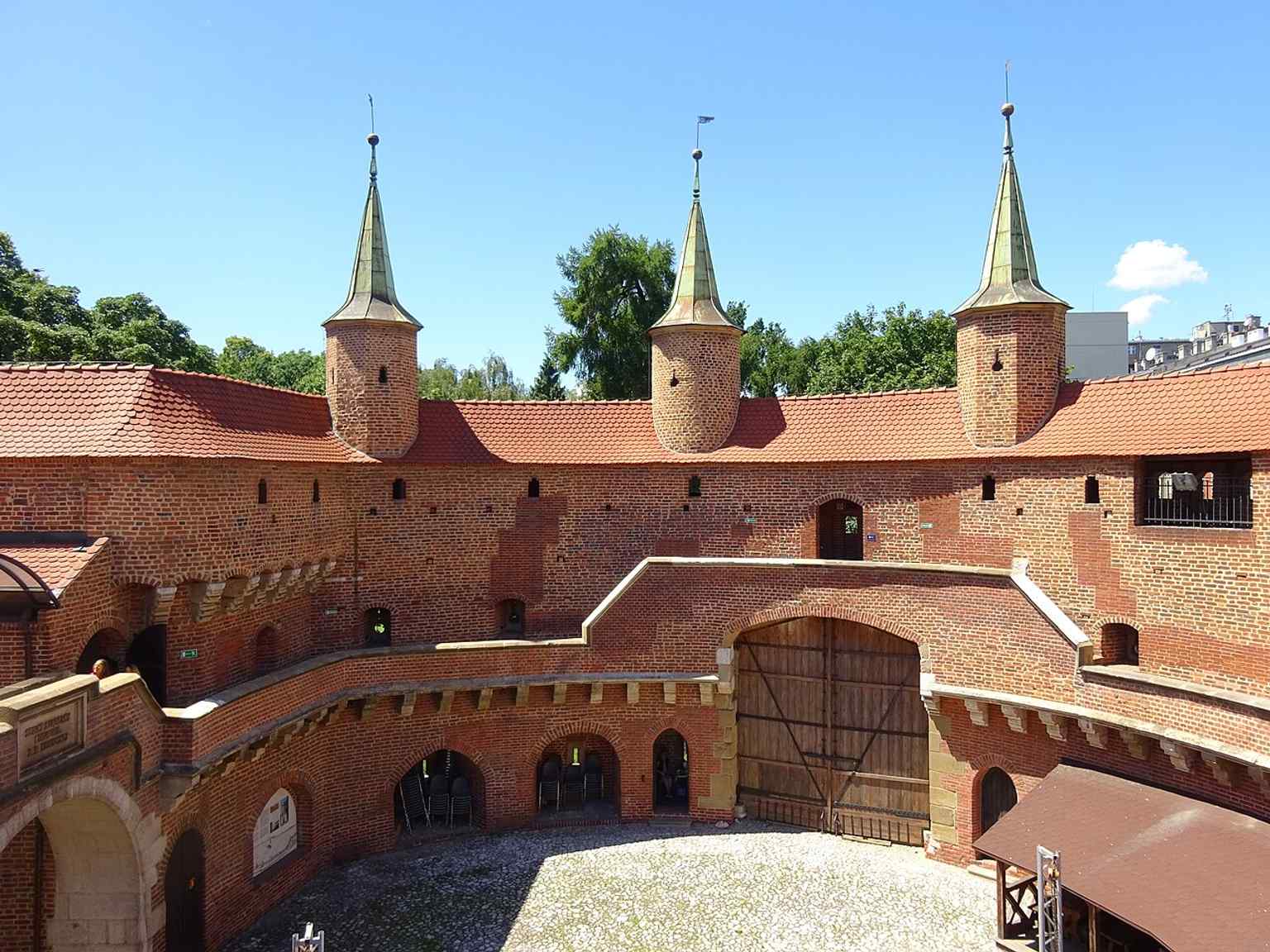
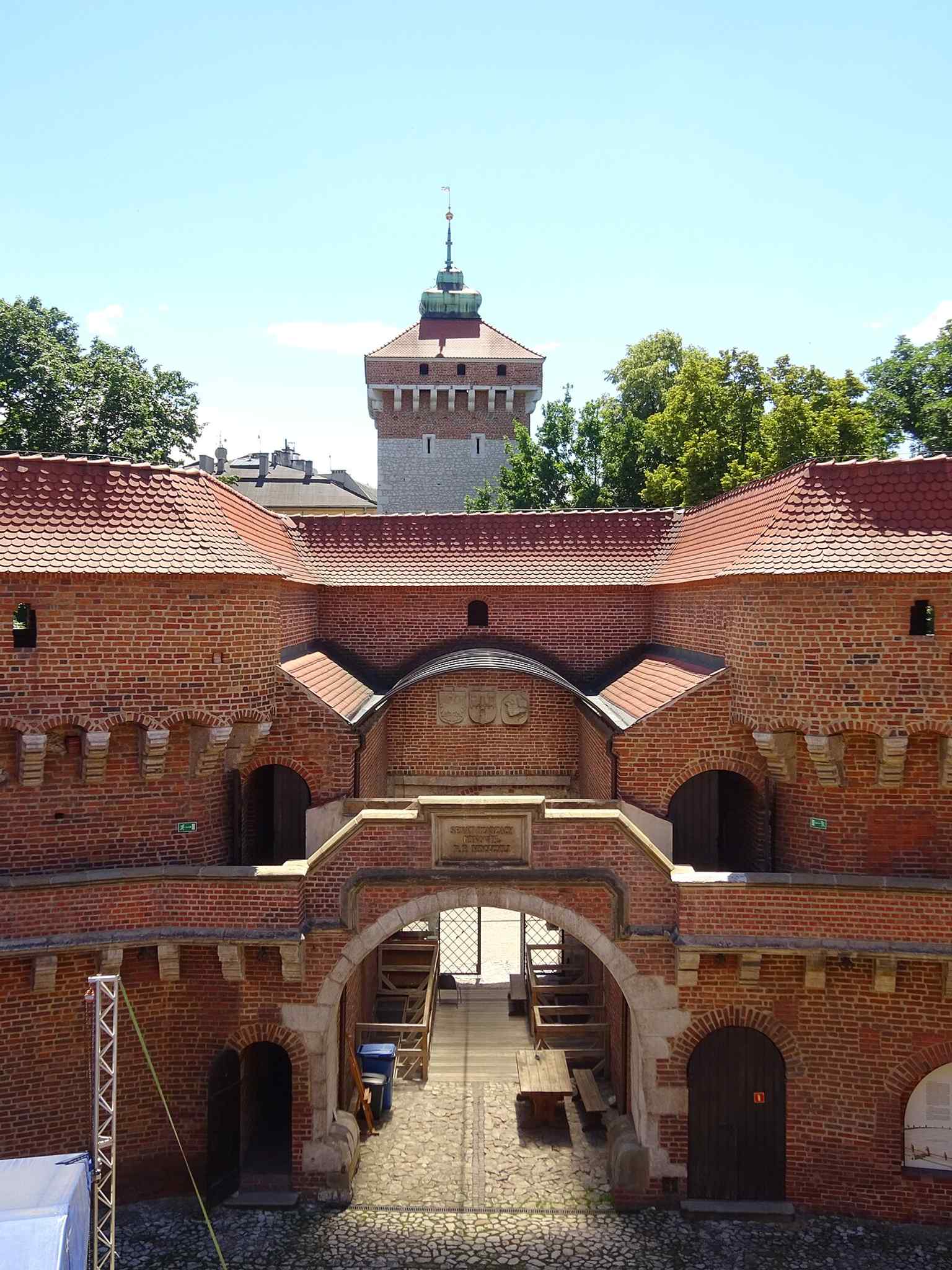
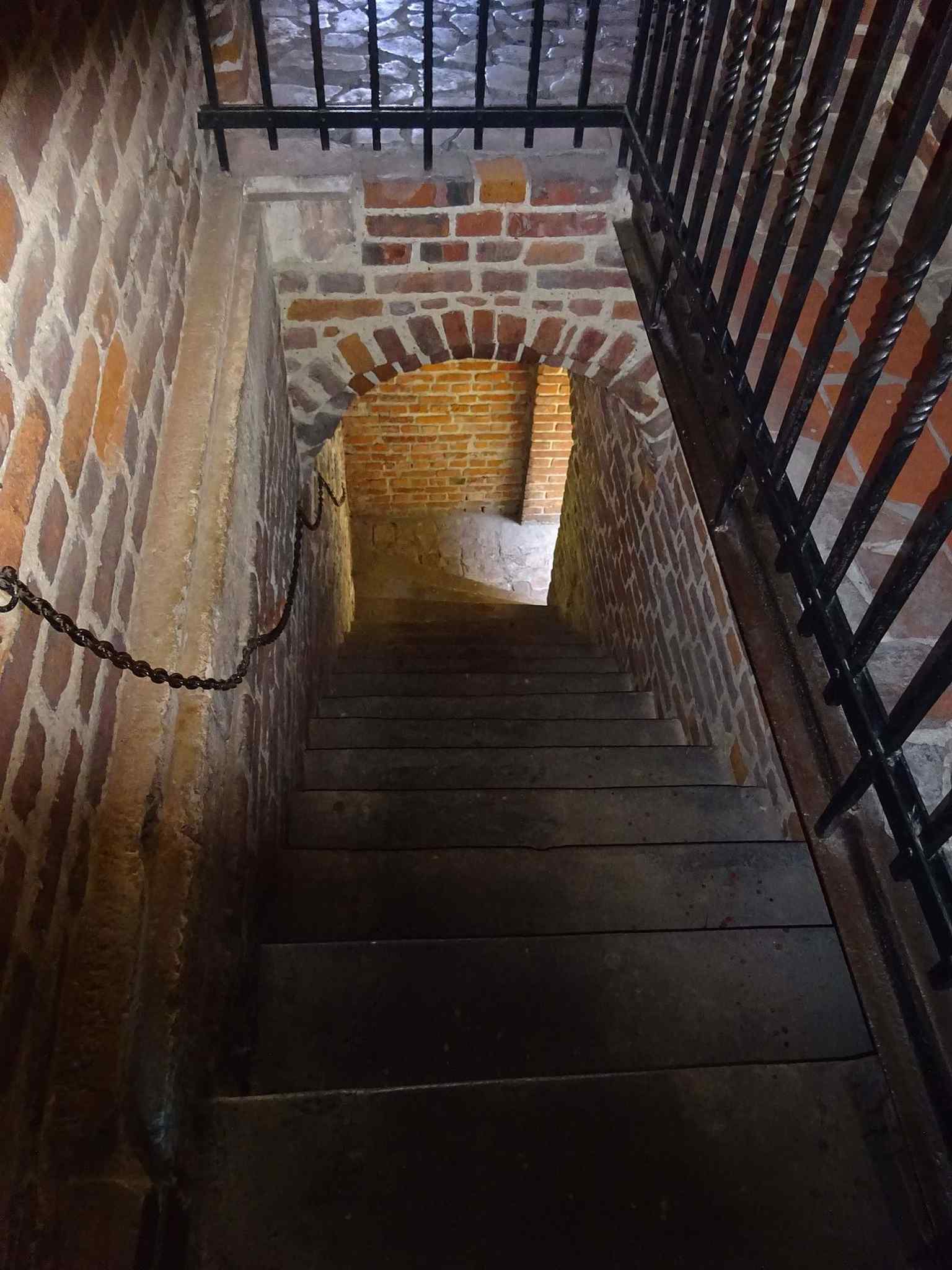
What makes it so clever is not just its muscle, but its choreography. The Barbican’s layered defense worked like a medieval puzzle box: the entrance did not line up neatly with Saint Florian’s Gate, so attackers could not just sprint straight through. They had to slow down, turn, cross multiple gates and bridges, and expose themselves while defenders watched from every angle. Inside, soldiers could move through hidden posterns, meaning small secret passages, and underground routes, while food and weapons waited for a long siege.
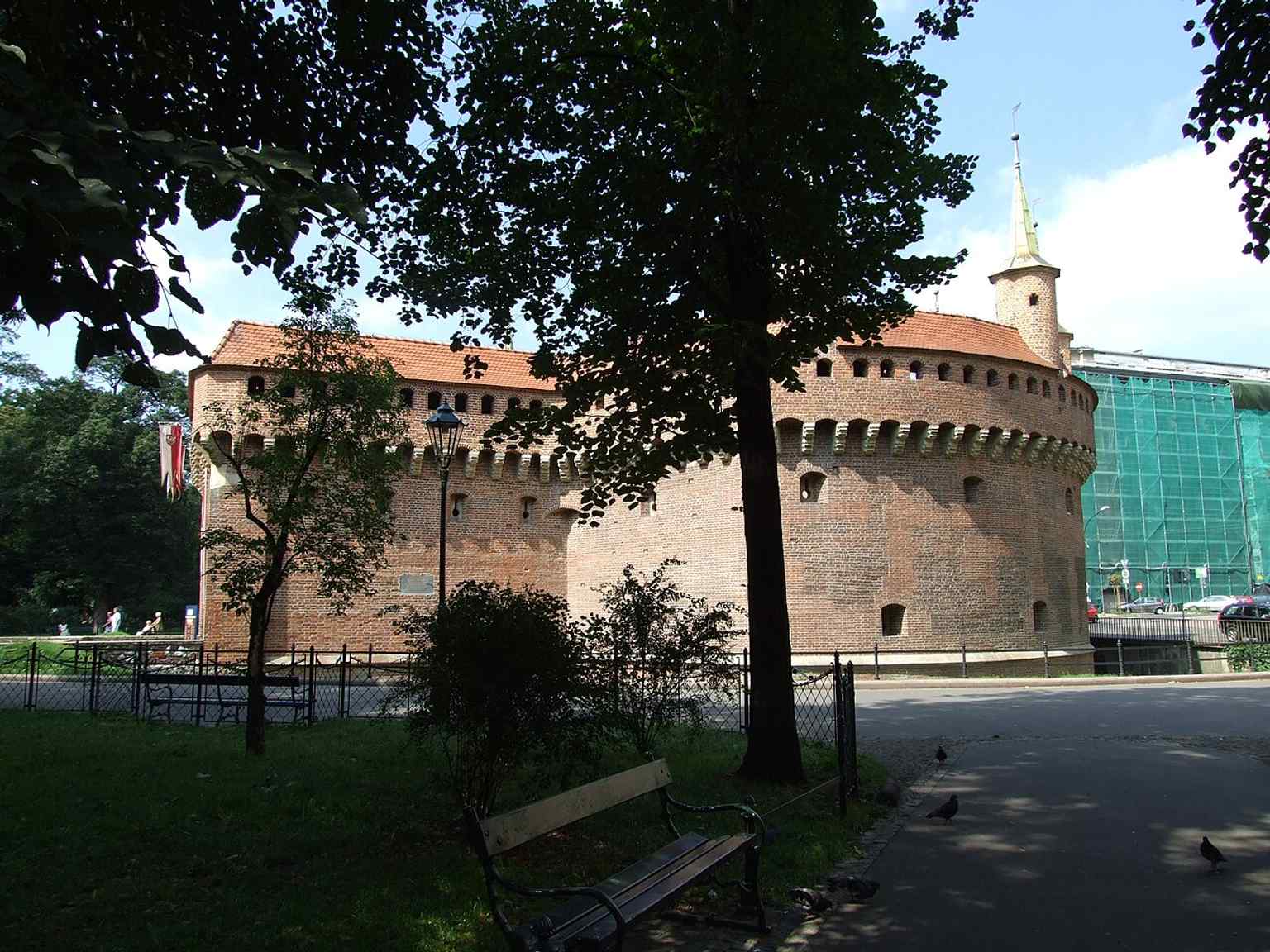
Take a second and trace that round shape with your eyes. Imagine trying to approach it without a straight path, while one hundred and thirty embrasures - those narrow firing openings - stare back at you from walls three meters thick. That is not architecture being polite. That is architecture saying, “Proceed, and make it awkward.”
The city had reasons to be jumpy. After King John the First Albert suffered a crushing defeat in the Cosmin Forest, Ottoman and Tatar forces pushed into southeastern Poland in the spring of fourteen ninety-eight, devastating whole regions and carrying off huge numbers of captives. Kraków strengthened its defenses fast. In fifteen oh five, Alexander Jagiellon went even further: he gave the city council the houses and spaces between Saint Florian’s Church and the Barbican so nobody could build anything that blocked the firing line or gave attackers cover. Urban planning, military edition.
Locals later nicknamed this place “the pan” because of its round shape, and here is the bit most visitors miss: the old covered passage to Saint Florian’s Gate still leaves a trace in the paving. That outline matters. It shows this was not some lonely tower dropped here for decoration. It was a tightly controlled gatehouse, part of a whole machine for filtering who entered the city.
Its reputation grew the hard way. In fifteen eighty-seven, Archduke Maximilian the Third came at Kraków with around six thousand men, and the northern defenses still stopped a direct breakthrough here. Later enemies learned the lesson. The Swedes avoided making their main assault from this side, and even a direct attack during the Bar Confederation failed. A local legend says defender Marcin Oracewicz ran out of ammunition and fired a jacket button that killed the Russian colonel Panin. Is every detail proven? Not exactly. Has Kraków adopted the story with a grin anyway? Absolutely.
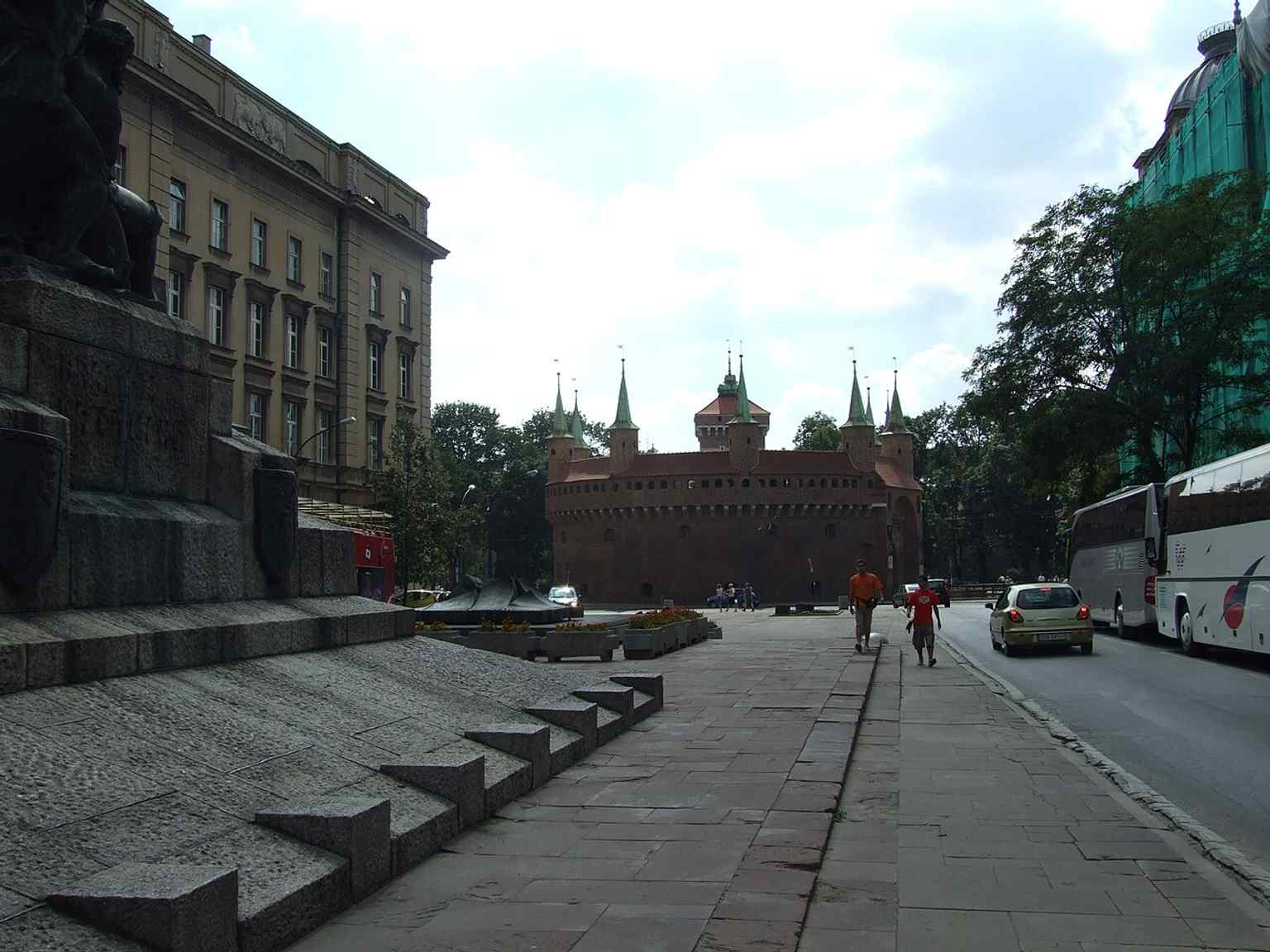
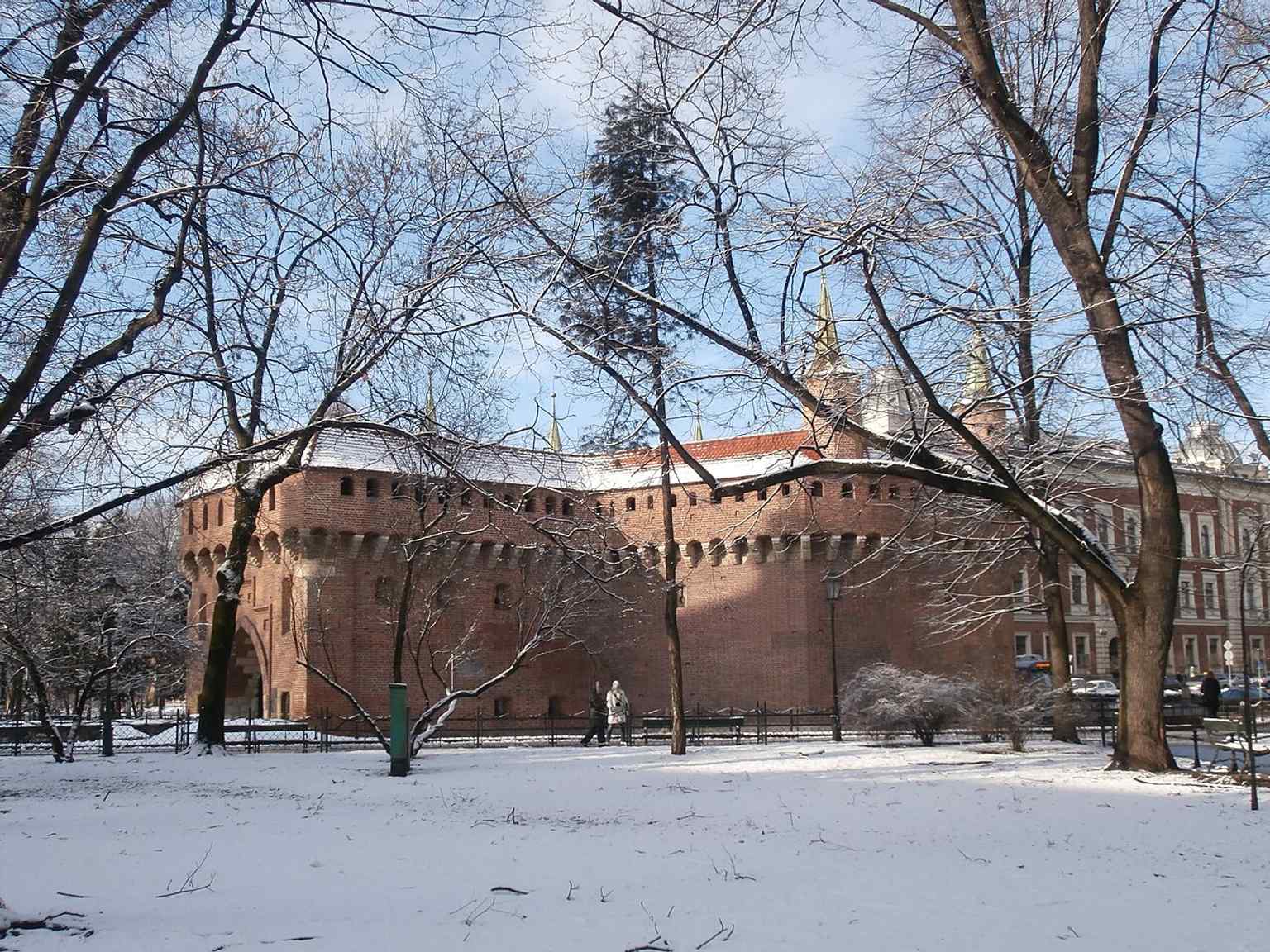
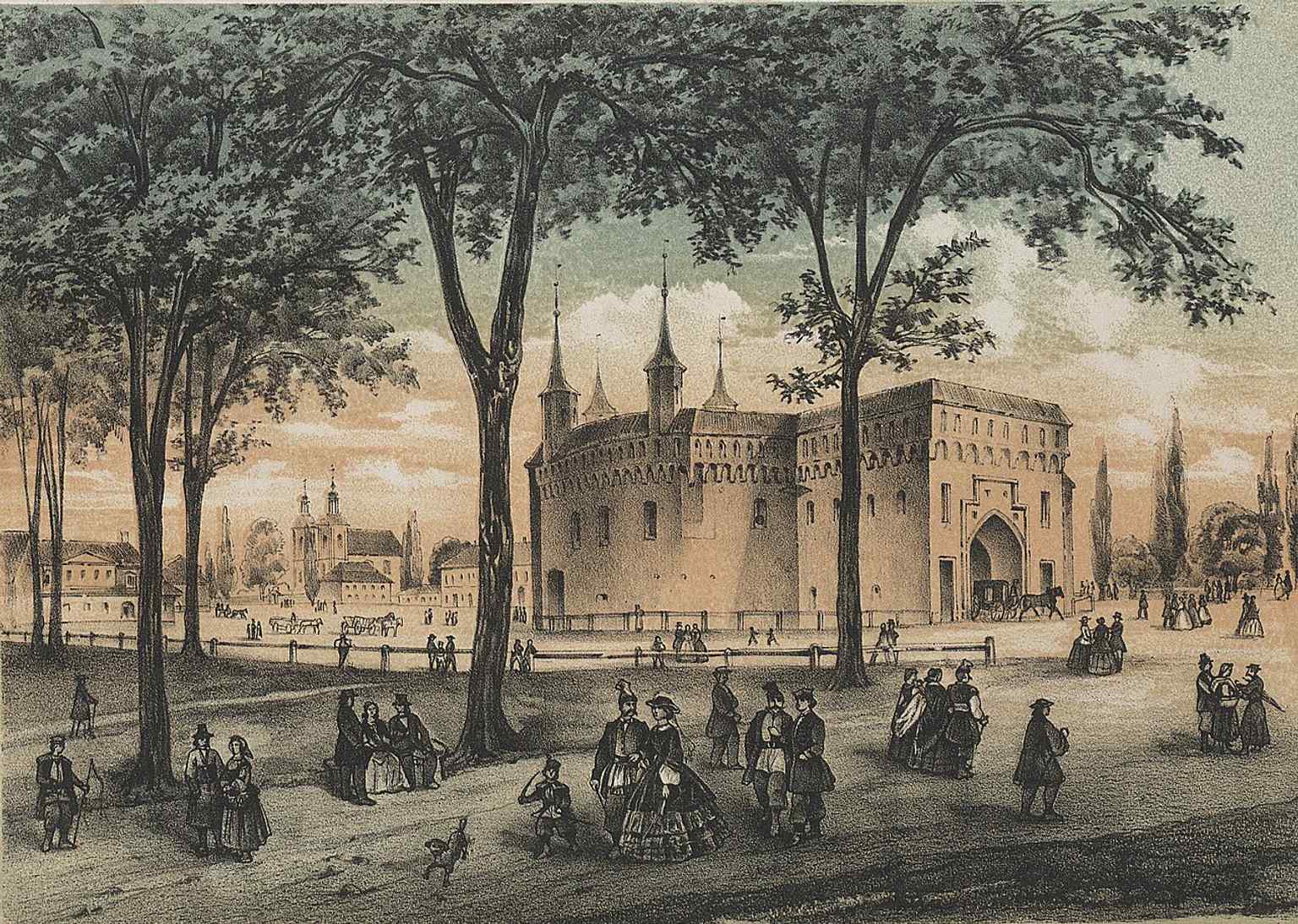
In the nineteenth century, the danger changed. No army could beat the Barbican, but accountants nearly did. When old walls looked expensive and obsolete, Feliks Radwański, and later Jan Librowski, fought to save this fortress from demolition. If you check the before-and-after image, you can see how the surroundings changed while the Barbican kept its stubborn medieval posture. Now it serves as a museum and even hosts exhibitions and performances, which feels wonderfully Kraków: first repel invaders, then put on a show. The city has not only protected walls; it has protected memory itself. Next, head to the Musée Czartoryski, about a three-minute walk away, where defense gives way to collecting. If you want to return inside later, the Barbican is generally open Tuesday through Sunday from ten thirty to six, and closed on Mondays.






%20(cropped).jpg)
