
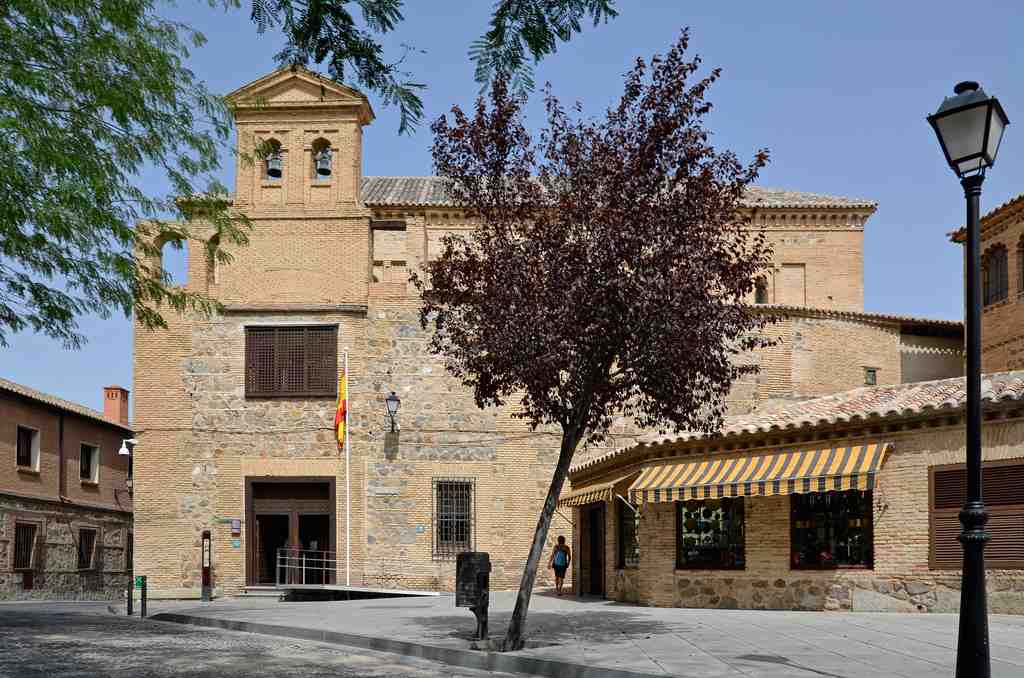
You’re just steps away from the Synagogue of El Tránsito! To spot it, look for a building in front of you made from warm, sandy-colored bricks, with a simple, fortress-like facade and small windows. There’s a flagpole near the main entrance, and the building also has a little tower rising above its stone base. The windows are covered, hinting at the treasures hidden inside, while the nearby tree gives the place a cool patch of shade-perfect for a pause before stepping into history.
Now, imagine yourself in mid-14th century Toledo. The streets around you would have echoed with the chatter of merchants, the toll of distant church bells, and maybe the occasional musician’s tune floating in on the breeze.
Here stands the Synagogue of El Tránsito, built in 1357, thanks to Samuel HaLevi-a man with one of the trickiest jobs in Spain: being both the king’s treasurer and a leader of Toledo’s Jewish community. He had a palace right next door, and this synagogue was his private masterpiece. Imagine the whispers-“How did Samuel manage to build such a grand place when synagogues were supposed to be banned?” Some say it was all thanks to his close friendship with King Peter of Castile. Others reckon it helped that the synagogue was technically part of Samuel’s home. I mean, who could turn down a royal accountant, right?
Take a closer look at the walls: see those delicate patterns carved in plaster? That’s the Mudéjar style, created by Muslim artisans at a time when cultures mixed (sometimes peacefully, sometimes not). There were whispers of poetry, Torah debates, and prayers here. High above, a wooden balcony-known as the women’s gallery-once hushed with secret conversations.
But not all the stories are peaceful. Samuel himself fell victim to palace scheming-arrested and tortured to death. The building changed hands: from synagogue to church, to barracks for Napoleon’s troops, and now, a museum honoring Sephardic Jewish heritage. Stand here a little longer, and just maybe, you’ll feel the echo of centuries-a mixture of sorrow, hope, and the endless turning of Toledo’s historic wheel.
And remember: if a building could talk, this one would have stories to keep you entertained until next Tuesday!




