
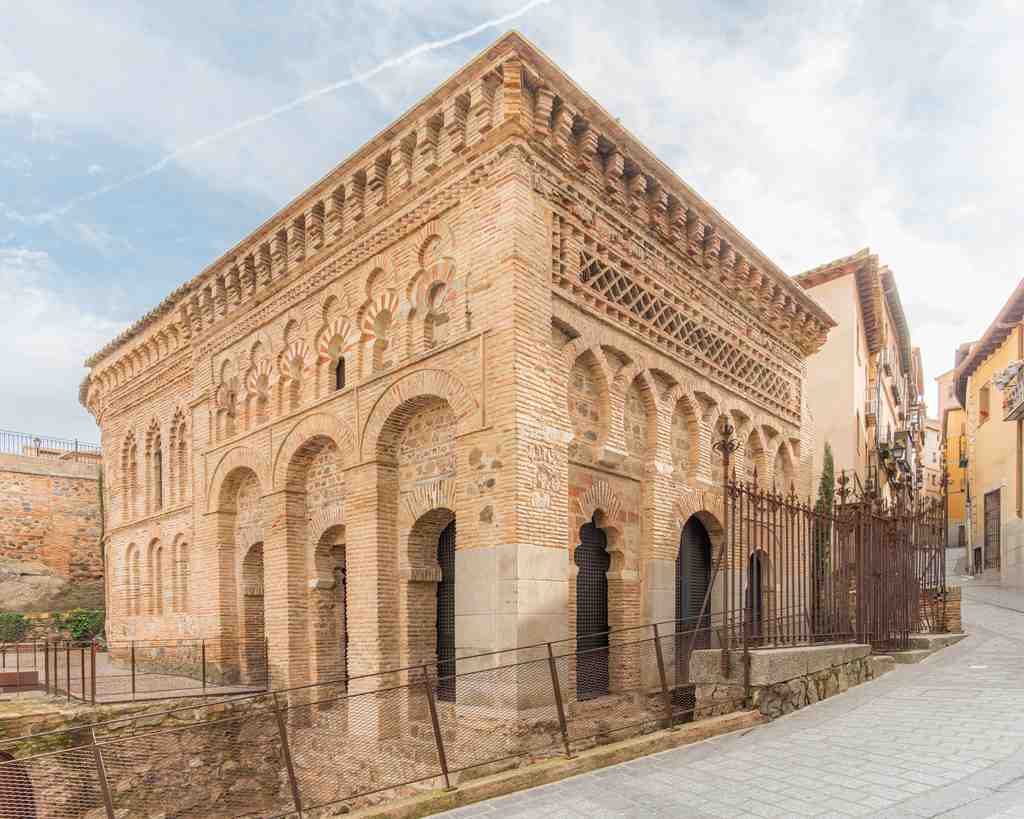
To spot the Mosque of Cristo de la Luz, look for a small, square-shaped building made of warm red bricks and stones, sitting neatly at the edge of the narrow street. Its walls are filled with rows of arches-some in horseshoe shapes, others more rounded-with intricate brick patterns at the top. The structure almost looks like an ancient treasure chest, sitting slightly lower than the sidewalk and protected by an old iron fence. It’s tucked among taller, lighter-colored houses, but those repeating brick arches are hard to miss!
Now, imagine the year is 999. The scent of spices fills the air, and the sound of distant market chatter echoes through these old streets. You’re standing outside one of Toledo’s oldest buildings-the Mosque of Cristo de la Luz. Once called the Mezquita Bab al-Mardum, this little square mosque is like a time machine made of brick and stone. Back then, the wealthy and powerful of the city walked past here, perhaps glancing up at its elegant arches, each patterned just a bit differently.
Listen closely. Did you hear that? That could be Ahmad Ibn Hadidi himself, striding by, proud of his latest project, hoping it’ll earn him a fine seat in paradise. There’s even a message written in ancient script on one side, woven into the bricks-almost like a very old tweet: “Hey, everyone, I built this with my own money! (Please remember me, up there!)”
As you stand before the mosque, picture its first days: no bell towers, no stained glass, just a quiet prayer hall facing east, sunlight shimmering through horseshoe-shaped arches. People would step inside, bowing quietly toward the qibla wall. If you look at the far end, imagine a small mihrab, softly glowing in the filtered light, showing worshippers the way to Mecca.
But the story doesn’t end here. In 1085, legend says King Alfonso VI rode up with his army to take Toledo back. Suddenly, his horse stumbled-right here!-and as the dust settled, a mysterious light shone from a crack in the old wall. In that beam, they found a crucifix that had hidden here through centuries of secrets. The king, amazed, left his shield behind as a thank-you, and declared the first Christian Mass would be held on this very spot.
Through time, the mosque was transformed-first a chapel, then the home of knights, even gaining that rounded apse on the far side to suit its new purpose. But look at those original bricks, those arches. They’re straight from the Caliphate of Córdoba-imagine borrowing design ideas from your coolest neighbors hundreds of kilometers away!
Today, if you listen carefully, you might hear the bubbling of the little garden fountain nearby. Or maybe it’s just history itself whispering in your ear, asking: What legends will you find on these ancient stones?




