
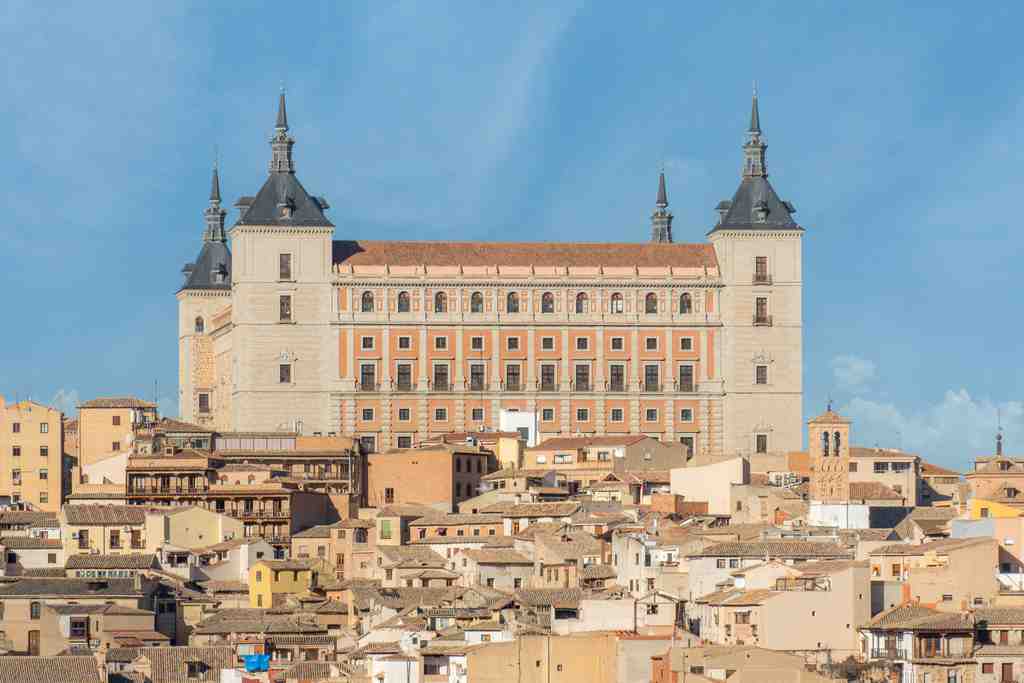
Look ahead and up above the rooftops-see that massive, square-shaped building rising high above Toledo, with four striking corner towers that look like they could poke a hole in the clouds? That’s the Alcázar! Its pale stone walls and neat, peach-colored façade stand out sharply over the maze of tan houses below. You really can’t miss it-it dominates the skyline like a king keeping watch over his city.
Now, let your imagination take you back to the hot summer of 1936. The grand fortress you’re standing before wasn’t just a pretty face-it was the heart of an explosive drama at the start of the Spanish Civil War. Picture this: the thick air buzzing with excitement and fear, streets filling with the echo of marching boots, and eyes darting up to the Alcázar, where hundreds of defenders and civilians were trapped inside.
The siege started on July 21. Republican forces-thousands of militia with artillery, a few rattling armored cars, and even some tanks-surrounded the fortress. Day after day, bombs thundered down, shaking the mighty walls and rattling everyone’s nerves. Inside, it was crowded-crammed with soldiers, officers, over 500 women, and a whole bunch of kids. Even a couple of newborn babies joined the party! The women didn’t fight, but their courage, filling the halls with laughter and stories, helped everyone hold on just a little longer.
The Republican side thought the Alcázar would fall easily-the place was isolated, a tiny knot of defenders with just a handful of old weapons and some stubborn leaders. But the fortress and those inside refused to give in. When they were offered a chance to surrender, their answer was always “No.” Even with bombs shaking the walls, they kept going. The city was full of tension, whispers of spies and escapes, daring raids and even secret prisoners hidden in the cellars.
Finally, after 70 days-a lifetime for those trapped inside-help arrived. Franco’s Army of Africa stormed in, breaking the siege and claiming a victory that would fill the headlines. The Alcázar stood battered but unbroken, a symbol of stubborn hope and the fierce will to survive.
So as you stand here in front of this giant, just imagine the thunder of cannons, the cries, the tension, and the strange hope that echoed inside these ancient walls. The Alcázar isn’t just a building; it’s a witness to one of history’s most dramatic stand-offs-and you’re standing right where it all happened. Not bad for a day’s sightseeing, right?
For further insights on the background, siege or the relief, feel free to navigate to the chat section below and inquire.




