
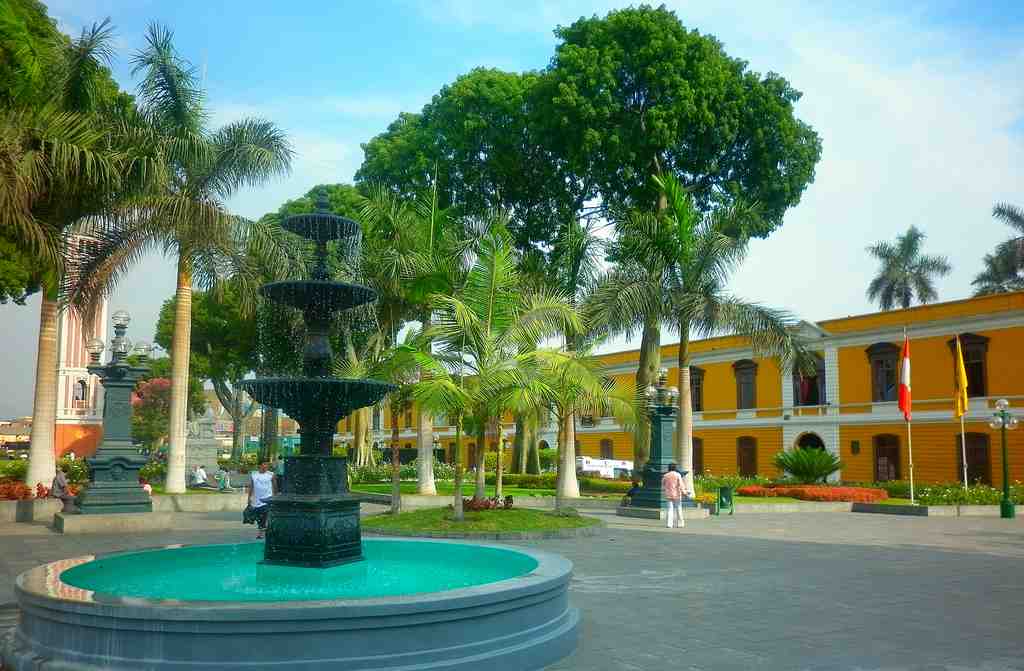
In the 19th century, the Casona was the residence of the viceregal Real Convictorio de San Carlos. However, the university took over the premises in the mid-1870s. Later, in 1966, San Marcos relocated to its current campus, leaving the park's historic buildings to be occupied by the Chamber of Deputies, which is now the Congress of the Republic.
Throughout the 20th century, the park witnessed numerous student demonstrations and riots. But it wasn't until the 1980s and 1990s that University Park underwent a much-needed renovation. During this time, ornamental pools were added, and a perimeter fence was built.
As you explore the park, you'll come across various monuments, including the Torre Alemana, a magnificent clock gifted to Lima by the city's German community during Peru's Centennial of Independence in 1921. Next to the Casona de San Marcos, you'll find the Panteón de los Próceres.
Let's take a look at some of the park's notable monuments. Firstly, the Monument to Sebastián Lorente, a striking sculpture made of bronze and granite. Created by the Peruvian sculptor José Luis F. Agurto, it was unveiled on September 15, 1924, at the park's east end.
Another remarkable monument is dedicated to Hipólito Unanue, an influential figure in Peru's independence movement and a renowned politician and doctor. This monument, made of exquisite Italian marble, stands proudly in front of the Casona de San Marcos. It was crafted by the Spanish sculptor Manuel Piqueras Cotolí and inaugurated on July 29, 1931.
Lastly, near the clock tower, you'll find the Monument to Bartolomé Herrera. This bronze and marble masterpiece was presented as a gift by the German government and was unveiled in 1922. It was crafted by the talented Spanish sculptor Gregorio Domingo.
So, as you stroll through University Park, take in the beauty of its monuments, enjoy the lush greenery, and relive some of Lima's significant historical moments. Take your time to soak up the atmosphere before we proceed to our next exciting stop on our tour!


