
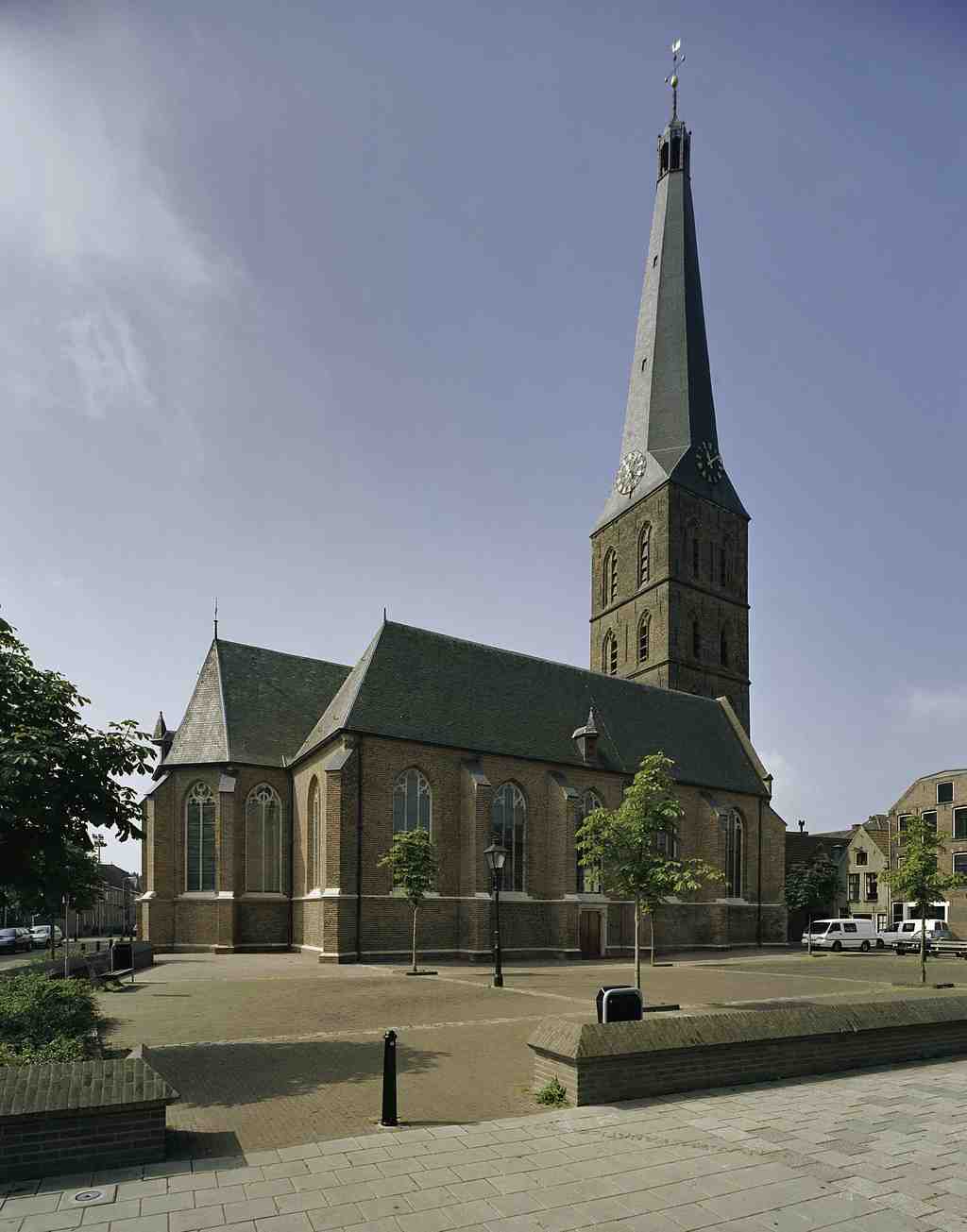
To spot the Nieuwstadskerk, just look for the tall, pointy spire rising high above the square, made of dark stone with slim arched windows and an elegant clock on one side-you can't miss it towering above you!
Now, stand right where you are and imagine the square before you buzzing with townsfolk, their chatter echoing against the brick walls of this magnificent church. This is the Nieuwstadskerk, or if you’re feeling a bit fancy, you can call it the Church of Saint John the Baptist. It was founded way, way back in the 13th century, during Zutphen’s big expansion-imagine the city spilling over into new neighborhoods, with workers clanging away, stacking up stones, and raising timber beams in what must have looked like a medieval construction zone.
Officially, its first mention was as the Holy Mary Church in 1272, but don’t let that fool you; this church has worn many hats-and names! The main hall you see now, with its three long sections, was built in the 14th century. The choir at the back? That’s from 1459, and the two side aisles were added as the centuries rolled on in the 14th and 15th centuries. So, in a way, standing here is a bit like time traveling through different ages of architecture.
Don’t forget to look up! That spire shoots 77 meters into the sky and is topped with a needle-sharp tip. It wasn’t always so lofty-the tower has five levels, but it only had three until it got a dramatic makeover in 1439. Inside hang ancient bells, one possibly as old as the church itself, another made by a famous bell maker in 1462, and yet another from 1565, still ringing out over the rooftops.
Now, let’s add a dash of drama! In 1572, soldiers looted the church in a flurry of chaos under orders from Willem van den Bergh. Then, during the Reformation, the church changed hands and became Protestant-talk about a game of musical chairs! Fast forward to the rule of King Louis Napoleon, brother of THE Napoleon-he handed the church back to the Catholics, who dedicated it to John the Baptist in 1816.
Today, the Kiwi-green trees outside wave at a building recognized as a national monument, and it’s still alive with music and community, thanks to a lovingly restored organ and the parish of the Twelve Apostles. So, while it’s easy to think of history as quiet and still, this church hums with stories, echoes, and just a hint of mystery-can you hear the bells?


