
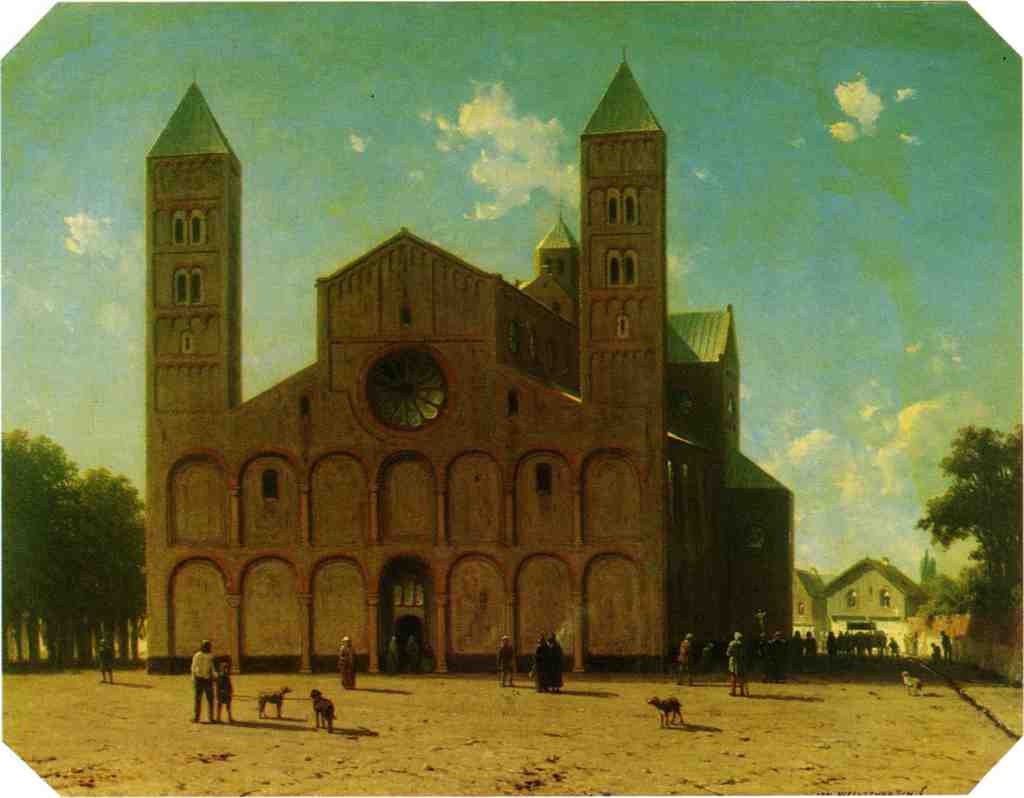
Look for the towering stone facade characterized by its two tall square towers with pointed green roofs and a large central circular window. Now, prepare yourself for a massive plot twist. That magnificent structure you are picturing is completely gone.
What you are actually looking at today is just a fraction of the original St. Mary's Church, also known as Mariakerk. Check your screen to see an eighteen forty drawing of the grand church just before its final demolition. Back in the eleventh century, this was one of the finest Romanesque buildings in the Netherlands. Romanesque architecture is known for its massive, fortress-like scale and thick semi-circular arches.
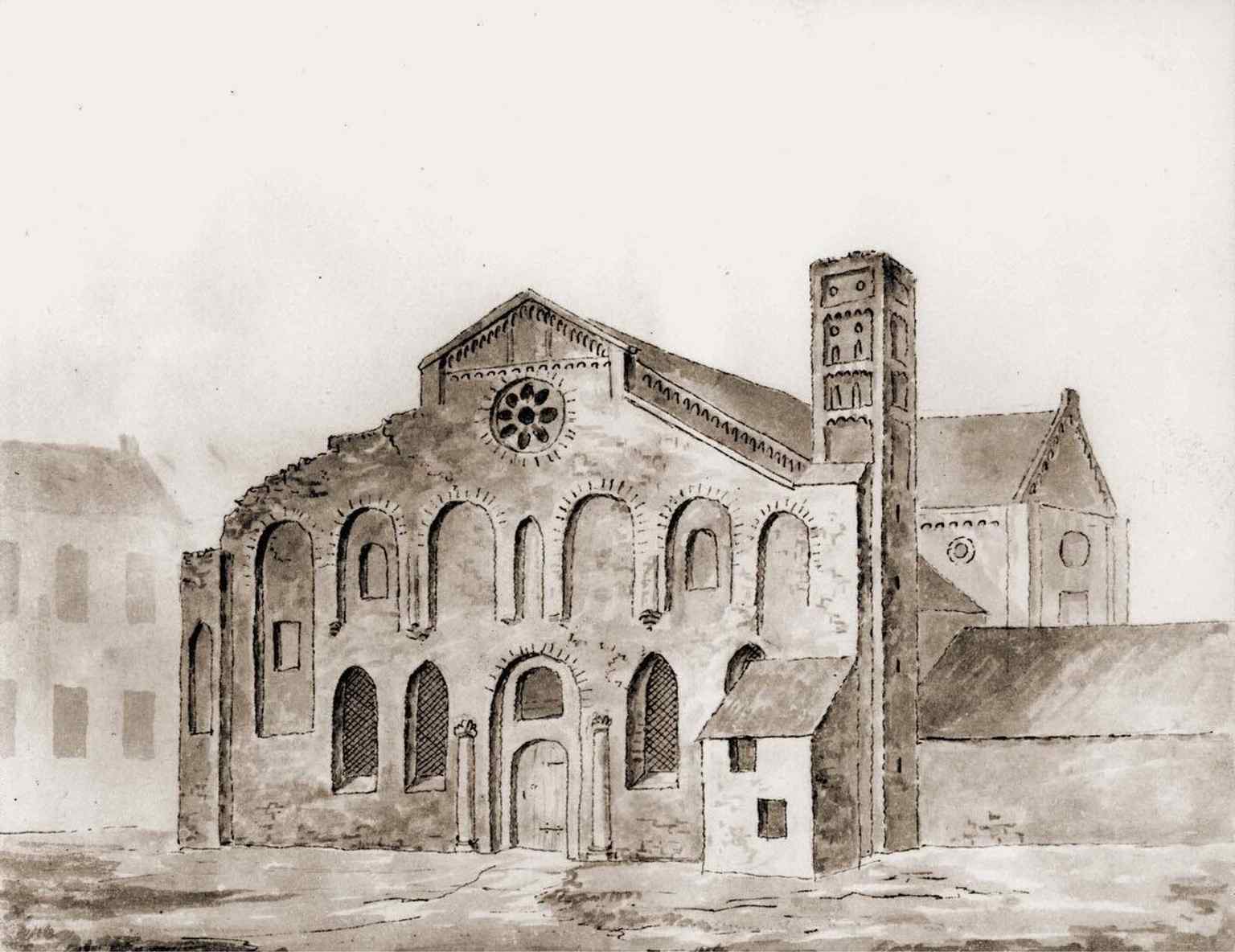
The story begins with Emperor Henry the Fourth and Bishop Conrad of Utrecht. They founded the church together as a bold symbol of the Emperor's power. By ten ninety-nine, the builders finished the choir, and the project seemed destined for glory. But things took a violent turn... That same year, unknown attackers murdered Bishop Conrad. With the Bishop dead, construction ground to a complete standstill.
Decades passed. Finally, after eleven thirty-three, builders returned to the site, but they brought a radically different vision. They constructed the nave, which is the long central approach to the main altar, in the Lombard style. This gave the church a gorgeous Italian appearance that you simply could not find anywhere else north of the Alps. It was incredibly unique.
Sadly, the magnificent church faced a brutal downfall. During a military siege in fifteen seventy-six, enemy cannon fire blasted the north tower to rubble. Then, in eighteen thirteen, Emperor Napoleon Bonaparte delivered the fatal blow. He ordered his men to tear down the church simply so he could sell the stone and timber for cash. By eighteen forty-four, the main building was entirely wiped off the map.
So, how did anything survive? Take a look at your app to see the tranquil modern cloister. A cloister is a covered, arched walkway that traditionally encloses a square courtyard. This beautiful stone corridor managed to survive Napoleon's wrecking crews for one simple reason. At the time of the demolition, the cloister technically belonged to the territory of the Old Catholic Church, which legally protected it from destruction.
Today, the cloister rests quietly behind the Utrecht Conservatory, a surviving piece of a vanished empire. If you want to explore the space, keep in mind it is generally open from ten A-M to five P-M most weekdays.
Take a moment to soak this in. When you're ready, we can head to the next stop.





