
Look for a towering, richly decorated brick church in classic Neo-Gothic style, right along Minrebroederstraat-the narrow side street makes it soar even higher above the buildings around it.
Welcome, traveler, to the majestic Sint-Willibrord church! Take in this Neo-Gothic beauty-she looks tall and narrow because, honestly, she didn’t have much room to stretch out-hemmed in by the city’s older walls and houses. If you listen closely now, you might imagine the echoing tap of footsteps on stone tiles as the first worshippers entered here in 1877, the year the church was blessed by Archbishop Schaepman.
But the story of Sint-Willibrord starts long before those magnificent stained glass windows and elaborate carvings appeared. Back in the 1600s, Catholics in Utrecht had to hide their faith, gathering in a secret “schuilkerk,” or hidden church, tucked away from unfriendly eyes. By 1842, they’d managed to build a humble “Silokerk”-a makeshift church-just until better times arrived. Imagine slipping down shadowy alleyways just to pray!
At last, those better times arrived along with a little architectural daring. Alfred Tepe, a man with a serious eye for grandeur, took on the challenge of a cramped plot surrounded by other buildings. His solution? If you can’t go out, go up! That’s why Sint-Willibrord reaches so dramatically toward the heavens, with dizzying pillars and ornate ribbed vaults. The small cloister on the Minrebroederstraat side offered a quiet place for reflection.
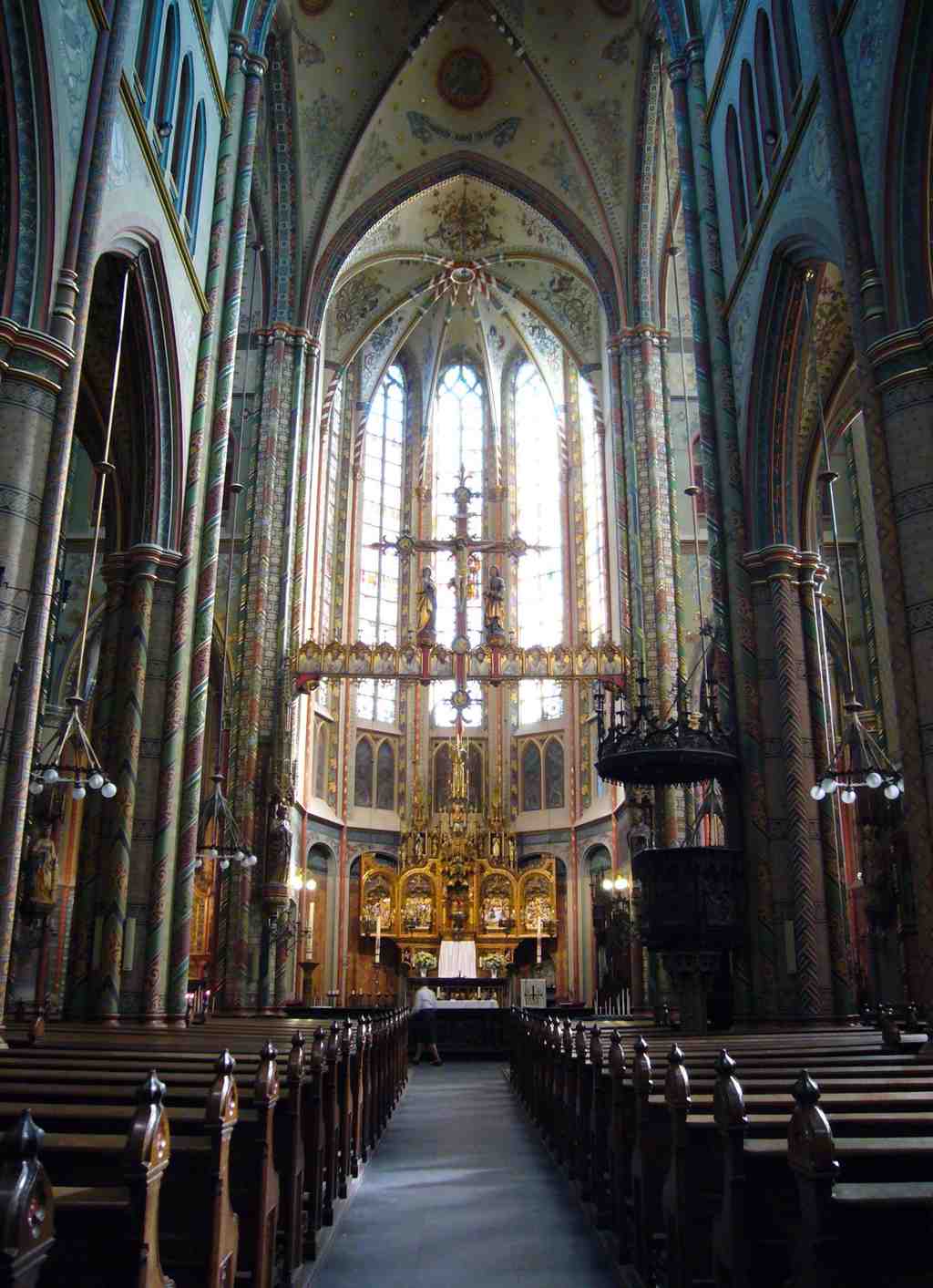
The remarkable look of the church is thanks to the St. Bernulphus Guild, a club of priests and artists who wanted to show how glorious the Dutch Gothic tradition could be. Their motto was basically “If you’re going Gothic, don’t hold back!” So they covered nearly every surface with color, sculpture, and light. There’s woodwork by the talented hand of Friedrich Wilhelm Mengelberg, sparkling glass from Heinrich Geuer, ironwork by Utrecht’s own Brom family, and rainbow-bright polychrome painting by Chrétien Lindsen. Even the tabernacle-sort of like the church’s masterpiece jewelry box for sacred objects-was created especially for this place by Jacob Ydema in 1939.
Strangely enough, while the 1960s and 70s saw many “old-fashioned” churches gutted, remodeled, or even demolished, Saint Willibrord was almost lost too. She was on the chopping block, considered doomed. But-plot twist!-a group of devoted laypeople and the determined Father Winand Kotte stepped in, buying the church and preserving it in all its intricate glory. Thanks to them, this is now one of the best-preserved Neo-Gothic interiors in the Netherlands-a place that transports you straight back to a more mysterious era.
But being a glorious church wasn’t always peaceful. In the 1970s, the Willibrord was the epicenter of what you might call “church drama”-heated debates about how to celebrate Mass, who got to use the building, and the volatile relationship with the larger Archdiocese. At one point, the church lost official recognition and almost lost its standing entirely. But in typical Willibrord fashion, just when it seemed the doors might close forever, a new agreement was struck. The church got a second, then third, then maybe fourth wind-always bouncing back after times of tension.
Fast forward to the 21st century, and yet more twists awaited. In 2014, a theatrical performance took place inside. This wasn’t your ordinary church event-actors portrayed funerals in such detail that it stirred outrage among the congregation. The Apostolate, the group in charge, declared the church “deconsecrated”-closed for worship. The diocese was willing to re-bless it, but only if the drama-literally and figuratively-ended.
After some negotiation, a new spiritual chapter unfolded. The Willibrord Foundation invited the Priestly Fraternity of St. Pius X (FSSPX) to lead traditional Latin Masses, complete with soaring choral music and centuries-old prayers. And, in 2017, the Willibrord officially became their home base. Coincidentally, the city government signed off too-which means you’re standing outside a monument not just to faith, but to resilience.
Today, despite all its ups, downs, and side alleys, Sint-Willibrord church is open for visitors, music, and even the occasional guided tour. Step inside-or just peek through the doors-and you’ll be surrounded by a sea of color, shadow, and shimmering gold. It’s more than a building. It’s a survivor, a storyteller, and-just maybe-the city’s most stubbornly elegant address.
Alright, let’s keep marching. Our next stop is Kerkenkruis, and trust me-you won’t want to miss what’s next!


