
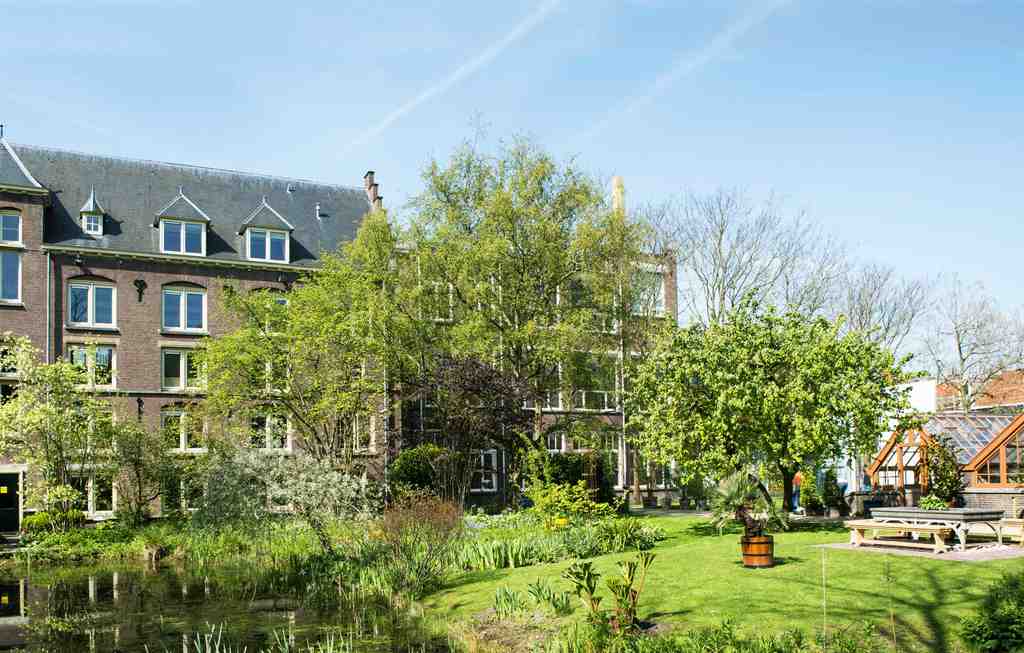
If you’re trying to spot the Oude Hortus, look for a peaceful garden oasis with lush green trees, old glasshouses, colorful flower beds, and a classic brick building in the background-it sits right between the Lange Nieuwstraat and the Nieuwegracht, with wooden benches and ponds that hint at its botanical past.
Take a deep breath, because you’ve just stepped into a secret patchwork of nature and history right here in the city-the Oude Hortus! Just imagine yourself back in the bustling 1600s. The year is 1639, the University of Utrecht is still a toddler, and the city council has an odd but brilliant idea: let’s turn a city fortress into a garden full of healing plants to train new doctors. The first scientific gardener, Henricus Regius, was so proud of his “hortus medicus” that he made a giant garden catalog, listing nearly 700 types of herbs. Who knew scientists had time for scrapbooking?
Now fast forward to the 1700s, when things go from earthy herb garden to blooming botanic beauty. The garden moves to its current spot, tucked between Lange Nieuwstraat and Nieuwegracht, and gets snazzy new neighbors: a grand house called “De Roos,” and-because botanists are always thinking ahead-two fancy orangeries, built for their precious potted plants and tropical friends. One of those buildings still stands, and if the sun is shining just right, you might see a flash of orange as someone sneaks out a tiny citrus tree for some fresh air. Oh, and look around-the grand old Japanese ginkgo tree? That’s possibly the oldest one you’ll find in all of Europe! You might say it’s “leafing” through history.
But gardens grow with the times, don’t they? By the 1800s, the place is prouder than ever, designed to look like a little slice of the English countryside. Thanks to Professor Miquel (a man with plant hair, probably), the central garden now rolls with gentle lawns and meandering paths-just like a miniature park for wandering poets. You’d find scientists quietly collecting leaves, then suddenly arguing over the best way to sort plants. (Botanists have plant drama, too. Try not to leaf them out.)
As the 1900s roll in, times-and temperatures-are changing. The gardeners build impressive new greenhouses, so they can fiddle with the climate and get even pickier about where their plants come from. Picture scientists running from a hot, damp hothouse to a chilly alpine corner, all in the same garden. That must have made for some pretty wild science experiments-and maybe some foggy glasses.
Now, don’t get too relaxed, because change is always just around the leafy bend. By the 1920s, the university’s botanical collection moves to Baarn and then to the edge of Utrecht, and the old garden here is almost forgotten, nearly turned into a parking lot. But the neighborhood rallies like heroes in a gardening tale, and in the 1990s, local friends, volunteers, and even the Rotary Club save the Oude Hortus from vanishing. You can thank them for all the flowers and shady spots you’re enjoying now.
The garden isn’t just a stroll down memory lane, though-it’s alive with stories. Throughout the year, you’ll find guided walks, school trips, and curious explorers peeking into corners once reserved for world-famous botanists, like Carl Linnaeus, who visited back in the 1700s. Maybe you’ll catch a whiff of something spicy from the cottagetuin (that’s fancy Dutch for “alpine garden”), or a breeze rolling through the grass where students used to study the secret life of roots.
And if you’re feeling peckish, pop into the museum café in the old zaadhuis, or seed house, recently restored and renamed Ginkgo. It’s the perfect spot to toast to plant power with a cup of coffee. So as you wander through the Oude Hortus, remember: you’re walking through 350 years of leafy learning, science, close escapes from extinction, and blooming good luck. Not a bad place to let your thoughts grow wild for a moment, right?


