
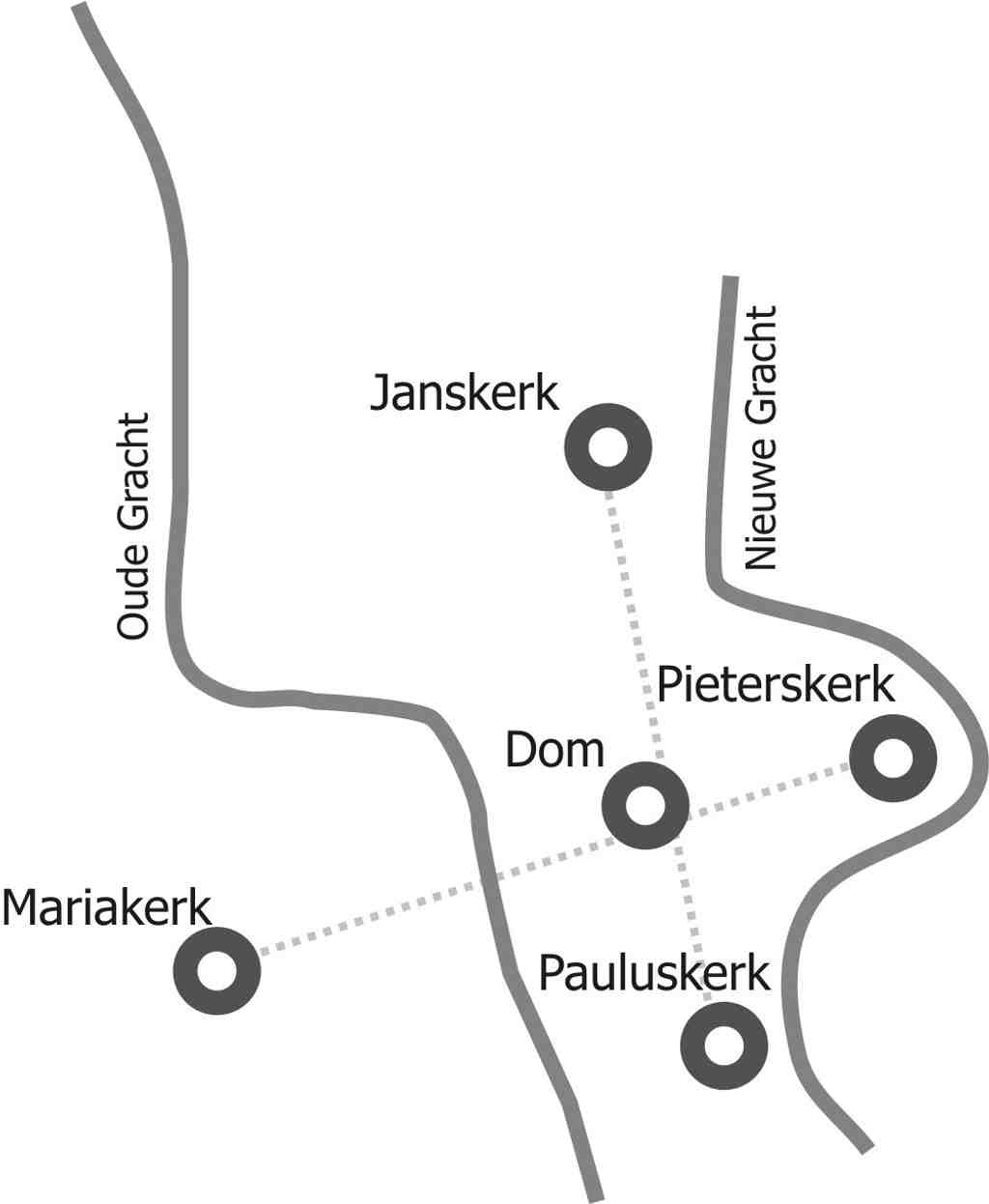
To spot the Kerkenkruis, look for a map-like diagram with five large dots arranged in the shape of a cross, each labeled with church names such as Dom, Janskerk, Pieterskerk, Pauluskerk, and Mariakerk-just picture these points as if they’re dotted across a treasure map.
Now, as you stand here, let your imagination transport you almost a thousand years into the past, when the air around Utrecht buzzed with church bells and the click-clack of wooden carts. The “Kerkenkruis” you’re gazing at isn’t a building or statue-it's a hidden story on the very streets beneath your feet. Some say Emperor Henry III, a medieval ruler with more ambition than a cat chasing two mice, dreamed it all up. After his father, Emperor Conrad II, died right here in Utrecht in 1039, Henry wanted to honor him with something astounding-a tribute of stone, faith, and geometry.
Legend has it, he imagined a cross of churches, five in all, with the mighty Dom at the centre, a place that would hold not just prayers, but his father's mortal remains. Bishop Bernold, something of a local hero and master planner, took this wild vision and got to work. Picture dusty builders and tired stonemasons sweating over blocks of stone to raise the Pieterskerk in 1039, the Janskerk in 1042, and Paulo’s Abbey in 1050. The Mariakerk took a little longer-everyone knows good things need time to rise, just like Utrecht’s famous bread.
If you walk around the city with a bird’s-eye view, you’d spot the Dom in the middle. Each of the other four churches sits at a corner, joining in crisscrossed glory: Pieterskerk, Janskerk, Pauluskerk, and Mariakerk. But here’s the mystery: Was this cross really planned, or just a happy accident of medieval city planning? The old books don’t say. Some clever folks point out that Utrecht’s rivers and roads might have decided the churches’ spots more than any emperor’s grand idea.
Still, it’s fun to wonder how these churches lined up so neatly-the kind of secret puzzle that would make any treasure hunter’s heart race. Today, only three of the original five still stand, while the others linger as scattered ruins and ancient cloisters, hiding in plain sight. The story of Utrecht’s Kerkenkruis is a blend of fact and fable, honor and mystery-almost as if the city itself is winking and daring you to connect the dots. So, if you feel a tiny shiver run up your spine, don’t worry; it’s just the past leaning in to whisper, “Can you crack the code?”


