
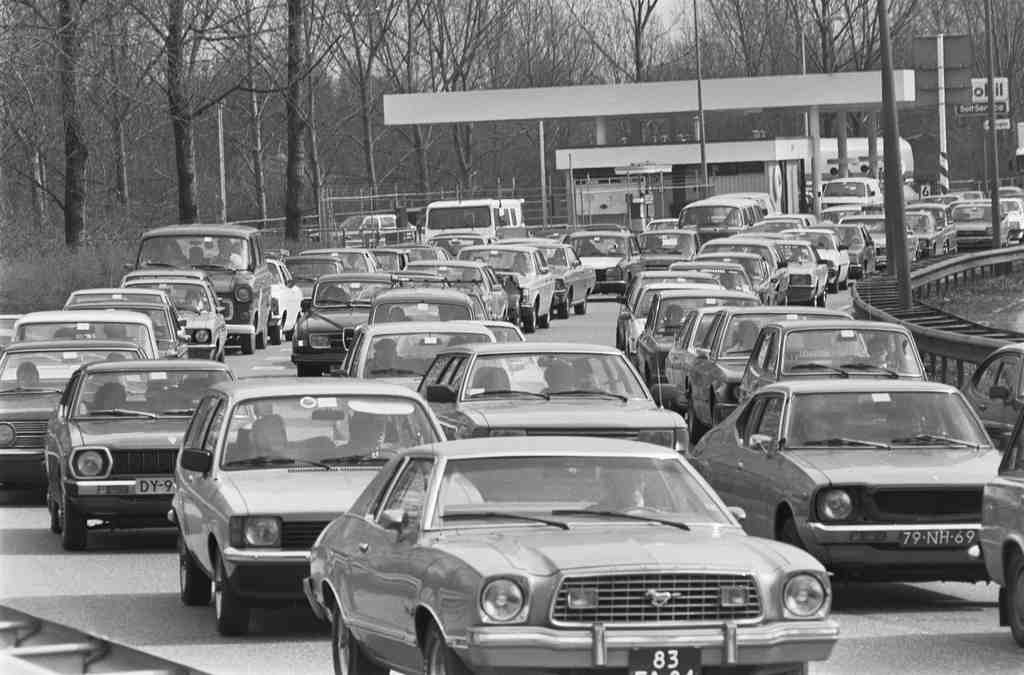
In front of you, Gooiseweg stretches out as a wide and straight road lined with trees, often filled with a steady stream of traffic-just look ahead for the broad lanes bustling with cars and the clear view of a roadway cutting between the trees.
Now, take a deep breath and imagine yourself back in time, standing where you are now, with the roar of engines and the smell of petrol filling the air. Gooiseweg wasn't always this major artery through Amsterdam-Oost. Picture the 1960s-massive clouds of exhaust, car horns blaring, and an endless river of boxy cars crawling across what would become one of Amsterdam’s most important city routes.
Originally, Gooiseweg was a dream of endless motion. Opened in 1960, it connected Amstelstation to Gaasperdam and was built for speed, with its overpasses and broad lanes-though cyclists still had their own paths along the sides for a peaceful ride. But the real adventure began when the planners dreamed even bigger: they wanted the road to soar beyond Amsterdam, all the way to “Gooistad.” The only problem? The road came to a screeching halt at the A9, as if it had hit invisible traffic lights. Plans to bridge the gap-literally-never came to pass, and those grand sandbanks you might spot along Langbroekdreef and Valburgdreef are silent reminders of roads never built.
But Gooiseweg wasn’t always so straight and smooth. Let’s rewind to the age of the Gooisehulpweg, the ‘help road’ of the late 1960s. Due to political squabbles-neither Diemen nor Ouder-Amstel wanted to foot the bill for a road mainly serving Amsterdam-the first version of Gooiseweg was more like a wild ride at a fairground. The road twisted, turned, and snaked through the muddy fields with ridiculous serpentines, forcing drivers into comical slow slaloms as they bounced over poorly paved patches. Locals joked you needed a good sense of direction and a sturdy back to survive the Gooisehulpweg rush hour.
It took until the late 1980s-long after Amsterdam’s metro became a fixture-before the permanent, polished version of Gooiseweg replaced that rattling snake of a road. And while traffic jams were once as dependable as the sunrise, the road finally let drivers zip in and out of the city with ease. The noisy Gooisehulpweg disappeared, replaced by the whisper of modern car tires humming on smooth asphalt.
So, the next time you’re gliding-or, let’s be real, stuck-in traffic here, just remember: you’re rolling over layers of history, plans, and a little bit of chaos that helped shape today’s Gooiseweg. Not bad for a stretch of road with such a bumpy past, right?


