
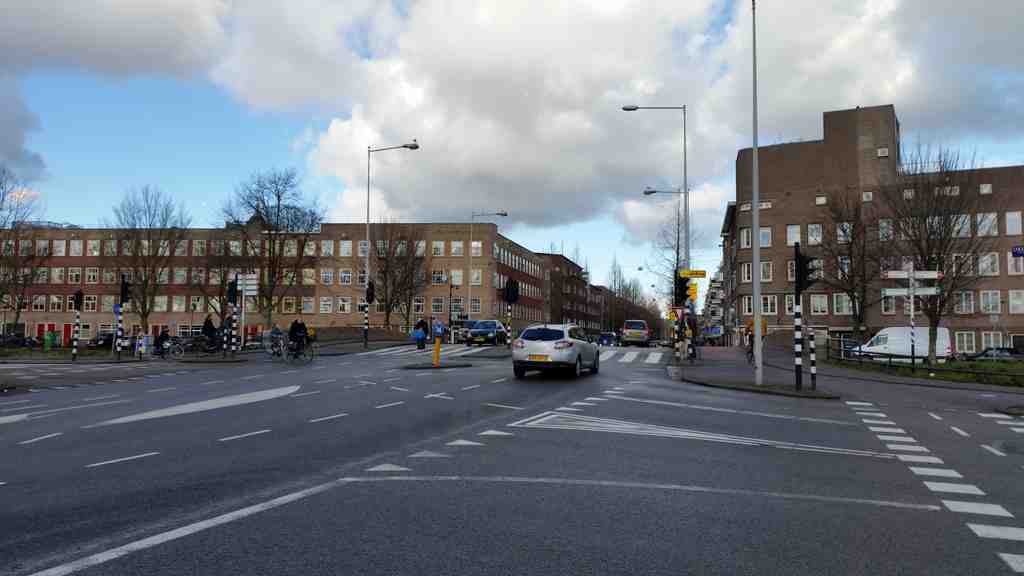
Just ahead, look for a wide bridge made of reddish bricks with slightly slanted balustrades and neat granite blocks-a steady stream of cars, buses, and cyclists is your clue that you’ve found the Hartman Bridge right at the crossroads.
Alright, welcome to the Hartman Bridge! You’re standing on a spot where angry neighbors, city debates, and a touch of Amsterdam School style all collided. Picture the year: it’s the late 1920s, jazz music is just hitting the radios, and the folks living here on Celebesstraat are not amused-rumor has it the city wants to plop down a rickety wooden emergency bridge, but the neighbors rally, stomping their feet until the council agrees to a real, solid bridge lined up just right with their street. The discussions drag on until 1932 (bureaucracy hasn’t changed much, has it?), when the city finally brings in the famous Piet Kramer. He wasn’t one to cut corners, and he designs this bridge gleaming with Amsterdam School touches: lots of brick, artful granite slabs, and quirky sculpted details. If you squint, you can spot “Anno 1935” carved in the granite-a subtle shout-out to the year of completion, so this bridge never has to show its ID at parties.
When it first opened, this was quite the grand entrance to the city-25 meters wide, two massive sidewalks on either side, shined up in brick and stone, proudly connecting the buzz of Indische Buurt with the greener sprawl of Watergraafsmeer. Below your feet, a forest of wooden piles supports the whole weight, holding off Amsterdam’s famous soggy soil.
And you know what? For decades, it was just called “Bridge 190.” It wasn’t until 2007, after an emotional campaign, that it got its name-the Hartmanbrug, honoring André Hartman, a beloved local cigar shop owner. After tragedy struck, his wife kept his memory alive, staying behind the counter until 2015. She herself unveiled the bridge’s new name, giving these old bricks a heartwarming, if bittersweet, story to tell. And every day, buses 40 and 65 rumble over, perhaps not realizing they’re rolling over history with every pass. Keep your eyes peeled-there’s more history lurking beneath each stone than you might guess!


