
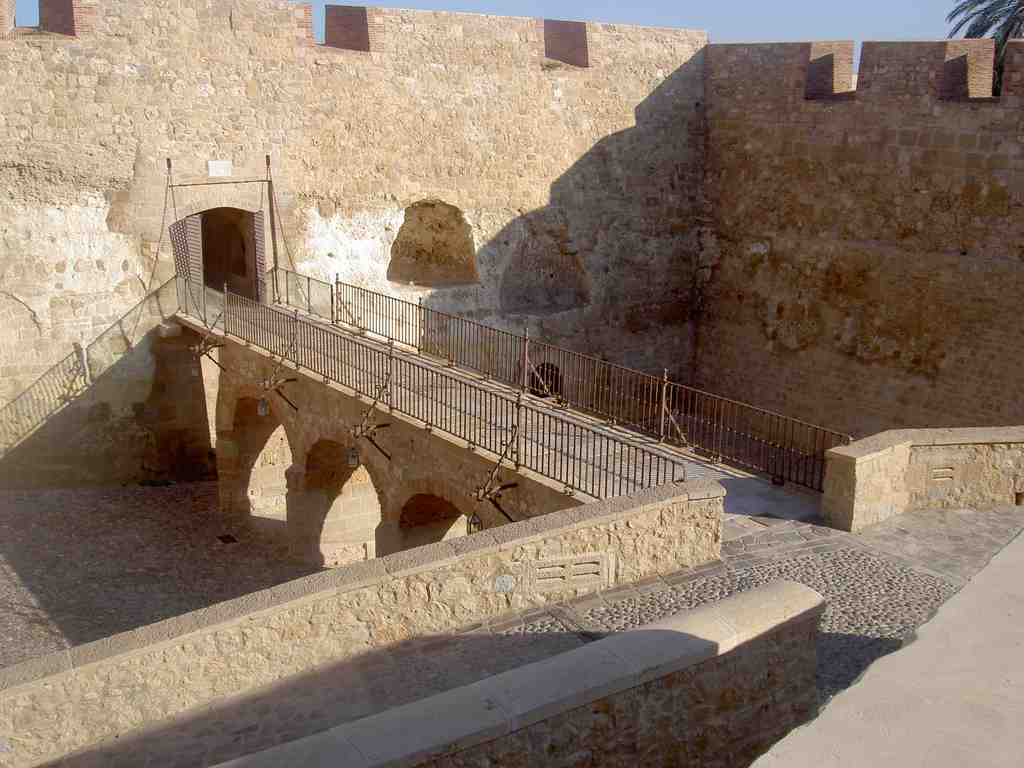
Right in front of you is a striking scene from the past-look for tall, sandy-colored stone walls crowned with battlements, and an old drawbridge stretching over a dry moat. The walls are thick, weathered by centuries, with arched openings and shadows dancing across the cobbled ground. That bridge, with its iron railings, looks ready for an old-fashioned standoff. It’s hard to miss-just follow the line of stonework and your eyes should land right on the heart of the story.
Imagine it’s 1564. The air in Melilla is hot and tense, a scent of dust and patience fills the air. Out beyond those walls, where you’re standing now, whispers travel quickly. News has come that a “morabito”-let’s call him a sort of magician or holy man-named Mohamed ben al-Lal has arrived from the region of Guelaya. People are excited and a little nervous, because Mohamed claims he can help his followers take Melilla, not with swords or cannons, but with magic. He’s promised to put the Spanish soldiers to sleep, as easy as tucking in a child, so long as no one steps on the crops, everyone praises Allah loudly, and-this is key-no one dares touch a firearm.
Now, close your eyes for a second and feel that anticipation in your chest. It’s midday, the sun throws harsh shadows, and a crowd gathers outside, hungry for glory and convinced by Mohamed’s confidence. But-plot twist! The Spanish governor, Pedro Venegas de Córdoba, is no fool. He’s got a spy in the crowd and knows what’s coming. The guards inside these very walls are lying still, faking slumber like overgrown cats napping in a sunbeam.
When the invaders tiptoe in and try to grab their weapons-surprise! Suddenly, chaos erupts, the air cracks with shouting and struggle, and the plan falls apart faster than cheap magic tricks. Most attackers get away, even the famous morabito himself, who later blames the failure on someone being too hasty and breaking his “spell.” He’s so convincing, people try it again two months later with even more followers. This time, the defenders are ready-bridges up, doors locked. Six hundred attackers get trapped inside the fort’s second wall, surrounded by the boom of 23 cannons and fierce soldiers. Only sixty prisoners make it out, sent away on Spanish galleys. And as for Mohamed ben al-Lal? He vanishes into legend.
Standing here, you can just imagine the shouts, the hopes, and the letdowns echoing off these stones, the dust swirling up from quick footsteps, and that odd blend of belief and bravado that can sometimes change the course of history-or at least make it pretty entertaining. Not every spell works out, and sometimes the biggest drama is right under your feet, on this very spot.




