
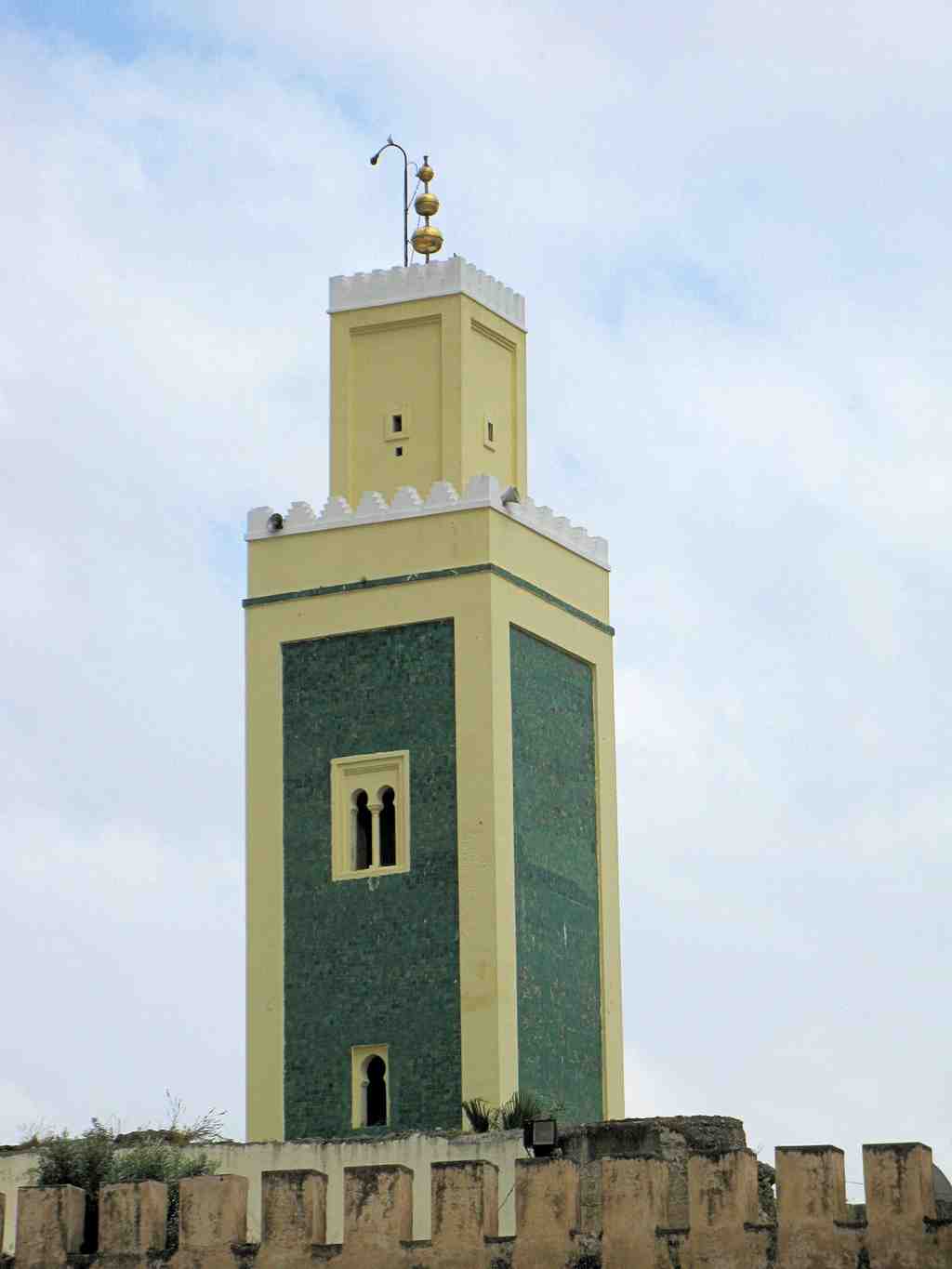
To spot the Lalla Aouda Mosque, just look for a tall, elegant minaret coated in green tiles rising above pale ramparts-you really can’t miss it standing proudly near the eastern edge of Place Lalla Aouda.
Now, let’s step back in time-imagine the year is 1276, and the air is thick with the scent of orange blossoms from the nearby courtyards. The Marinid sultan Abu Yusuf Ya'qub has just commanded the construction of a mighty kasbah and, at its heart, a grand mosque. It was then known simply as the Mosque of the Kasbah-nothing too fancy with names yet, just sturdy sandstone walls and the echo of prayers.
But as centuries rolled by, the mosque got caught up in a whirlwind of history, intrigue, and royal ambition. Enter Moulay Isma'il, the Alaouite sultan with big dreams and a mustache even bigger, who swept into Meknes in the late seventeenth century. Determined to turn the city into his imperial capital, he expanded this mosque into a jewel of his palace, with construction hammering and chiseling day and night between 1672 and 1678. He wanted a place fit for a king-a royal mosque right next to the palace, where he could breeze in through a private passage straight from his throne to prayers. Talk about luxury real estate!
And that’s when the mosque’s story gets even more interesting-it changes names and legends begin to swirl. The locals start calling it the Mosque of Lalla Aouda, after Lalla Masuda, a revered saint and mother of the mighty Saadian sultan Ahmad al-Mansur. Was she the real founder? Or is that just a tale passed down with the wind? Sometimes history leaves us with a little mystery-after all, what’s a grand old mosque without a dash of legend?
As you stand before the northwest entrance, step up to the gates: one is plain, with a classic horseshoe arch, but look to the left for the fancy one, sparkling with colorful zellij tilework-if the sun is right, it’ll glint in your eyes. The inscription above tells us this gateway was finished at the hands of Moulay Isma'il himself in 1679. Step through and you’d have found yourself in a spacious courtyard-part mosque, part ceremonial square-alive with parades when sultans were in town, but forbidden to almost everyone else. Orange trees now line this courtyard, swaying gently as local children dart past and pigeons coo from the ramparts.
Beyond, the mosque is a true maze of passages-one way leads to a hall for ablutions, complete with zellij paving, tiny horseshoe archways to quiet latrines, and even a chamber for the timekeeper, who had one job: making sure prayers started at just the right moment. (Imagine the stress of waking up late for that role!)
Inside, the main prayer hall unfolds in grand style: broad, sturdy columns topped with marble, arches upon arches, and a T-shaped nave layout, directing everyone’s gaze toward the mihrab, beautifully carved with stucco and flanked by marble engaged columns. Here, the sultan would slip in through his private passage, right beside the imam, to join the prayers. Just hope people didn’t mistake him for a latecomer.
But there’s more-once, a majestic minbar (the preacher’s pulpit) and an intricate wooden maqsura (the sultan’s private screen) graced this mosque. These are now preserved in the Dar Jamai Museum, so even though the halls are quiet, you’re surrounded by echoes of ceremony, devotion, and royal ambition.
So here you stand, at the threshold of a mosque that has seen centuries of empires, saints, intrigue, and faithful devotion-a place where the stones themselves might just be tempted to whisper their secrets if you lean close enough. Fancy a listen?


