
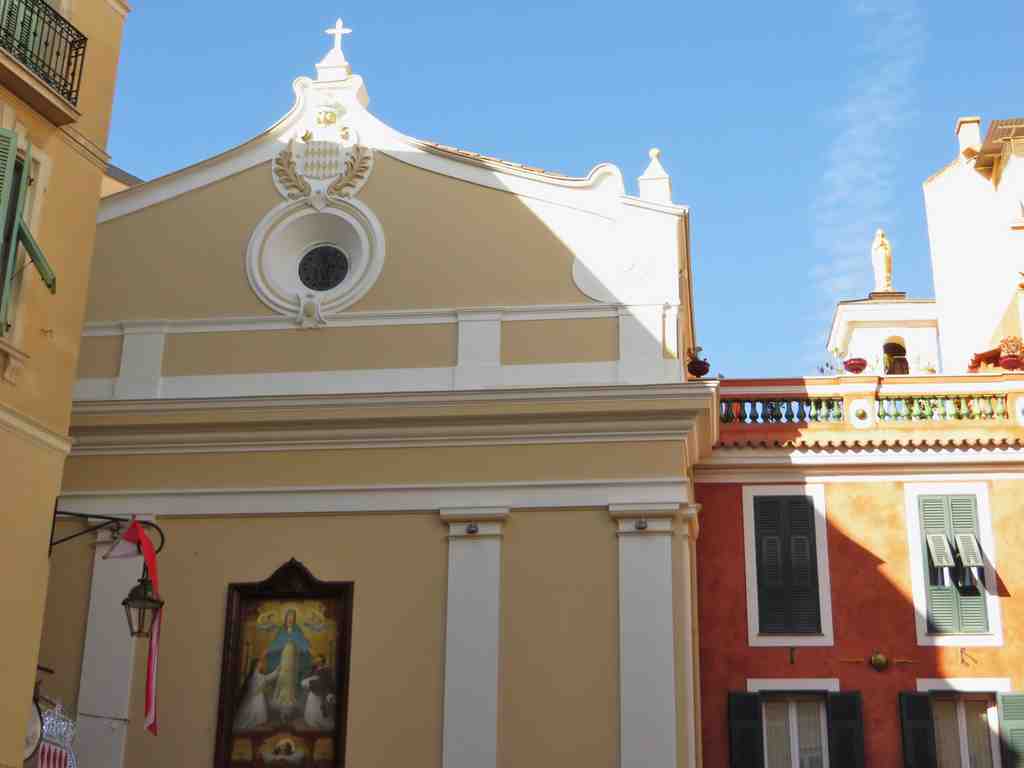
You’re almost there. Look ahead for a small, elegant church with creamy yellow walls, simple white trim, and a striking, arched wooden entrance. The Chapel of Mercy, or Chapelle de la Miséricorde, is perched right on the historic Rock of Monaco. It’s easy to spot - just off the cobblestone lane, its facade is welcoming but quietly grand, embraced by a wrought iron railing and gentle stone steps. If you glance upward, you’ll see a gently sloping roof and a delicate bell gable that stands out against Monaco’s sky.
Now, as you’re standing in front of the chapel, imagine stepping back in time almost four hundred years. It’s 1639, and the air smells of candle wax and old wood. The chapel has just been blessed by Prince Honoré II himself, creating a special home for the Brotherhood of the Black Penitents. These were solemn men dressed in black robes, devoted to acts of charity and mercy. Years later, their white-robed counterparts would join, merging black and white to create the Brotherhood of Mercy-today’s guardian of the chapel.
The building is a treasure of the baroque era - just stand still and listen for a moment. Try to feel the echo of prayers whispered under those golden ceilings, surrounded by sculptures and colorful paintings. Every inch is drenched in carved marble and shining gold leaf. Imagine being here on a misty spring evening when the brotherhood would gather in cloaks and process through the narrow streets, carrying heavy whispers of secrets and hope. The most precious piece inside is a wooden Christ, sculpted by François-Joseph Bosio, a local artist who would go on to become the favorite sculptor of Emperor Napoleon himself. He carved his masterpiece from a single block of wood, pouring all his skill and faith into every detail - his fingertips still remembered in the smooth texture and gentle lines.
In 2012, the chapel was restored with great care. Picture the day the work was completed - priests, townsfolk, even Prince Albert II gathered for a blessing by Cardinal Dominik Duka. The old stones gleamed like new, humming with the excitement of renewal.
For nearly four centuries, every Good Friday, a solemn procession sets out from this very spot. Imagine the mournful bells, the flicker of torches, and the slow, rhythmic footsteps as the people of Monaco recreate the ancient procession of the Dead Christ - a tradition lost for many years and now returned to life.
You stand here at the threshold not just of a chapel, but of centuries of stories, devotion, and art. When you’re ready, we’ll continue to the next chapter of Monaco’s living history.


