
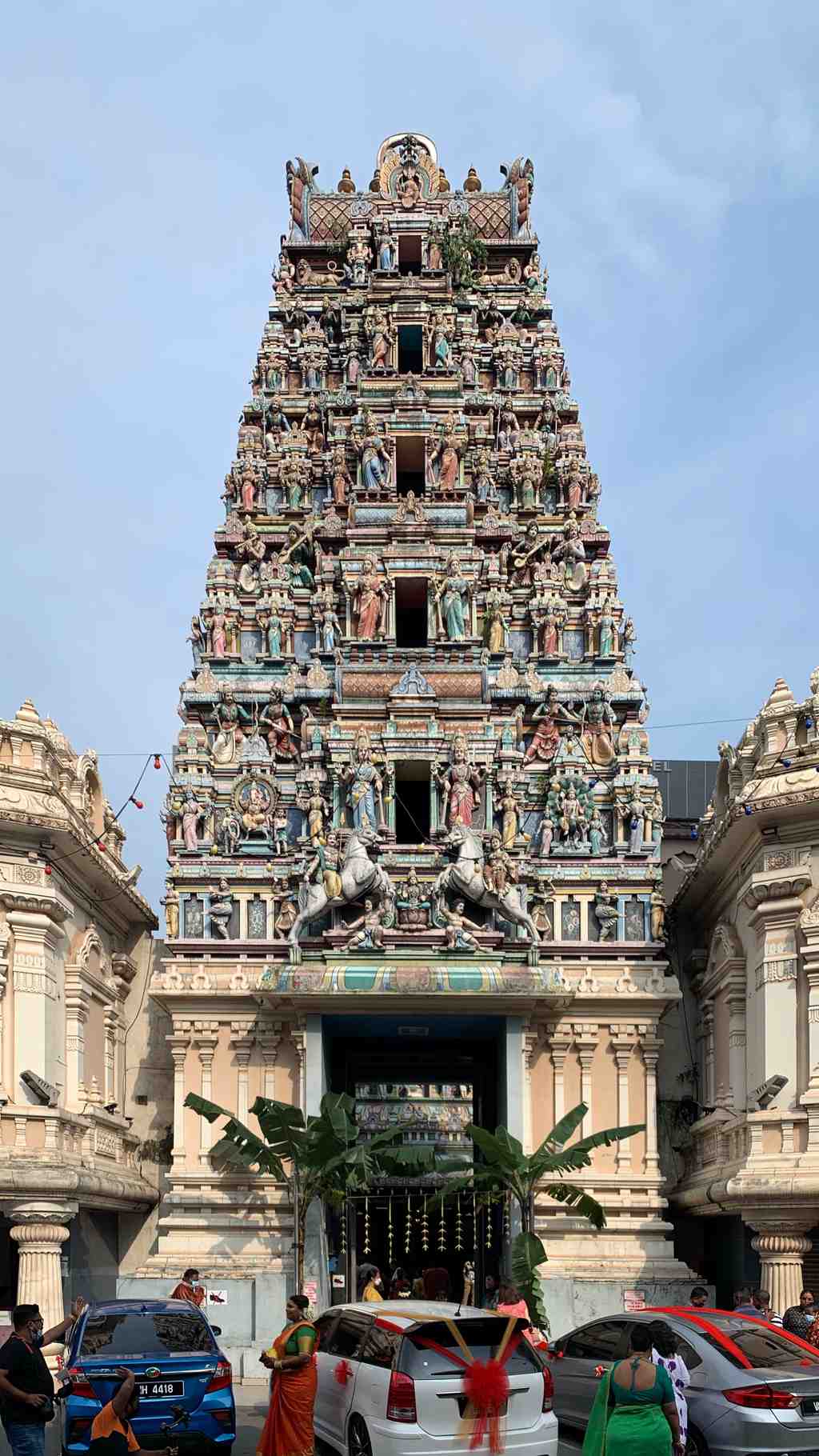
To spot the Sri Mahamariamman Temple, look ahead for a tall, colorful tower covered in dozens of detailed sculptures of Hindu deities-this ornate structure stands out against its neighbors and rises above the street with five intricate tiers.
Now, let’s set the scene: You’re standing right at the threshold of a temple that’s not just the oldest Hindu temple in Kuala Lumpur, but also one of its most vibrant storytellers. Picture yourself in 1873-before the hustle and bustle of today’s city, when an Indian immigrant named K. Thamboosamy Pillai built this temple as a private shrine for his family. But shh-don’t worry, you won’t need a VIP pass to get inside; in the late 1920s, the Pillai family generously opened the temple to everyone, transforming it into a sanctuary for countless immigrants searching for comfort and community so far from home.
As you gaze up at that spectacular tower, known as the gopuram, don’t bother counting all the statues-unless you have a lot of time and a ladder! There are exactly 228 brightly painted idols crowded onto that 23-meter-tall gateway, each one sculpted by expert hands brought all the way from Tamil Nadu, India. This “Raja Gopuram” was finished in 1972, and it’s designed in classic South Indian style. At its base you might almost expect to hear the murmur of stories, because each figure carved into the layers tells a myth, a hope, or a blessing.
Move your eyes from street level right up to the top, and you’re looking at the temple’s “feet”-because, believe it or not, the entire temple is shaped like a giant human body lying on its back, with the gopuram as the toes, and the sanctum-the “garbagraham”-at the far end serving as the “head.” I know, it’s a yoga pose that would impress anyone. The sanctum is the most sacred spot inside, home to the powerful goddess Mariamman herself, who’s there to watch over her devotees, especially those far from their homeland. Mariamman is considered a fierce protector, a force for good, and Mother Earth herself-if Malaysia ever gets monster weather, you know who the locals are praying to!
Step a bit closer and imagine the sound of temple bells and the fragrance of incense drifting on the breeze. The main prayer hall is right inside, under ceilings rich with ornate designs. Three golden onion-shaped domes mark the location of the main shrines, visible even from outside. The left shrine is dedicated to Pillaiyar, remover of obstacles-hopefully, he’ll help you find your way if you ever get lost in KL traffic! Lord Muruga, his brother, stands guard on the right.
Every year, especially during Deepavali, the temple comes alive with crowds of devotees-picture families in brilliant saris, children clutching flowers, and priests chanting prayers to bring blessings. But if you want real spectacle, come during Thaipusam. At the break of dawn, thousands pack the temple to send off a majestic silver chariot. This 6.5-meter-tall chariot, made with 350 kilograms of silver and 240 bells, carries Lord Muruga and his consorts in a grand procession all the way to the Batu Caves. Before the silver version debuted in 1983, a wooden chariot (built in 1930) had the honor-though it probably creaked a bit more.
Behind the main structure, don’t miss the new addition: Bangunan Mariamman, a six-story building opened after a 40-year wait, linked to temple life and helping with the overflow during massive festivals. Inside, there’s space for meetings, celebrations, and even (gasp!) basement parking-because even saints have to worry about where to put their cars in Kuala Lumpur.
Through years of change-from its first humble attap hut by the railway tracks, to the brick shrine, and finally the lavish monument you see now-the Sri Mahamariamman Temple has stood as a place of hope, memory, and resilience. Managed by a dedicated board, it also guides the spiritual calendar for Malaysian Hindus.
If you listen closely past the city sounds, you might just catch the echo of prayers, or perhaps the rustle of saris as a festival begins. And remember: behind all the colors and carvings is a legacy of faith, migration, and community-a living, breathing heart in the city that never shuts its doors to anyone who comes in search of a blessing… or just a little beauty.
Seeking more information about the architecture, the deity or the administration? Ask away in the chat section and I'll fill you in.




