
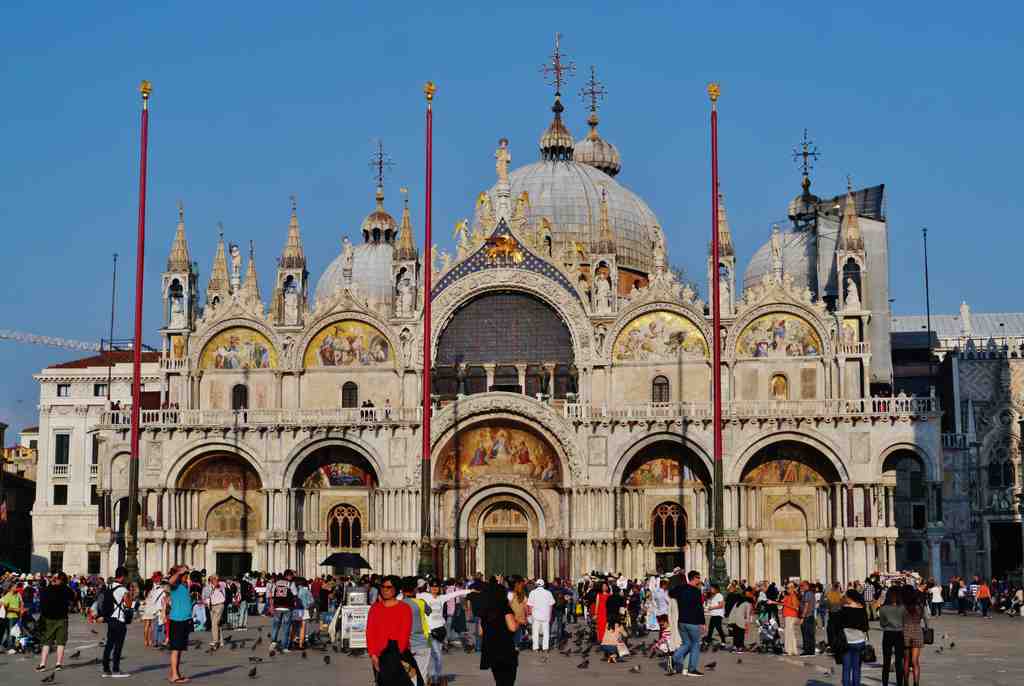
Venice Audio Tour: A Symphony of Art, History, and Splendor
A city of masked secrets, Venice has hidden its true self behind stone lacework and music that once drifted from shadowed halls. Set your own pace on this self-guided audio tour to uncover the untold stories etched into the very stones that others simply walk past. What fate befell the secret prisoners led across the Bridge of Sighs? Why were young prodigies at the Ospedale della Pietà forced to perform behind iron grills, their faces never seen by their adoring audiences? And what long-lost alliance was whispered beneath the golden mosaics of Piazza San Marco during a midnight rebellion? Glide from echoing palaces to waterfront mysteries, each step revealing scandal, resilience, and drama tangled through the centuries. Venice transforms before your eyes when you journey through its legends instead of merely crossing its bridges. Ready to follow the melodies and shadows most travelers miss? Begin now and claim Venice’s best-kept secrets for yourself.
Tour preview
About this tour
- scheduleDuration 70–90 minsGo at your own pace
- straighten3.0 km walking routeFollow the guided path
- location_on
- wifi_offWorks offlineDownload once, use anywhere
- all_inclusiveLifetime accessReplay anytime, forever
- location_onStarts at Ospedale della Pietà
Stops on this tour
lock_open 3 free previews · 7 unlock with purchase
Take a look around you! The Ospedale della Pietà isn’t flashy like a palace, but look for a sturdy, rather square building standing along the waterfront. You’ll spot its neat,…Read moreShow less
Take a look around you! The Ospedale della Pietà isn’t flashy like a palace, but look for a sturdy, rather square building standing along the waterfront. You’ll spot its neat, symmetrical face, rows of rectangular windows, and an entrance that seems to quietly invite you inside, promising plenty of stories within its old walls. Now, I want you to imagine the Venice of centuries past-gondolas creaking on the canal, the salty breeze carrying hints of pastry and church incense, and laughter echoing as Carnival masks swept by. Right here, you’d have seen the Ospedale della Pietà, a haven for little ones with nowhere else to go. Started by a group of determined nuns, this place opened its arms to orphans and abandoned girls, offering food, shelter, education, and-most famously-music. Think of this as more than just an orphanage. In the 17th and 18th centuries, the Pietà became a musical powerhouse! Picture rows and rows of girls, taught by legendary masters like Antonio Vivaldi, filling the halls with music that made even traveling nobles stop and listen. But here’s a twist for you: their concerts were top-secret! Ladies in fine dresses and powdered wigs would come to listen, but the musicians performed hidden behind a metal grill, their faces unseen, their talent burning through the shadows. It was the world’s fanciest and most mysterious game of musical hide and seek. And it wasn’t only music-luthiers, the superhero violin makers of their time, bustled in and out, keeping a whole orchestra’s worth of instruments in tune. Imagine how busy they were! Strings snapping, cellos squeaking, someone accidentally sitting on a viola… let’s hope not, but you get the idea. Girls here learned to play, sing, and sometimes dazzled the greatest visitors of Europe. Many never left, though if they were lucky, they might earn a villa holiday or a handsome dowry and a good match. The Pietà was a world unto itself, full of dreams, secrets, and the echoes of centuries-old music. It’s almost enough to make you want to peek inside, isn’t it? But for now, just stand and let the ghosts of music drift out to meet you on the wind. Shall we waltz along to the next stop?
Open dedicated page →Take a look ahead-see that impressive, pale pink and white building with lace-like stonework and the row of pointed arches at street level? That’s the Doge’s Palace, right in…Read moreShow less
Take a look ahead-see that impressive, pale pink and white building with lace-like stonework and the row of pointed arches at street level? That’s the Doge’s Palace, right in front of you. It stands out with its patterned walls and delicate columns, like a gigantic Venetian wedding cake. If you’re facing the lagoon, just look a bit left, and you can’t miss those elegant arcades and the decorative windows up above. Now, as you stand in front of these ancient walls, imagine the hustle and echoing footsteps of guards, government officials, and secretive messengers hurrying inside. This isn’t just any palace-it’s the very heart of old Venice, built in the dramatic Venetian Gothic style. The Doge’s Palace was the seat of power, the Doge’s home, a place for making laws, and yes, even a jail. Talk about multitasking real estate! Step back in time to the year 810. Venice wasn’t all shiny gondolas and glass souvenirs. The Doge, Venice’s top dog-pun absolutely intended-moved the government here to keep an eye on his city. The palace saw fires, fierce citizen revolts, and more rebuilds than your average fixer-upper. Over centuries, it was shaped and reshaped, both by disaster and design, using strong Istrian stone at the base and decorated with rich herringbone brick. Even today, you can spot hints of long-lost Byzantine details at ground level if you peer closely. But the palace didn’t just get by on its good looks. In its golden days, its grand halls rang with heated debates, secrets, betrayals, and the steady scratching of quills-not to mention the small problem of keeping hundreds of Great Council members happy! Around the 1400s, a special addition was built for law courts, and ornate arcades were added so the movers and shakers could see and be seen. On quiet nights, the wind from the lagoon whistles through those arches with secrets of its own. Of course, drama followed the palace like a gondolier chasing a tip. Huge fires broke out time and again. Renaissance architects even snuck in a few new tricks-but the city kept restoring its palace in stylish Gothic. Even the famous Bridge of Sighs, linking the palace to its prison, was added for dramatic effect (and dramatic sighs). Over the centuries, the palace was home to powerful rulers, frightened prisoners, and more than a few schemers. Can you imagine the Doge glancing out of these windows, cloaked in velvet, making decisions that would affect the fate of entire nations-or at least, the flavor of Venice’s next big party? Today, the Doge’s Palace is a living museum, inviting you to step behind the scenes of Venice’s past. Talk about history with a view! So, snap a photo, take in the details, and maybe-just maybe-picture yourself as a Venetian powerbroker, plotting your next move in the shade of those glorious arches.
Open dedicated page →Take a look straight ahead! That breathtaking open space before you, framed by elegant buildings and a tall red-brick bell tower, is Piazza San Marco-St Mark’s Square. To spot it,…Read moreShow less
Take a look straight ahead! That breathtaking open space before you, framed by elegant buildings and a tall red-brick bell tower, is Piazza San Marco-St Mark’s Square. To spot it, look for the broad expanse of smooth stone paving, with rows of graceful arches on either side. The magnificent basilica, crowned in domes and golden mosaics, will catch your eye at the eastern end, flanked by the soaring Campanile-the square’s iconic clocktower. Welcome to the heart of Venice! If Venice had a living room, this would be it. Locals just call it “la Piazza,” and you’ll see why-this isn’t just a square, it’s the gathering place for Venetians and visitors alike, buzzing with stories and secrets. Napoleon once called it “the drawing room of Europe.” Maybe he was just jealous his own living room wasn’t as fancy. Face the grand basilica ahead of you-that’s St. Mark’s Basilica, glittering with ancient mosaics and watched over by four bronze horses trotting nowhere fast. Legend says peace with Genoa was impossible as long as those horses stood free, and when Napoleon swept through, he couldn’t resist taking them for himself. Don’t worry, we got them back-Venetians don’t let their treasures gallop off for long! Just to your right, spot the huge blue and gold clock tower, the Torre dell’Orologio. It’s been picking off tourists who run late for centuries-just kidding, but if you hear it chime, you’re hearing echoes from 1499! Scan the square’s arcades-Peek in at the shops and historic cafes, where writers and revolutionaries sipped their coffee and planned big things. Caffè Quadri was the spot for the Austrians, while rebellious Venetians crossed to Caffè Florian and plotted with their cappuccinos. As you walk the Piazza, imagine balls and celebrations, political intrigues, and romantic meetings under the soft glow of lanterns. Every stone here could probably tell you a juicy story-if only you spoke Venetian pigeon! Soak it all in, and maybe twirl in the middle for that classic Venice feeling. Ready to move on? Let me know when you’re up for more magic. Want to explore the description, description of the piazzetta or the pavement in more depth? Join me in the chat section for a detailed discussion.
Open dedicated page →

Show 7 more stopsShow fewer stopsexpand_moreexpand_less
Take a look ahead-if you're seeing a tower that looks like it’s standing tall, proud, and just a little bit like it was plucked out of a Renaissance fairy tale, then…Read moreShow less
Take a look ahead-if you're seeing a tower that looks like it’s standing tall, proud, and just a little bit like it was plucked out of a Renaissance fairy tale, then congratulations! You’ve found St Mark’s Campanile. This giant brick tower is pretty hard to miss; with its red brick body soaring upward and a glittering golden figure glinting on the very tip, it stands alone right in the square, just a few steps from the beautiful St Mark’s Basilica. Picture this: The year is 900, and Venice is no peaceful tourist spot. Pirates and invaders are popping up more often than pigeons at your feet. The city leaders, faced with trouble on the horizon-or in their case, on the sea-build a massive watchtower right here where you’re standing. That’s how St Mark’s Campanile began. Imagine those anxious nights, the air heavy with fog and fear, the city’s defenders peering out into the dark sea, straining their eyes for enemy ships. At almost 99 meters tall, if you squint, the top almost seems to touch the sky-well, unless you’re a seagull, then it’s just another obstacle. For centuries, the Campanile did double duty as a lighthouse for Venetian sailors and as Venice’s original lookout for invaders. The bells up top rang out the rhythm of life here: calling people to work, to worship, for government meetings, even-gulp!-for public executions. The bells weren’t just pretty music; sometimes, they delivered ear-splitting news no one wanted to hear. Now look up-see that golden figure on the very top? That’s the archangel Gabriel twirling as a weather vane. I always say, if you ever get caught in a sudden rainstorm here, just blame it on Gabriel’s dancing! And if you ever wondered if Venice has a ‘boss’-well, the locals call this tower "el paròn de casa": the master of the house. That’s the kind of confidence you get when you’re the tallest landmark in town and can out-shout all the other bells in the square. So as you stand here, imagine the centuries of excited ship captains, bustling crowds, and maybe a few anxious night watchmen all looking up at “their” tower, keeping an eye out for danger-and ringing out news louder than Venice’s best gossip. And hey, make sure you look out for flying hats on windy days-this tower has a reputation for catching more than just the breeze. Eager to learn more about the historical background, construction or the bells? Simply drop your inquiries in the chat section and I'll provide the details you need.
Open dedicated page →To spot St Mark’s Basilica, look ahead for a building that’s practically wearing a golden crown. The front is loaded with shining mosaics, swirling marble columns, and horses…Read moreShow less
To spot St Mark’s Basilica, look ahead for a building that’s practically wearing a golden crown. The front is loaded with shining mosaics, swirling marble columns, and horses frozen in mid-gallop above the main door-you can’t miss those guys, they’re the only ones around here who never have to worry about parking. The domes rise up like giant scoops of gelato in the sun, edged with little stone spires reaching for the sky. As you approach, listen for the buzz of the crowd and the echo of footsteps on the wide, open square. Now that you’re facing this glittering giant, let’s step back in time. Imagine the eastern end of Saint Mark’s Square, centuries ago, full of merchants, nobles, and-if you squint-maybe a pigeon or two plotting world domination. St Mark’s Basilica is Venice’s beating heart, with roots going all the way back to the 800s. The church really started cooking in 1063, built to show off Venice’s power, pride, and undeniable flair for shiny things. Did you know this basilica wasn’t always for everybody? Before 1807, it was basically the private club for the Doge, Venice’s top dog. He called the shots, and only the fanciest people got to pop in for worship. And inside? Well, the Venetians decided that “plain” just wasn’t their thing-they started slapping marble and gems onto every wall they could find. Columns and sculptures? Many came from their adventures in Constantinople. Pirates would have been impressed-these guys brought back more than just towels from their travels! And then, the domes. Imagine looking up to see over 8,000 square meters of glittering gold mosaics-so sparkly you might need sunnies inside. Some of these mosaics date back almost a thousand years, while others were refreshed by superstar artists like Titian and Tintoretto. It’s the ultimate art gallery where saints and prophets stare down at you 24/7. If walls could talk, these would probably sing-loudly, and possibly in Latin. Oh, and about those legendary bronze horses above the doorway? Spoils of war! The Venetians cheekily “borrowed” them during a crusade, and there’s still a little mystery around exactly how they managed to haul them home. Makes you wonder if the horses plotted a midnight escape while everyone was busy painting the ceilings. Standing here, you’re at the crossroads of empires, faith, and a bit of friendly rivalry. Take a deep breath, and let the gold, marble, and mosaics work their magic. And remember-no matter how much you love your souvenirs, try to leave the ancient horses where they are! To delve deeper into the architecture, mosaics or the administration, simply drop your query in the chat section and I'll provide more information.
Open dedicated page →Right in front of you is the Peggy Guggenheim Collection. If you’re searching for it, just look for the low, long, white stone building hugged by thick green ivy and crowned with…Read moreShow less
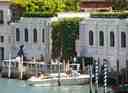
Right in front of you is the Peggy Guggenheim Collection. If you’re searching for it, just look for the low, long, white stone building hugged by thick green ivy and crowned with an impressive rooftop garden. It’s not your average Venetian palace towering above the water-this one feels almost secretive and snug, pressed right up to the Grand Canal with iron-grilled windows and a line of mooring posts at its entrance. You might spot a few visitors relaxing on the terrace, watching gondolas and boats drift by. And don’t forget those blue-and-white striped mooring poles-like candy canes for art lovers! Alright, let’s step into the world of Peggy Guggenheim-a woman who collected modern art like it was going out of style and threw the best avant-garde parties on this very spot! Imagine the gentle lap of the canal below you, the buzz of conversation weaving through the summer air, and a slightly eccentric lady in massive sunglasses picking out a Picasso for her living room. This building, the Palazzo Venier dei Leoni, looks modest for a Venetian palace, right? That’s because, believe it or not, it was never finished! Picture an 18th-century architect running out of money or-maybe-just getting distracted by Venice’s endless parties. So here it sits: low, mysterious, and somewhat unfinished, like a masterpiece with a corner left blank. Peggy Guggenheim bought this place in 1949, turning her Venetian home into one of the most dazzling treasure troves of modern art you’ll ever see. Step inside, and you’ll be nose-to-canvas with works by the giants of Cubism, Surrealism, and Abstract Expressionism. Think Picasso’s brushstrokes so bold you can practically hear him muttering in Spanish, or Jackson Pollock’s paint splatters that tell you art doesn’t always color inside the lines. It’s a visual feast, all thanks to a woman who, legend has it, could spot genius at twenty paces-even if it showed up to dinner with paint in its hair! You’ll see wild shapes and swirling colors from artists like Giorgio de Chirico, Salvador Dalí, and Joan Miró. And don’t miss the sculpture garden-Constantin Brâncuși’s polished bronze shapes seem to hum with creative energy, as if ready to break into a jazz riff at any moment. During the Second World War, Peggy bought up masterpieces in “dizzying succession” while most people were hoarding rations. Quite the shopping spree, right? She even discovered young Jackson Pollock “splattering” away in America and gave him his big break. These days, the museum, now part of the Guggenheim Foundation, attracts nearly 400,000 art lovers a year-making it the most popular site in Venice after the Doge’s Palace. Don’t be surprised if you catch a sudden feeling of excitement as you stand where centuries of creators and collectors have mingled. If only these walls could talk… or better yet, paint. Ready to get lost among masterpieces, brushstrokes, and maybe a few mysterious art ghosts? If the building ever feels oddly quiet, just imagine Peggy herself, waving you in and saying, “Come on, darling-there’s always room for more art!” Intrigued by the collection, building and venice biennale or the management and attendance? Make your way to the chat section and I'll be happy to provide further details.
Open dedicated page →You’re standing right in front of the grand Ca’ Foscari, so give yourself a moment to let your eyes take it all in! Look toward the Grand Canal, and find the tall, dazzling…Read moreShow less
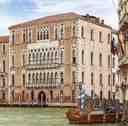
You’re standing right in front of the grand Ca’ Foscari, so give yourself a moment to let your eyes take it all in! Look toward the Grand Canal, and find the tall, dazzling palazzo with elegant arches and rows of windows running across its pale stone face. You’ll notice its Gothic charm-the pointed arches on the windows, the intricate carvings, even a line of delicate quatrefoil patterns sitting like a lacy crown above the columns. If you see stone lions and fancy shields peeking out from the façade, you’re in the right place! The building is perched confidently on the canal’s bend-like Venice itself showing off on the city’s main stage. Now, imagine it’s 1453. The air smells a bit salty from the Grand Canal. Venice is bustling, gondolas gliding by, and noble families are always trying to outdo each other with the biggest and boldest homes. Right here, Francesco Foscari-one of the most powerful Doges-decides to build a palace so grand, so dramatically Venetian, it could outshine even the neighbors. Sorry, Doge next door! He chooses this exact spot so he can be front and center to all the watery action. After all, if you’re Doge, why not go big? And did you know there were once two towers here? Before Ca’ Foscari, this place was called the “House with the Two Towers,” and it hosted kings, diplomats, and guests with big hats. But then, as with any good Venetian soap opera, there was betrayal-Francesco Sforza lost the house after switching sides, and Foscari swooped in, tearing it down, and building anew. That’s one way to handle a bad Airbnb review! Above those beautiful windows, look for the marble frieze-a helmet, a lion lounging with style, and children holding shields with the winged lion of Saint Mark, the symbol of Venice. Talk about a family crest that says, “Yes, we rule the city…and the animal kingdom!” For hundreds of years, this palace watched festivals, masked balls, and political intrigue. During the Regata Storica, the excited crowds cheer along the canal as La Machina-the floating grandstand-appears here. Imagine the Doge and Venetian officials in all their pomp, watching rowers sprint to the finish line just in front of you, hopes high and mustaches probably even higher. Fast forward and Ca’ Foscari is now filled with students, ideas, and maybe a few frantic last-minute term papers. In fact, after some high-tech eco magic in 2013, this became the oldest building in the world with LEED certification for sustainability. So you could say, Ca’ Foscari went from late Medieval party palace to 21st-century green champion-now that’s a plot twist for the ages. So, as you stand here, picture the shimmer of past parties, the echo of royal footsteps, and maybe even a sneaky mask or two from carnival nights long gone. And remember: if these walls could talk, they’d probably ask you for your homework. Shall we continue our Venetian adventure?
Open dedicated page →You’re just about to stand in front of Santa Maria Gloriosa dei Frari! To spot it, look for a giant brick church that rises up alongside a little canal. It doesn’t try to dazzle…Read moreShow less
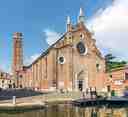
You’re just about to stand in front of Santa Maria Gloriosa dei Frari! To spot it, look for a giant brick church that rises up alongside a little canal. It doesn’t try to dazzle you with too much decoration on the outside-no glitz, no marble fashion statements, just those tall red brick walls with a huge round window above the main door. To your left, you’ll see a towering bell tower, strong and proud, and if you look up, there are three pointed spires on top of the facade, almost like three candles on a very serious cake. Now, take a deep breath and imagine yourself here not just as a traveler, but as someone stepping back in time. The Frari is Venice’s biggest church, the kind of place where you can almost hear history whispering in every nook and cranny. The Franciscan monks who started it in the 1200s weren’t interested in flashy exteriors-they wanted a haven for faith, and a stage for the city’s best artists. You can almost feel the centuries pressing close, the old red bricks warmed by centuries of Venetian sun, each one holding stories of secret monks, daring artists, and even a few naughty 19th-century villains who tried to cause mischief here. Inside these walls, there’s more than just echoes and incense. The Frari is a treasure chest for art lovers: Titian’s paintings gleam from the altars, and Donatello left his mark in Venetian stone. Many famous Venetians are buried right here-including Doges, the city’s legendary leaders, and even Titian himself, who may just be quietly judging every aspiring artist who passes his tomb. The bell tower looming overhead is the second tallest in all of Venice. Its bells once called the whole neighborhood to prayer-or maybe to hurry up to a big feast. Don’t let the outside fool you-step inside and your footsteps cross the same ancient floor that monks, nobles, and artists crossed for centuries. Listen closely, and who knows? You might hear a ghostly choir practicing for a festival, or even an argument between rival Venetian painters. This church has seen solemn funerals, wild feasts, prayers, and yes, a little bit of chaos. At one point, the Franciscans lost their church and had to wait almost a century to come back! But like every good Venetian tale, the Frari survives-majestic, mysterious, and very much alive. And it’s still the parish heart of this part of Venice. Take a second to soak it all up-the scent of old stone, the echo of distant bells, and the knowledge that you’re gazing at history itself. For Venetians past and present, the Frari isn’t just a landmark-it’s part of the city’s soul. Or as they might say around here, it’s where the spirit of Venice never really sleeps. Eager to learn more about the architectural features, bell tower structural intervention or the interior plan? Simply drop your inquiries in the chat section and I'll provide the details you need.
Open dedicated page →

Frequently asked questions
How do I start the tour?
After purchase, download the AudaTours app and enter your redemption code. The tour will be ready to start immediately - just tap play and follow the GPS-guided route.
Do I need internet during the tour?
No! Download the tour before you start and enjoy it fully offline. Only the chat feature requires internet. We recommend downloading on WiFi to save mobile data.
Is this a guided group tour?
No - this is a self-guided audio tour. You explore independently at your own pace, with audio narration playing through your phone. No tour guide, no group, no schedule.
How long does the tour take?
Most tours take 60–90 minutes to complete, but you control the pace entirely. Pause, skip stops, or take breaks whenever you want.
What if I can't finish the tour today?
No problem! Tours have lifetime access. Pause and resume whenever you like - tomorrow, next week, or next year. Your progress is saved.
What languages are available?
All tours are available in 50+ languages. Select your preferred language when redeeming your code. Note: language cannot be changed after tour generation.
Where do I access the tour after purchase?
Download the free AudaTours app from the App Store or Google Play. Enter your redemption code (sent via email) and the tour will appear in your library, ready to download and start.
If you don't enjoy the tour, we'll refund your purchase. Contact us at [email protected]
Checkout securely with 




