
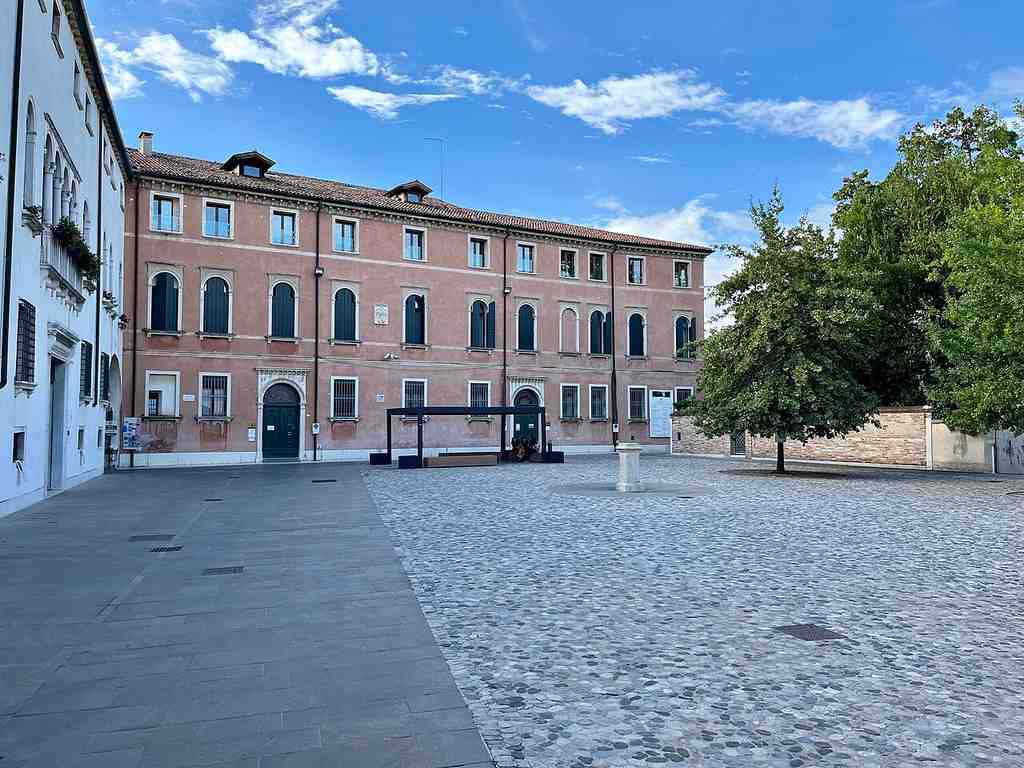
On your left, Palazzo Rinaldi shows a pale stucco facade, a broad rectangular mass, and a formal stone portal that still gives off old noble-house confidence.
This began as a fifteenth-century residence near Piazza dei Signori, with its garden opening toward the Buranelli canal, and it now serves as Treviso’s second municipal seat after Ca’ Sugana. Inside, the city stages its more polished moments: conferences, weddings, exhibitions, and official meetings. The rooms are dressed for the part, with Venetian terrazzo floors - polished surfaces made from marble chips - and richly framed Renaissance-style ceilings inspired by Sansovino. The star attraction is a fresco by Pier Antonio Torri from the second half of the seventeenth century, showing the Fall of Phaethon... a myth that ends badly when a reckless young driver loses control of the sun’s chariot. Bureaucracy rarely aims that high. In two thousand and nineteen, the square in front stopped being a parking lot and became a larger public space for concerts and cultural events, while the canal-side garden took the name Children’s Rights and shares space with the Enzo Demattè children’s library.




