
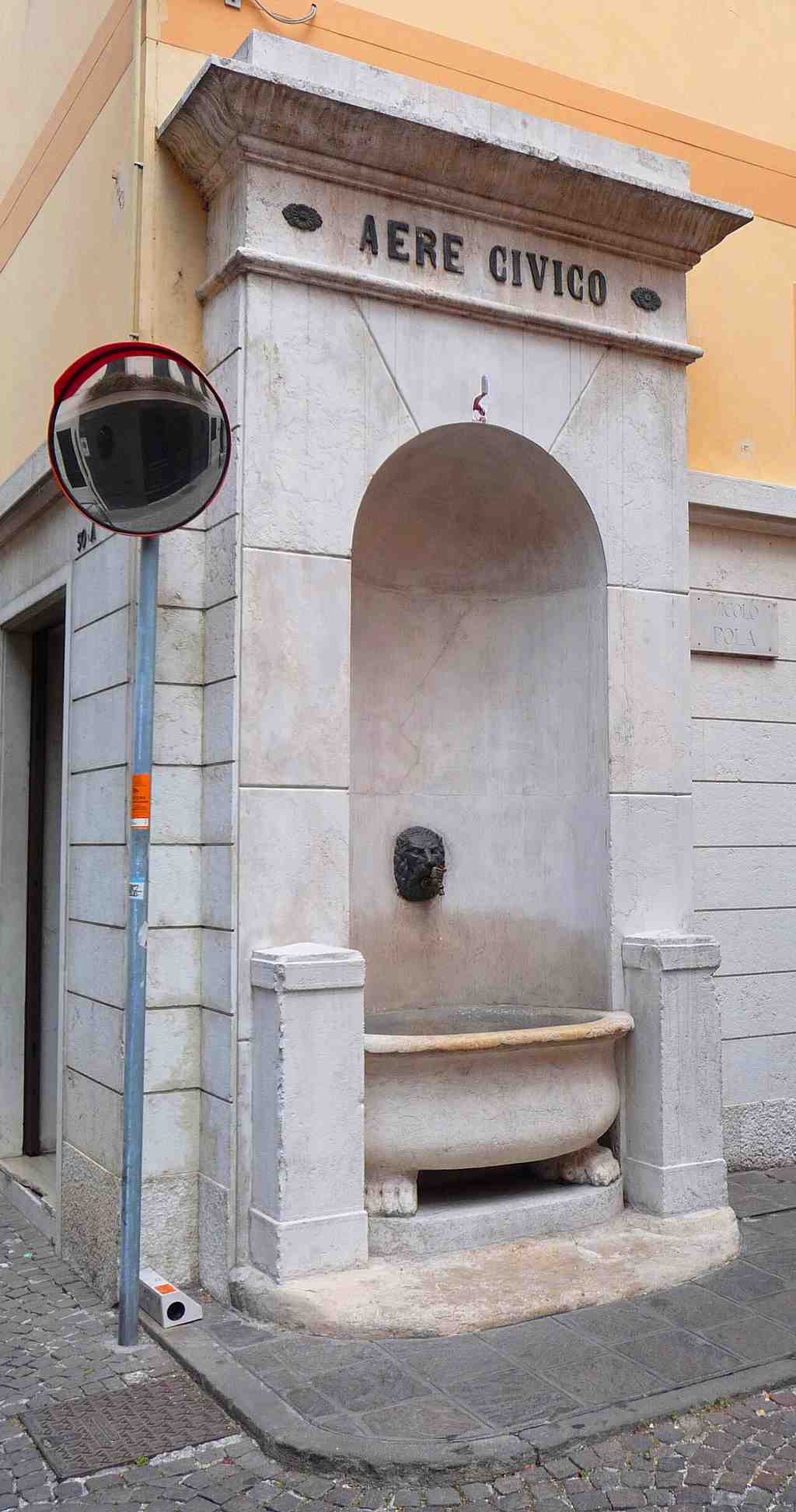
Look for a shallow Istrian-stone niche set into the building, with a cast-iron lion mask at its center and a stone basin standing on four lion paws.
This little fountain hides in plain sight... and Treviso has taken it seriously for a long time. In the middle of the nineteenth century, Bartolomeo Zanon examined the water here along with five other city fountains. He tested its organoleptic qualities, meaning the things ordinary people actually notice: taste, smell, and feel. Then, in eighteen forty-seven, he gathered the results in a study called Analisi delle acque potabili di Treviso, an analysis of the city’s drinking water. Not glamorous, perhaps, but very civilized.
The design has its own pride. Water flows from the lion’s mouth through a push-button tap, collects in the stone basin below, and above the arch you can read the bronze words AERE CIVICO, “at civic expense.” Even the two stone bollards stand guard like dutiful bodyguards. It stays accessible all day and all night. Small fountain, serious character. When you’re ready, continue on toward the Diocesan Museum.




