
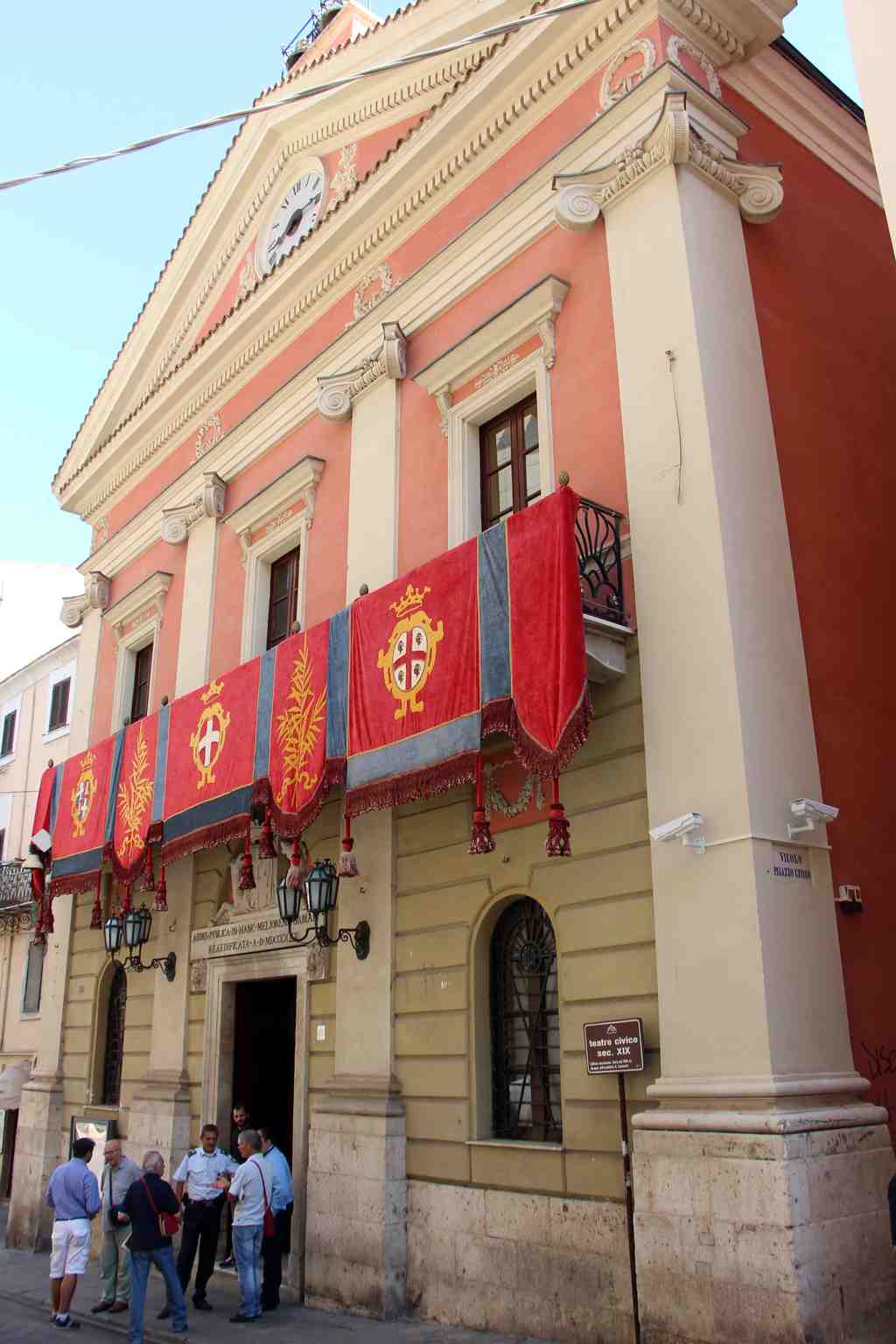
Right in front of you is a striking neoclassical building with a salmon-pink and pale yellow facade, four tall decorative columns, a grand balcony with ornate ironwork, and a triangular pediment up top-a sure standout among its neighbors on corso Vittorio Emanuele II.
Now, let’s imagine what this spot was like centuries ago. Where you’re standing now wasn’t always a theater-back in the days of medieval Sassari, this was the nerve center of the city. The original palazzo di città, the town hall, stood proudly here, complete with its handy arcades, council chambers, secretarial office, and even a courtyard where city officials might have swapped the latest rumors along with council reports. By the end of the 16th century, the palazzo had grown upwards, gaining a new floor so that even more official business could be crammed in. Let's face it, even back then, paperwork always seemed to expand to fill the space available!
But time has a way of wearing even the grandest buildings down. By the early 1800s, the old palazzo was on its last legs and city life was bustling right through the walls. King Carlo Felice, with a flair for modern upgrades, decided Sassari deserved something more fitting, so in 1826 the site was transformed. Giuseppe Cominotti, the city architect, got to work designing the beautiful neoclassical structure you see today-a scene-stealer with its elegant columns and grand balcony. It was built in the shape of a horseshoe, inspired by the fashionable theaters of Turin, and was designed to add a little bit of drama (both literally and architecturally) to city life.
Here’s something for your next trivia night: the building’s split personality as both municipal headquarters and public theater turned out to be a bit awkward-so much so, the city council packed up and moved, first to Palazzo Manca di Usini, and later, to Palazzo Ducale. The theater side stayed, rolled up its sleeves, and took center stage. Of course, buildings are like actors-they pick up a few scars from the job. In the 20th century, fires and neglect did their worst, but with a dramatic comeback in 1967 and another restoration in the 2000s, the theater is alive and well, still hosting concerts, plays, and art exhibitions-many in the local Sassarese dialect.
One of the city’s treasured traditions, the Faradda di li candareri, still puts the Civic Theatre in the spotlight. Every August, the mayor appears out on that grand balcony, raising a toast to wish everyone “A zent’anni!”-to a hundred years! Sometimes that speech gets applause, sometimes a few cheeky whistles-but hey, that’s democracy for you. The Civic Theatre isn’t just a building, it’s a living character in the city’s ongoing story, always restless and ready for its next act. And yes, you might secretly want to take a bow as you pass by!


