
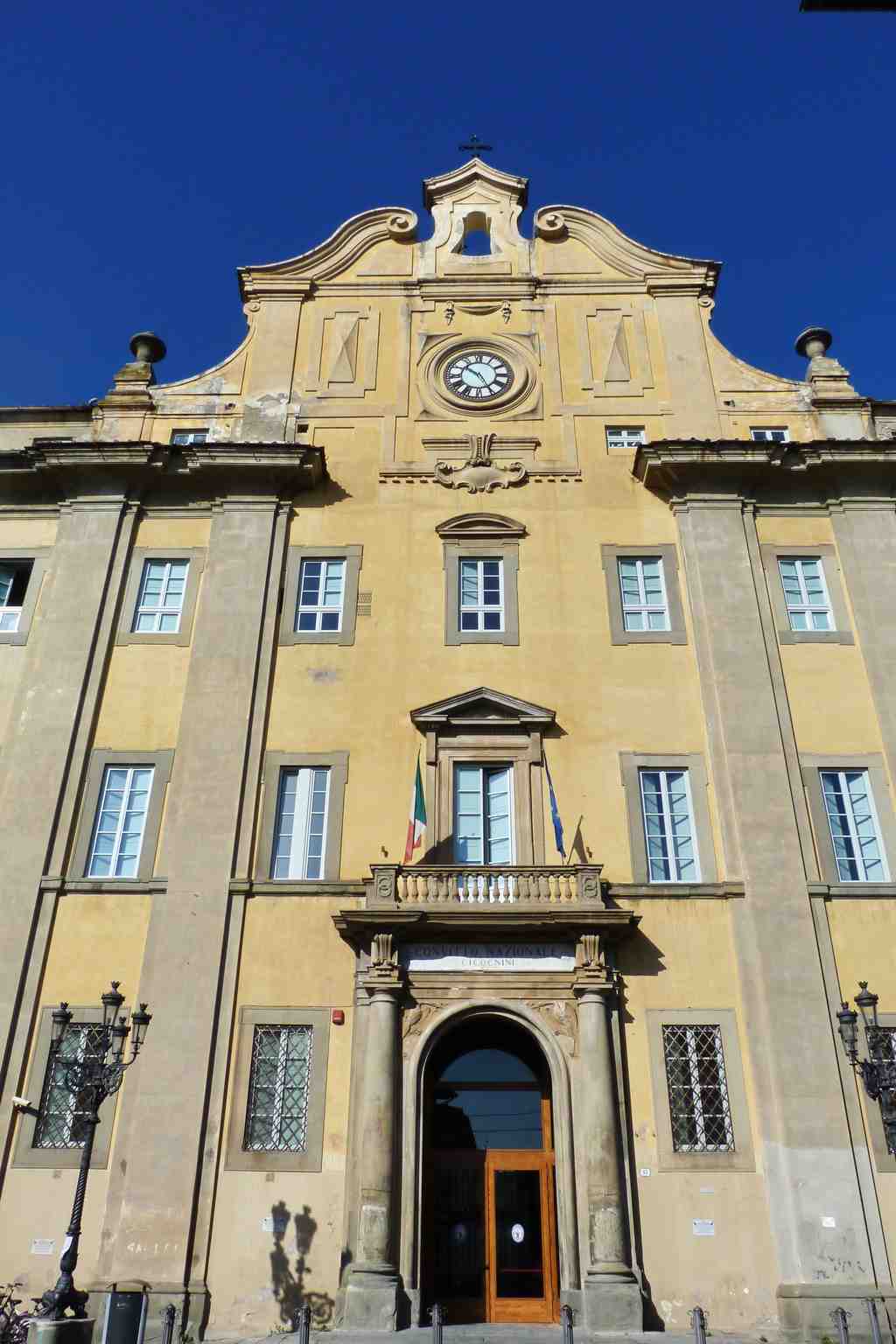
Alright, just on your right, you’ll spot a grand, cream-colored building with rows of arched windows and a stone entrance that looks like it belongs in a novel about strict headmasters and dramatic schoolyard rivalries.
So, gather 'round-figuratively, of course-because this spot isn’t just any stately old block. This is the Francesco Cicognini National State Boarding School: Prato’s *eldest* institution for shaping young minds. That job’s been on its agenda since 1692, back when powdered wigs were the rage and the Jesuits were calling the educational shots. Picture it-a medieval abbey, the Badia di Santa Maria a Grignano, echoing with Latin drills and possibly the sighs of overworked pupils.
If you look at its ornate entrance, designed by Giuseppe Valentini, the baroque ambition of the place is obvious. Giovan Battista Origoni-one of those overachieving Jesuits-dreamed up the building’s layout, adding a big entrance hall, refectory for untold trays of hearty Tuscan fare, and a chapel that’s seen more homework prayers than perhaps any church in town. Inside, you get a theater that originally masqueraded as a tiny church. Not to mention, Biblically-themed frescoes from 1754 by Giacinto Fabbroni liven up the dining hall-a little divine inspiration over your polenta.
Originally funded with a chunk of local priest Francesco Cicognini’s estate-it would have bought you a small Tesla these days-the school quickly grew into a magnet for aspiring scholars from all over Tuscany. Of course, like everything else Italian in the 18th century, it tangled with politics and religion. The Jesuits were kicked out in 1773 by papal decree, then the Grand Dukes of Lorraine waded in, and suddenly things leaned a bit more… secular. There was even a brief cameo as military barracks during the Napoleonic shake-up.
Perhaps the best part? The school wasn’t just churning out proper citizens-it minted bona fide personalities. Ever heard of Gabriele D’Annunzio? He was sneaking around the halls here as a teenager-probably composing poetry and perfecting his scandalous stare. Directors, writers, scandalous thinkers... they all roamed these corridors.
The whole time, the emblem of the school-a stork stabbing a snake, with the motto “Invisa colubris” (not fond of snakes)-watched over them. Subtle reminder: behave, or else.
Over the years, the school adapted. By the late 19th century, it was state-run, moving from classical studies to the sciences as Italy realized it should probably keep up with all those experiments happening up north. In the 1970s, parts of the school migrated to newer digs, but “Cicognini” powered on with even more modern methods-and, eventually, girls in the boarding program too, starting in 2012.
Peek inside today and you’ll find elementary-age kids right up to high schoolers, all hustling between classes, armed with books, dreams, and, perhaps, a prayer that their next exam will be easier than the last. So, whether you’re picturing drama, science, or just the sound of bored teenagers plotting mischief, Cicognini has hosted it all.
And that, my friend, is the story of Prato’s living, learning legend-part monastery, part revolution, all institution.




