
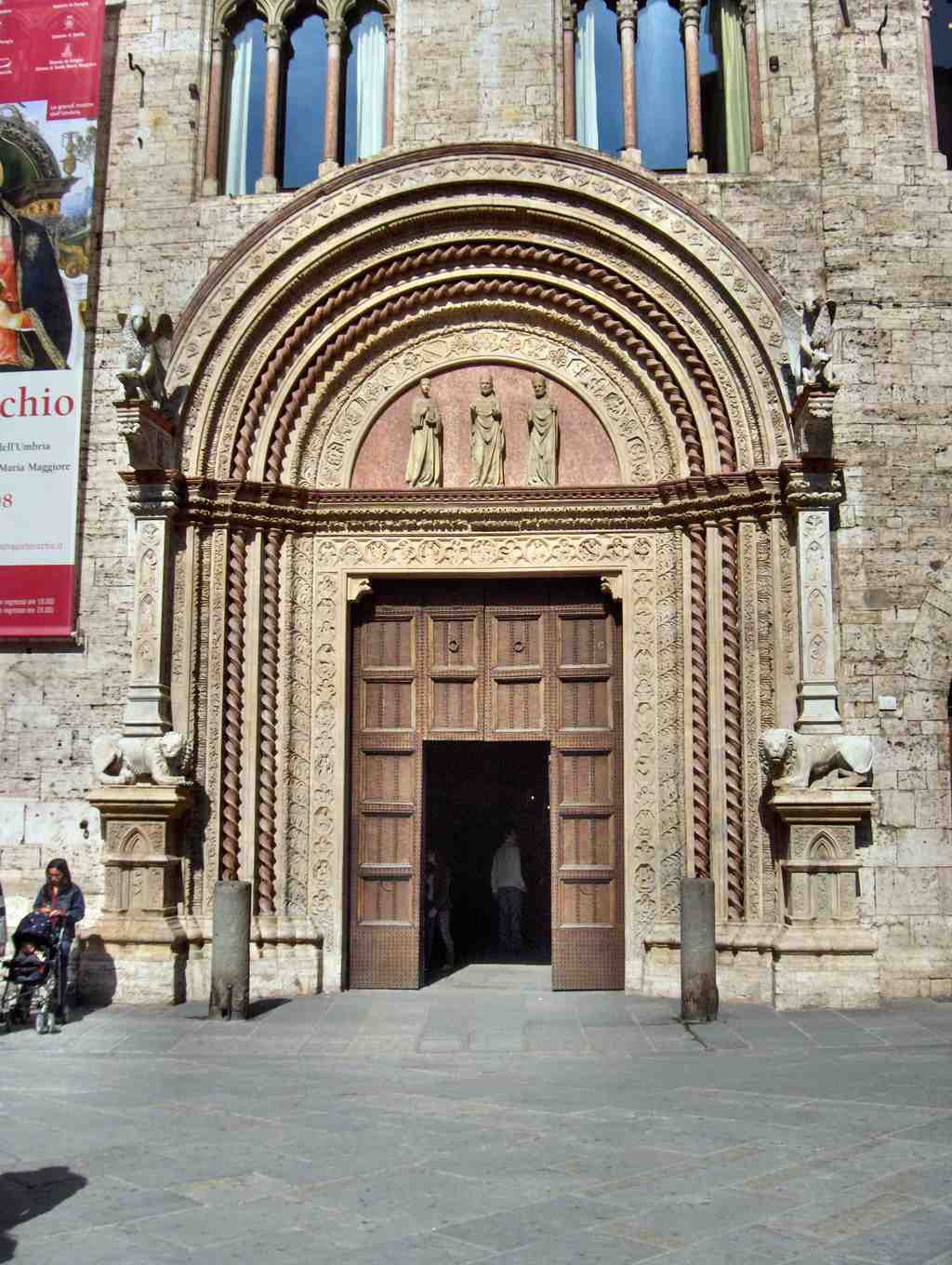
Look for a grand stone doorway with deep arches and carved figures above a large wooden door-if you see three statues right over your head as you approach, you’ve found the entrance to the National Gallery of Umbria.
Now, let’s step into a place where art and history have been brewing together longer than Italian espresso! Imagine the year is 1570. Artists in funny hats are sketching away in the Convent of Montemorcino, grumbling about having to share their favorite pencils. Here, the earliest collections of drawings and paintings are coming together, sparking what will someday become this grand gallery. Of course, history loves a little drama-so a wave of religious suppressions hits Umbria, first from Napoleon and then the Kingdom of Italy. Suddenly, precious artworks start flooding the State’s property, rescued from monasteries and churches. Imagine the shuffle and sound of footsteps on stone as priceless paintings are lugged up the stairs and across the city.
By the 1800s, there’s so much artwork piling up that the city needs a new spot to put it all-so, in 1878, this entire treasure trove is hauled up to the third floor of the Palazzo dei Priori, the very building you’re next to now. Over the years, this gallery grew with donations, purchases, and just a little help from the lottery-yes, even back then, the lottery did more than just make people dream!
If you walk inside, you’d find an extraordinary journey, room by room, through centuries of Umbrian art. The earliest galleries are full of medieval wonders-wooden crucifixes, marble panels, and those moody, golden Madonnas. Step around the corner and you bump into the Renaissance, with works by the legendary Beato Angelico and Benozzo Gozzoli. There’s a painting here by Piero della Francesca of Saint Anthony, so magnificent that even the gallery guards whisper about secret messages hidden in the brushstrokes.
Ever heard of Perugino? He was the teacher of Raphael, and right here you can see his masterpieces-from the fresh-faced youth all the way to his mature works, including the Madonna della Consolazione and the famed Polittico di Sant’Agostino. And just when you think you’ve seen every saint, madonna, and cherub imaginable, along comes Pinturicchio, Perugino’s buddy, with his gigantic altarpieces that look like they could launch into song at any moment.
The collection doesn’t stop with the Renaissance. The Martinelli Collection brings in the drama and flash of Baroque art-think Gian Lorenzo Bernini and Mattia Preti, swirling drapes and wild, staring eyes! In every gallery, you’ll find a new surprise: glimmering silver chalices, carved ivories, and Perugia’s famous textiles, all rich with color and age.
You might even spot paintings that fled the city during Napoleon’s wild treasure hunt and eventually reunited with their Umbrian siblings-pieces like these have more travel stories than the average tourist. In the last galleries, the century turns, and suddenly you’re face-to-face with Rococo and Neoclassical works-can you imagine painters struggling with powdered wigs while painting dramatic scenes like the Partenza di Rinaldo? Not easy to keep the hair out of the paint!
This museum isn’t just a building; it’s a living legend of Perugia’s passion for beauty and innovation, a temple where every stone, every frame, and every faded tapestry whispers tales to those who stand and listen. So, linger a moment by the great doorway, and let the echoes of centuries of art and history swirl around you. If these walls could speak, they’d probably tell jokes about all the artists who forgot to sign their paintings!




