
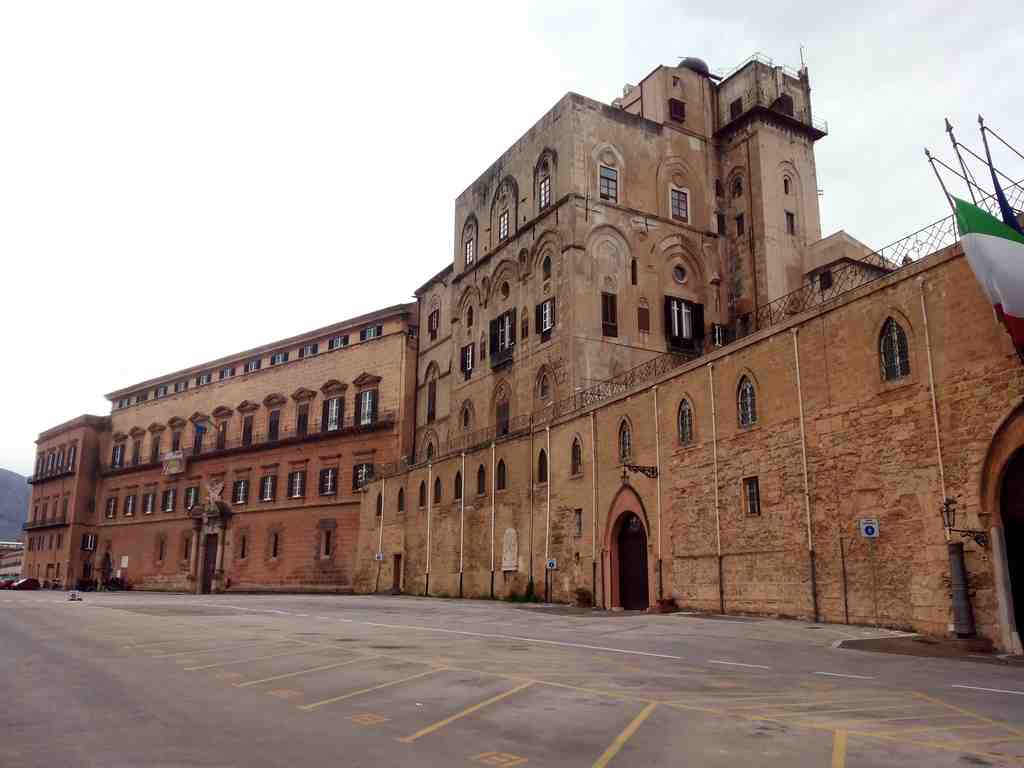
To spot the Palazzo dei Normanni, look for the grand, fortress-like building with a mix of rectangular towers and ornate windows rising above high sandy-brown stone walls on your right.
Alright, pause right here and let your imagination time-travel! You’re standing before the oldest royal palace in Europe, a place that’s seen more action than a blockbuster movie-kings, poets, Arab emirs, and Norman conquerors have all called these walls home. Close your eyes for a second and picture it: centuries ago, this hilltop was buzzing with craftsmen and soldiers, hammers ringing out as they built a mighty fortress. Pretty soon, the sturdy structure became known as “Qsar,” a word with an exotic Arabic twist, filled with the secrets of strongholds and castles.
Soon enough, the Normans burst onto the scene-think chainmail, shining swords, and a dash of Sicilian sunshine. After their conquest in 1072, they decided to trade in some battlements for royal luxury (well, as luxurious as you could get back then without Wi-Fi). Roger II got crowned king in 1130 and wanted something even more dazzling-a jewel box inside a fortress! That’s why he built the Palatine Chapel, a wonder packed with golden mosaics, where sunlight glitters on hundreds of tiny tiles and every footstep echoes through history.
But the palace is more than pretty pictures; it’s the nerve center of a multicultural kingdom! Imagine workshops where tailors buzz over royal silks, towers where guards swap secrets, and grand halls filled with laughter, plots, and the occasional grumpy king (like William the Mean-he didn’t exactly win “King of the Year”).
Things got spiced up again when the German emperor Frederick II lived here as a kid. He loved poetry, falcons, and, probably, a good Italic gelato, though don’t quote me on that! Over centuries, Spanish viceroys, Aragonese noblemen, and Bourbon rulers all left their mark-each adding arches, halls, secret courtyards, and sparkling fountains. Even today, the Sicilian Parliament meets inside, ruling under ancient ceilings.




