
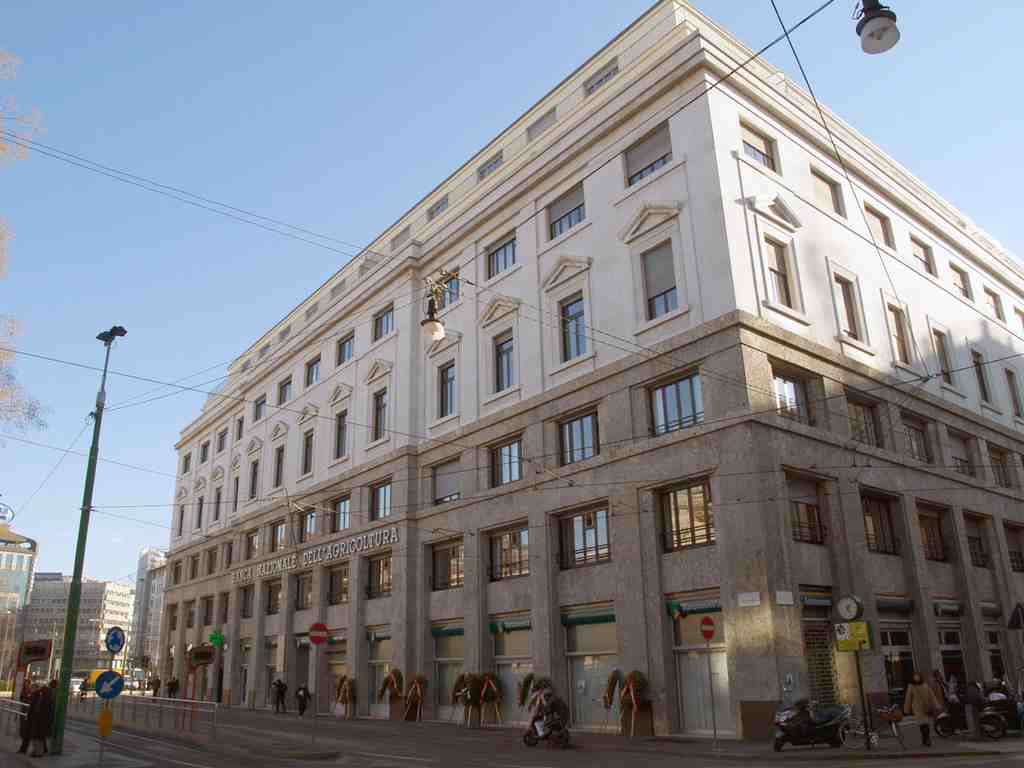
To spot the site, look for a large, stone-clad rectangular building on the corner with tall, symmetrical windows and the inscription “Banca Nazionale dell’Agricoltura” right above the entrances-it dominates the street and is hard to miss!
Now, take a moment to imagine Milan as it was on a chilly December afternoon in 1969: the air heavy with city sounds, trams rattling by, people hustling in and out of the grand bank before you. But suddenly, the ordinary hum of Piazza Fontana was broken by a violent, world-changing blast. The explosion ripped through the banking hall inside this very building, snatching away 17 lives and injuring 88 in a single, horrifying instant. Shoes and papers were left scattered across the marble floors, and Milan's heart skipped a beat.
The bombing wasn’t some random act-it was planned with chilling precision as part of a string of attacks across Italy that day. Just imagine the confusion: in Rome, a bomb exploded in another bank, and yet another device was found, unexploded, at the Tomb of the Unknown Soldier-enough to give any detective a headache and a twitchy eye! The group behind this? Ordine Nuovo, an ultra-right-wing paramilitary organization with a taste for chaos and a name that sounds more like a secret society than a terror cell. Their goal was as sinister as it gets: to make Italians fear the left wing so much that the country would turn away from democracy.
But hold on-it gets messier. The police, desperate to point the finger, arrested dozens of local anarchists, including one named Giuseppe Pinelli. Here’s where we take a turn into real-life mystery. Pinelli died-he fell or was thrown, depending on who you ask-out of a fourth-floor police station window. The story the police gave? "Suicide." But this only made people even more suspicious. After three grueling days of questioning, with tired minds and jittery nerves, many claimed he simply fainted and toppled out. The officer in charge, Calabresi, was eventually cleared, but public anger grew so hot that he himself became the target of revenge-he was murdered by left-wing militants a few years later, sparking even more court cases and controversy.
For decades, the investigations whirled on, like a never-ending circus with new suspects, endless trials, double acquittals, and confused witnesses-there was even a guy who forgot everything after a stroke! Right-wing extremists, secret service agents, American spies, and a host of shadowy figures passed through the Milanese courts. Even members of Italy’s own intelligence services were found guilty-not of the bombing itself, but of muddying the waters, hiding evidence, and spiriting witnesses out of the country.
This wasn’t only about bombs, but about power and secrets. The infamous “strategy of tension” meant the public was supposed to blame communists for the bombing, but those plans backfired spectacularly. Rumors even swirled that the CIA knew about the attacks but kept quiet, arms folded, like a poker player who knows all the cards but refuses to show his hand. In the end, although courts eventually attributed the bombing to the Ordine Nuovo group, many escaped justice thanks to legal loopholes and a mountain of lost evidence.
Standing here today, maybe with a tram dinging in the distance or Milan’s traffic alive all around, it's hard to picture the crackling tension that once filled this square. Yet this somber, stately building witnessed a drama big enough for any movie-filled with mystery, sorrow, and more plot twists than a detective novel. So yes, Piazza Fontana may look calm now, but in 1969, it was the epicenter of a story that shook Italy to its core. And don’t worry-I promise, the only surprise today is how much history is waiting right beneath your feet...or maybe just behind that next corner!
Yearning to grasp further insights on the piazza fontana, official investigations and trials or the state security service? Dive into the chat section below and ask away.


