
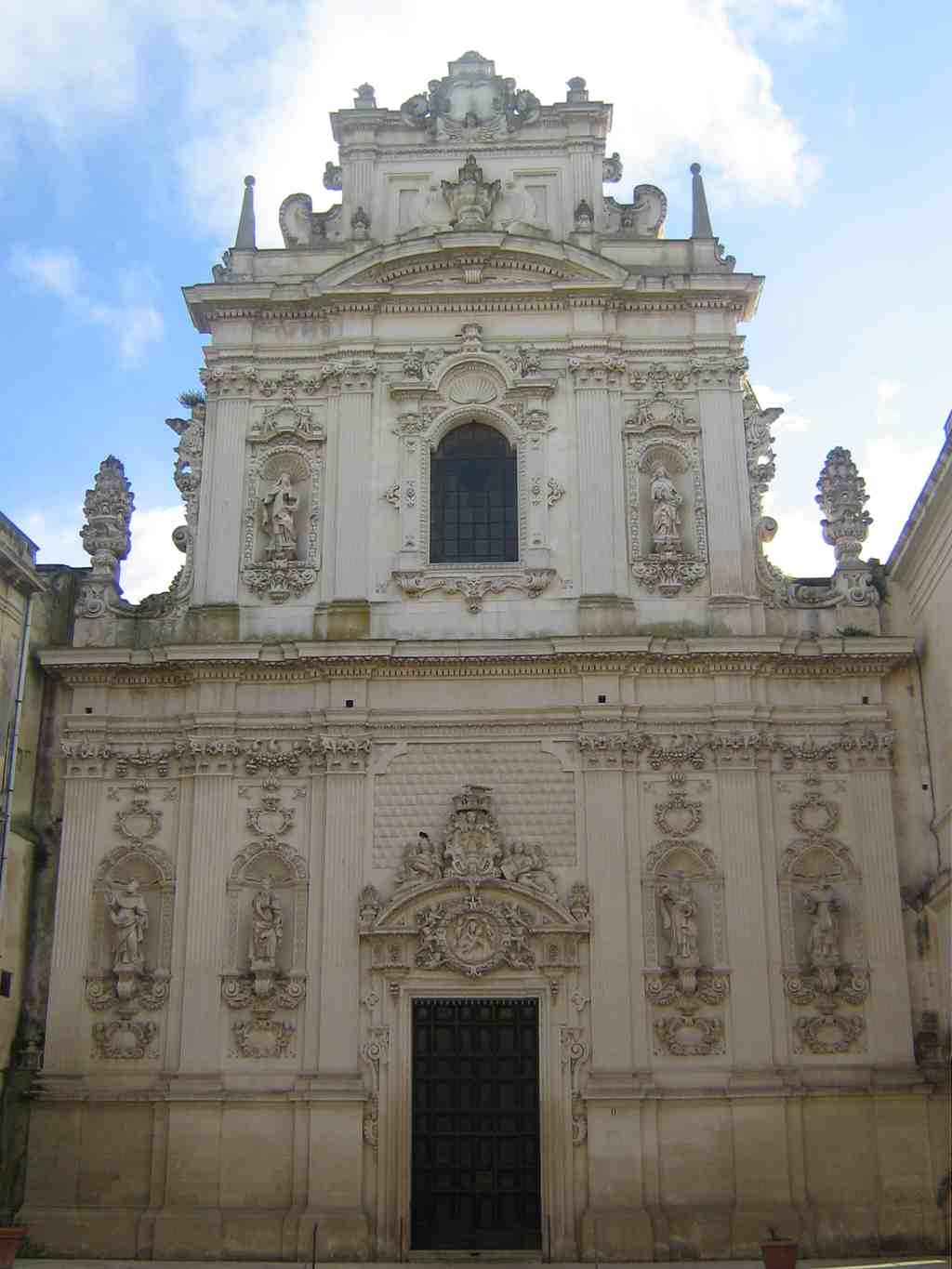
To spot the Church of the Carmine, just look for a grand, creamy stone façade bursting with intricate baroque decorations and rows of statues standing watch in elegant niches above and around a large central doorway.
Now, let your imagination wind back through the streets of Lecce to the late 1400s-picture humble Carmelite monks making their way toward the city, trailing the dust of centuries and hope in their hearts. They settled first outside the city walls, near Porta San Biagio, in a church that seemed perfectly peaceful. But all was not quiet in Lecce-no, not at all. In 1546, the earth itself grumbled and shook beneath their feet. As mortar crumbled and stones crashed to the ground outside the walls, the monks decided it was time for a move.
They relocated within Lecce’s walls, to a place they would soon dedicate to the Madonna del Carmelo. That old site, however, wasn’t quite grand enough for their ambitions. With a bit of monkish determination and, perhaps, a little divine inspiration, they dreamed up something truly magnificent. Enter Giuseppe Cino, a local architect with flair - and, apparently, a love for curly baroque details. The first stone was laid on July 15, 1711. Cino worked passionately, carving and designing until his death in 1722, but the story didn’t end there. Mauro Manieri picked up the mantle, ensuring the church you see in front of you was finally completed in 1737.
Take a closer look at the façade-three distinct levels stacked one atop the other, a sort of baroque layer cake topped with a frosting of statuary and flowery ornaments. The lowest level is guarded by four impressive statues-in one niche stands Saint Angelo from Jerusalem, in another Saint Albert, and with them the prophets Elijah and Elisha. Each seems to silently swap secrets with the passersby. Above, you’ll spot Santa Teresa of Avila and Maria Maddalena de’ Pazzi, expressions serene as they keep vigil beside the large central window.
But don’t just marvel at the outside-imagine the inside: a unique structure modeled after the shape of a human foot, echoing biblical tales and a reminder, perhaps, to walk a little slower and soak in each wonder. The church opens up into an elliptical nave, lined with baroque chapels gleaming with altars, some dedicated to prophets, others to saints and the sorrowful Madonna. Overhead, a domed roof shimmers with tiles colored green and white, and high above the altar, the ceiling holds a wooden masterpiece-Paolo Finoglio’s painting, where the Virgin Mary herself offers the scapular to St. Simon Stock.
Hidden inside are treasures of paint and stone-an altarpiece here, statues there, and a wooden crucifix that’s witnessed nearly three centuries of whispered prayers. With every prayer and echo, the Carmine became a haven of faith and a dazzling example of Lecce’s baroque heart.
So as you stand beneath these statues and stone garlands, imagine the lives that passed through-monks, architects, artisans, restless citizens-each leaving a mark in this labyrinth of beauty. And remember, next time you stub your toe, blame the monks-they made sure this church is shaped like a foot!




