
Catania Audio Tour: The Historical Heartbeat Tour of Catania
Beneath the bustling squares of Catania, ancient baths lie in secret shadows while opera arias drift from a theatre dressed like a royal confection. Wander at your own pace with this immersive self-guided audio tour, peeling back layers of history most travelers never notice. Where did deadly political rivalries erupt behind the velvet curtains of the Massimo Vincenzo Bellini Theatre? What cryptic secrets still linger beneath the University of Catania’s grand facade? Which everyday Roman habit led to an unexpected disaster within the Achillian Baths? Each step draws you into a city shaped by rebellion, reinvention, and unstoppable imagination. Glide from golden balconies to sunken stone corridors, swept up by stories of forgotten scandals and epic comebacks. It is time to let Catania’s dramatic past pull you in—begin now and discover what’s hiding just below the surface.
Tour preview
About this tour
- scheduleDuration 40–60 minsGo at your own pace
- straighten2.8 km walking routeFollow the guided path
- location_on
- wifi_offWorks offlineDownload once, use anywhere
- all_inclusiveLifetime accessReplay anytime, forever
- location_onStarts at Massimo Vincenzo Bellini Theatre
Stops on this tour
Take a look straight ahead-you’ll spot a grand, reddish-brown palace with glorious arches, statues on the rooftop, and a balcony lined with flags. That’s the Massimo Vincenzo…Read moreShow less
Take a look straight ahead-you’ll spot a grand, reddish-brown palace with glorious arches, statues on the rooftop, and a balcony lined with flags. That’s the Massimo Vincenzo Bellini Theatre, and it’s right here to greet you in all its opera-loving glory. As you stand at the edge of the square, notice the horseshoe shape, like it’s ready to give the world a big dramatic hug. The front is filled with ornate carvings and topped by statues that look like they’re about to burst into song. And, of course, there’s a fountain right in front-perfect for a little dramatic reflection before a show. Now, imagine it’s the late 1800s. Catania wants a new stage for music, one to rival the grandest halls in Europe. After a wild game of “Where shall we build it?” the city finally settled here. Builder after builder, plan after plan, with so many arguments and not enough money, you’d think they were writing an opera about building an opera house! Finally, the theatre opened in 1890 with “Norma,” composed by Catania’s own Vincenzo Bellini. Can you picture the excitement in the air that night, with everyone in their best, and the sound of arias echoing through these streets? This theatre is all about style-the exterior is dressed up like a cake with fancy decorations, and the entrance was so elegant, even the horses pulling carriages probably felt underdressed. Step inside, and you’d find four whole levels of private viewing boxes, all glittering with gold and deep red velvet. Look up-a ceiling painted with angels, heroes, and the legendary Bellini surrounded by glimpses of his masterpieces: Norma, The Sleepwalker, The Puritans, and The Pirate. Even the stage curtain was a star here, painted to show a victorious battle. The Bellini Theatre wasn’t just about music, though. It’s seen historic performances and famous folks over the years-imagine Maria Callas’ powerful voice bouncing off those walls, or the president of Italy enjoying an opera right here! There have been great nights, tough times, and even a closure during World War II. But each time, the music returned, grander than ever. So as you look at this beautiful building, picture the anticipation, the laughter, the drama, and maybe, just maybe, hear a phantom note from some ghostly soprano hitting the high C. If your feet start tapping, don’t worry-you’re not being dramatic. That’s just the magic of the Teatro Massimo Vincenzo Bellini. Ready for the next act of our Catania adventure?
Open dedicated page →In front of you is the grand Palazzo dell’Università-don’t worry, it’s hard to miss! Look for the pale, elegant building that stretches across the square with rows and rows of…Read moreShow less
In front of you is the grand Palazzo dell’Università-don’t worry, it’s hard to miss! Look for the pale, elegant building that stretches across the square with rows and rows of tall windows, an arched central entrance, and a clock perched above, right in the middle. Flags hang proudly over the doorway, and if you look up, you’ll see a bell waiting to chime at the top of the structure. Alright, time for a little time travel! Picture this spot almost 600 years ago. The year is 1434-no smartphones, but plenty of ambition. This is the University of Catania, the oldest university in Sicily. Some say the idea of a school here goes all the way back to the ancient Greeks-imagine sandals slapping on the stones, the air filled with lively debate. Officially, things kicked off when King Alfonso V gave his royal thumbs-up, allowing Catania to hand out real degrees-not just in philosophy and medicine, but even in the art of arguing. At first, there were only six professors; today, the teacher-to-student ratio is a bit more… mathematically challenging. Every student in Sicily who wanted a proper diploma had to make their way to Catania. Even the poor students in Palermo-yes, the rivals-had to travel here to get the all-important piece of paper! The university moved around the city, sometimes after earthquakes decided to “remodel” the previous buildings a bit too suddenly. By the 1700s, there were about two thousand students-a real crowd for the time. Just imagine the parade of young minds, the drama of final exams, and the world-changing ideas passing through these halls. So, as you stand in front of this majestic façade, remember: you’re looking at centuries of learning, passion, and maybe even a little healthy academic competition-not to mention the occasional student racing to class, just beating the bell. Would you have made it in time? Curious about the facilities, university library or the rectors? Don't hesitate to reach out in the chat section for additional details.
Open dedicated page →Look ahead and a little down-you'll spot a mysterious entrance just to the right of the grand facade of Catania’s cathedral. If you see a ramp leading underground and some thick…Read moreShow less
Look ahead and a little down-you'll spot a mysterious entrance just to the right of the grand facade of Catania’s cathedral. If you see a ramp leading underground and some thick stone arches barely peeking out from beneath Piazza del Duomo, you’re in exactly the right place for our next ancient adventure. The light down there is soft and a bit shadowy, making the underground walls look even older and filled with secrets. So, welcome to the Achillian Baths! Imagine stepping into Catania nearly 1,700 years ago. Instead of streets and cars, you’d find yourself amongst the smells of steamy water and echoes of lively chatter, all in these very baths buried beneath your feet. The Achillian Baths are real Roman thermal baths-think of them as the ancient version of a modern-day spa, just with a lot more togas and a lot less Instagram. Now, all that’s left is a small piece of what was once a massive bathhouse complex-most of it hidden deep below the city. To get here, you’d have walked down that secret ramp and entered through a long arched corridor, just the way the Romans might have. It’s a bit like walking into a film set! You can almost hear the splash of water and playful shouts as people plunged from the hot rooms to the cold. The name "Achillian Baths" is actually a mystery itself, pieced together from a broken marble inscription dating back to the 400s AD-it’s on display at Castello Ursino, if you’re curious. We don’t even know exactly when they were built! Some experts say they popped up in the fourth century, others think maybe even a bit earlier. That’s what happens when your blueprints get buried by lava, earthquakes, and thousands of years of daily life. At one point, to save on firewood, the baths were actually made smaller. Imagine that-a Roman cost-cutting measure! And it gets even more dramatic: in 1169 and 1693, giant earthquakes buried these baths deep under rubble. For years, people didn’t even know anything was left-until some curious locals decided to dig around. Every time they started a new building or tunnel, they’d find bits of ancient swimming pools and Roman arches. What you see now is only a taste of the original grandeur. The visible chamber is probably just one of the cold rooms, known as a frigidarium-so you’ll have to picture hot steam rising all around you, marble floors underfoot, and Catania’s Romans strutting around like they owned the place. These baths were once so vast that they might have stretched all the way to where Via Garibaldi is today, covering a huge chunk of the city center. And get this-over the years, they’ve been forgotten, rediscovered, closed, restored, and even hidden again beneath steel plates when the piazza was redone. It’s almost as if these baths are the city’s best game of hide-and-seek. So take in the sight and the cool hush of these ancient rooms. When you’re ready, we’ll head up and out, leaving behind the whispers of the Romans-though, with a bit of imagination, you might still hear a ghostly splash or two. Eager to learn more about the structure, registration or the image gallery? Simply drop your inquiries in the chat section and I'll provide the details you need.
Open dedicated page →
Show 10 more stopsShow fewer stopsexpand_moreexpand_less
 4
4Basilica Cattedrale di Sant'Agata
Buy tour to unlock all 17 tracksAlright, take a look in front of you-there it is! The Catania Cathedral, also known as the Duomo di Catania, rising up with its shimmering white stone and grand, dramatic face. If…Read moreShow less
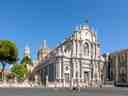
Alright, take a look in front of you-there it is! The Catania Cathedral, also known as the Duomo di Catania, rising up with its shimmering white stone and grand, dramatic face. If you’re facing the big open square, just follow the line of tall marble statues on the balustrade. The cathedral is the big, lavish building with tons of sculpted saints standing guard along the fence, and a massive dome and bell tower reaching for the sky behind it. The entrance is hard to miss-it’s that layered Baroque façade with swirling columns and a crowd of saints above the doors, looking as if they’re posing for an immortal photo. Now, imagine this place almost a thousand years ago, the ground still echoing with legends and the heat of Mt. Etna mumbling nearby. This cathedral is dedicated to Saint Agatha, Catania’s beloved protector. But here’s the twist: this spot has been both blessed and cursed by a series of disasters. Earthquakes, fires, volcanic eruptions-Mother Nature really didn’t hold back! In 1693, an earthquake shook it so hard, only part of the ancient apse survived. You’re now standing on ground that’s seen more rebuilds than a LEGO set in a room full of kids. The bones of this massive church go all the way back to 1078, when Roger I of Sicily built it on the ruins of-you guessed it-an ancient Roman bath. And if you peek at the stonework at the back, you’ll spot some lava stones from Mount Etna, recycled with stubborn Sicilian spirit. Give your eyes a treat by following the three levels of columns on the front. Those dark columns of granite? They might have been borrowed (let’s say ‘borrowed’ politely) from the city’s old Roman theatre. Look up-there’s Saint Agatha reigning above the main gate, with her saintly friends on either side, and just above you, the huge wooden main door carved with 32 tiny stories of Saint Agatha’s life. Talk about leaving your mark. The bell tower-well, that’s nearly as tall as the drama in this city-originally 70 meters, then stretched to 90 meters with a 7.5-ton bell. Can you imagine it ringing out over the rooftops? It’s the third largest bell in all of Italy, so if you hear it, you might just feel your bones vibrate. Inside, the place is shaped like a Latin cross, with grand aisles and chapels lining the sides. There’s a tomb inside for Vincenzo Bellini, Catania’s famous composer. You could say it’s the most harmonious final resting place in town. In fact, if you listen closely, you might just hear a whisper of opera on the breeze. So, whether you’re here for a quiet prayer or to soak in centuries of stories and stone, every corner of this cathedral crackles with history-and more than a little Sicilian determination. Shall we leave the saints to their sunbathing and head to our next stop? Let’s go!
Open dedicated page →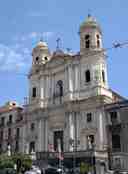 5
5Church of St. Francis of Assisi 'all'Immacolata'
Buy tour to unlock all 17 tracksTo spot the Church of St. Francis of Assisi at the Immaculate Conception, look for an imposing pale stone façade right ahead, soaring up with two tall towers topped by round…Read moreShow less
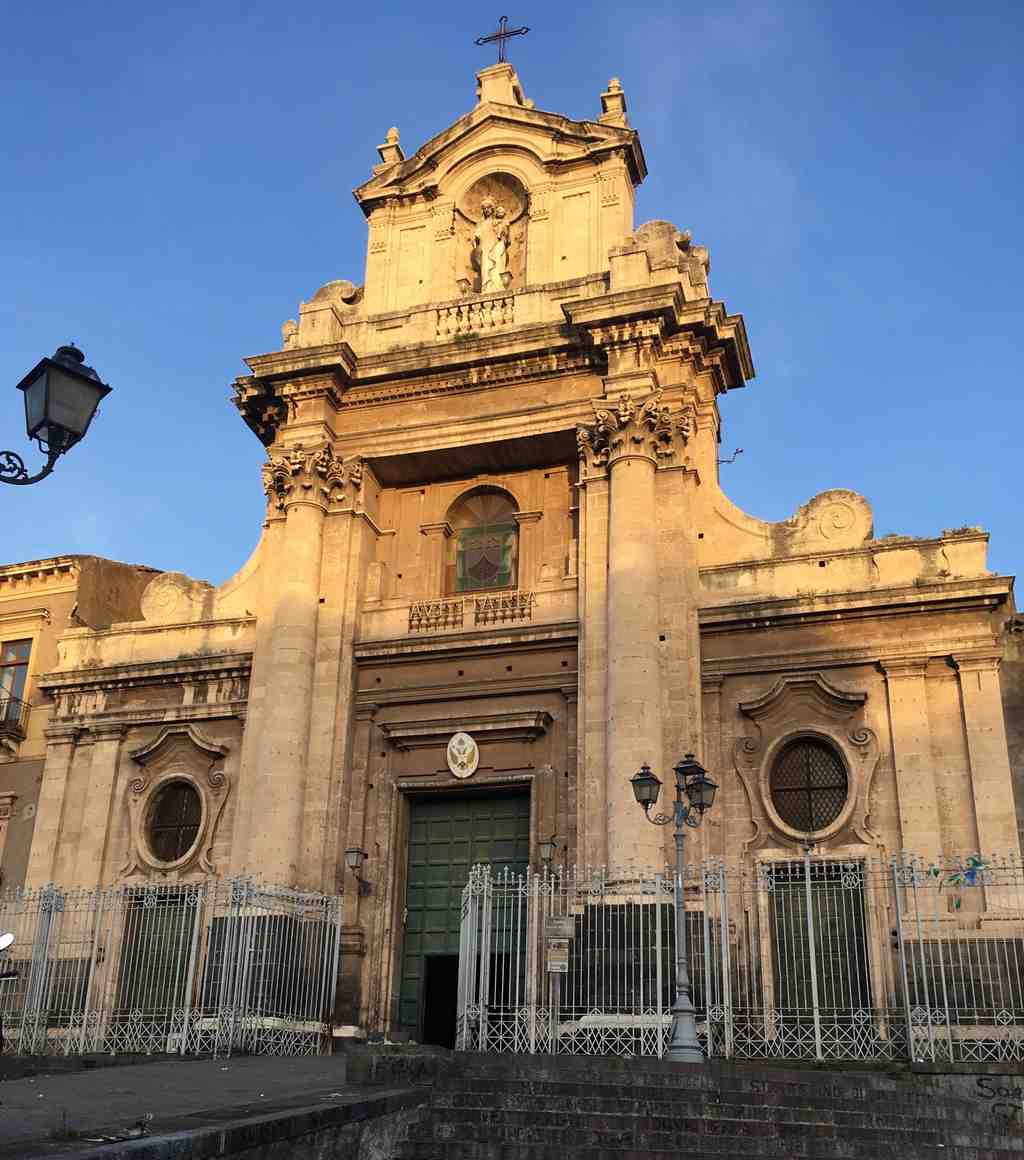
To spot the Church of St. Francis of Assisi at the Immaculate Conception, look for an imposing pale stone façade right ahead, soaring up with two tall towers topped by round domes. Notice the dramatic front staircase made from dark Etna lava stone-it’s almost like the church is rolling out a volcanic red carpet just for you. Four large statues line the front, guarding the three grand green doors. If you’re wondering if you’re in the right place, just look for those sixteen elegant columns rising along the façade, and the two small towers flanking the center with open windows. You’re standing in front of a site where history likes to play hide and seek. Long before this grand church, locals worshipped Demeter, the ancient goddess of the harvest. Imagine the clatter of Roman sandals right here, where a pagan temple stood. Then, in 1254, the Franciscans moved into the neighborhood, a little crowd of monks probably figuring out how to keep their robes clean in the shadow of Castello Ursino. Fast forward to 1329: Queen Eleonora d’Angiò, feeling a bit nervous as Mount Etna rumbled and spit fire, made a royal promise. She funded a church here as thanks to the Virgin Mary for sparing her from the volcano’s fury. That’s what I call volcanic pressure. The church you see was almost wiped out by the mighty earthquake of 1693. But like a Sicilian grandma after a storm, it bounced back grander than ever. Look up at the rows of statues at the top: Saint Anthony of Padua, the Immaculate Conception (very well-protected by lamps!), and of course, St. Francis himself in the middle, just below the cross. Step closer to the gate and imagine the echo of footsteps climbing the lava stone steps. The iron gate and sturdy balustrade are watched by statues of saints like St. Joseph of Cupertino (the flying friar!), Sant’Agata, St. Clare, and St. Bonaventure. Inside, you’d find sunlight glancing off a marble floor of blue and white squares and decorations so detailed, they’d make even a baroque angel blink twice. Hidden behind the entrance is a statue of the Immaculate Conception from 1745-said to bring good luck to all who visit. And-here’s a mystery-behind the altar there’s a painting of a mule kneeling before the Holy Wafer. I guess you could say, around here, even the animals know when to be on their best behavior. So, breathe in the scent of history-and maybe just a whiff of Etna’s volcanic dust. This isn’t just a church, it’s a tale of survival, gratitude, and a little bit of the miraculous-Sicilian style. Ready to step onward? Want to explore the description, documented works or the confraternity of the slaves of the immaculate conception of mary in more depth? Join me in the chat section for a detailed discussion.
Open dedicated page →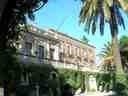 9
9Villa Cerami
Buy tour to unlock all 17 tracksRight in front of you, you’ll spot a grand villa with a soft, grayish facade and tall, elegant windows-each one gleaming in the sunlight. Look for the thick curtain of green ivy…Read moreShow less
Right in front of you, you’ll spot a grand villa with a soft, grayish facade and tall, elegant windows-each one gleaming in the sunlight. Look for the thick curtain of green ivy swirling up the walls and around arched doorways. There’s a stone balcony that runs the length of the building, and just below, a shady courtyard dotted with palm trees and marble busts. It almost feels like you’ve wandered into a secret garden. If you’re having a hard time spotting it, just look for the highest palm trees stretching into the sky, and you’ll know you’ve made it! Now, let me whisk you back in time-imagine the rustle of noble dresses and the soft echo of conversations in Sicilian dialect. Villa Cerami was once the luxurious home of the Rosso di Cerami family, with a view over the whole city. In those days, from this very spot, you could see Catania rising from its ashes like a stubborn phoenix. Underneath your feet, right beneath the surface, linger the ghosts of Roman settlements. This spot was famous not only for its wealthy owners but also for the legends of martyrs like Sant’Euplio and Sant’Agata-heroes whose stories were whispered among the stone ruins just outside. Now, don’t think Villa Cerami was stuffed with snobby nobles and no one else. Oh no! During a famine in 1763, the Prince of Cerami turned his home into a lifeline. Picture the grand doors swinging open and crowds of hungry, wide-eyed children flooding in for food and comfort. The house was buzzing with the noise of little feet instead of ballgowns swishing across marble floors. In 1881, Villa Cerami threw a party fit for a king-literally! King Umberto I and Queen Margherita waltzed through these halls, and if those palm trees could talk, I bet they’d still gossip about the festivities. For the royal visit, they even transformed the chapel into a glittering ballroom, covering a religious fresco with a painting of the goddess of dawn. Now that’s redecorating with style! But as time passed, this place wasn’t spared from its share of scratches. Schoolgirls filled the ballroom, their ink-stained desks side-by-side with golden mirrors and silk wallpaper. By the 1950s, the villa was a shadow of its former self; some precious artwork even slipped away into the city’s collection. Today, Villa Cerami belongs to students once more! It’s the home of Catania’s Department of Law. So if you hear heated arguments inside, don’t worry-they’re probably just spirited debates about legal theory and not a noble family quarrel or a king losing at cards! Just for a moment, try to imagine this villa in all its glory. What stories do you think these old palm trees and weathered stones would tell if they could whisper in your ear?
Open dedicated page →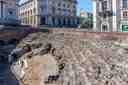 11
11Roman Amphitheater of Catania
Buy tour to unlock all 17 tracksLook ahead and slightly downward, just below street level, and you’ll spot the curved rows of rough, dark stone steps. This isn’t just any sunken area in Catania, but the ancient…Read moreShow less
Look ahead and slightly downward, just below street level, and you’ll spot the curved rows of rough, dark stone steps. This isn’t just any sunken area in Catania, but the ancient Amphitheatre of Catania-like a Roman arena hiding in plain sight, right next to the busy city streets, with bustling traffic just meters away. Now, imagine standing here almost 2,000 years ago, surrounded by cheers and excitement. The air would be thick with the smell of roasting food, maybe the occasional waft from a neighbor’s sheep, and everywhere, the buzz of thousands of people. This amphitheatre could host over 15,000 spectators-basically, half of Catania squeezing in for the day’s show. Picture those grand, wide stone seats you see, carved from black basalt straight from Mount Etna, with smooth marble accents that must have glittered under the Sicilian sun. The amphitheatre was built in the Roman Imperial period, probably in the 2nd century AD, when Catania was right at the edge of the ancient city. Back then, this was the place for drama, games, and stories so wild that modern reality TV would blush in comparison. People believed gladiators fought fierce battles here, and-according to legend-they even tried to flood the arena for mock sea battles. How’s that for an ancient water park? If you look at the stones, you’ll notice they don’t all match. That’s because some were recycled from other buildings. The people who built this place were practical-use what you’ve got, especially when it’s heavy volcanic rock from the neighborhood volcano. And if you look at the arches, you’ll see red bricks and sturdy mortar. The mix of dark rock and red brick would have made quite the impression-imagine attending a show here, the colors clashing beautifully as you craned your neck for a better view. Some say their tombs lie somewhere around here-Charondas the lawgiver and the poet Stesichorus-adding a bit of mystery to the site. But don’t worry, the only ghosts you’re likely to meet today are echoes of thunderous applause and maybe a few snack sellers from centuries past. So, as you stand here, just for a moment, close your eyes and let yourself hear the roar of the crowd, the excitement in the air, and maybe, just maybe, the splash of ancient Romans enthusiastically pretending to be naval warriors. Now, how’s that for a dramatic stop on your tour of Catania?
Open dedicated page →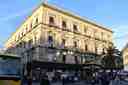 12
12Palazzo del Toscano
Buy tour to unlock all 17 tracksTo spot Palazzo del Toscano as you approach, look out for a grand, sand-colored palace standing proudly on the bustling corner of Piazza Stesicoro and Via Etnea. The building is…Read moreShow less
To spot Palazzo del Toscano as you approach, look out for a grand, sand-colored palace standing proudly on the bustling corner of Piazza Stesicoro and Via Etnea. The building is three stories tall, with rows of windows decorated by little iron balconies-look for the thick, dark shutters that give it a mysterious, almost secretive air. The ground floor is ringed by broad arches, made of alternating stripes of white and dark stone. If you’re feeling lost, just look for the lively crowd and the towering palm tree swaying out front. There it is-impossible to miss! Now, as you stand in front of Palazzo del Toscano, take a moment to imagine what this place might have felt like in the 1800s. Picture fancy carriages rolling up, the smell of fresh oranges drifting in from the market, and the proud Paternò family peering from above, making sure their windows had the best view in town. Palazzo del Toscano isn’t just another old building-it’s a place where ambition and family drama played out like an opera, right here in the heart of Catania. It was first designed by the famous Vaccarini, but only the first floor ever got built. Sometimes, even in Italy, construction takes a coffee break-and a century later, the work still wasn’t done! Then, Antonino Paternò-soon to become Catania’s first mayor-decided this palace deserved its grand finish. He hired Errico Alvino, a Milanese architect with a flair for the dramatic, to make the building as noble as its owners. Alvino hated boring. He designed this neoclassical beauty, drawing inspiration from Naples, with a dash of 19th-century euphoria for theme rooms and marbled staircases. If those walls could talk, they’d sing! They’ve seen family fortunes rise and fall, secrets traded in hushed voices by those tall windows, and perhaps a couple of pasta feasts that would put your nonna to shame. Even the decorations inside were a city-wide affair-the best artists in Catania, like Alessandro Abate and Giuseppe Sciuti, left their mark here. So, while you look up at those solid stone arches and those dignified windows, remember: this is a palace built on dreams, ambition, and maybe a few family squabbles. Every corner holds a little slice of Catania’s history-maybe that’s why it still manages to draw a crowd, even today. Ready for the next stop? Let’s stroll on!
Open dedicated page →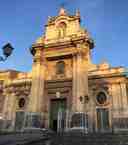 13
13Basilica Satuario del Carmine
Buy tour to unlock all 17 tracksYou’re almost at your last stop! Up ahead, you’ll spot the Sanctuary of the Madonna del Carmine by its grand entrance rising at the top of a small set of stone steps. Just look…Read moreShow less
You’re almost at your last stop! Up ahead, you’ll spot the Sanctuary of the Madonna del Carmine by its grand entrance rising at the top of a small set of stone steps. Just look for the tall, sandy-colored facade with three majestic doors, elegant columns reaching upwards, and, at the very top, a huge marble statue of the Madonna watching over Piazza Carlo Alberto. The sunlight brings out every detail-so if you see something glowing like golden honey in the late afternoon, you know you’re in the right place! Now, take a moment to soak it all in. You’re standing in front of a church that has more stories than a Sicilian grandmother at a family dinner. Once, this was a necropolis, a resting place for those who came before-talk about a seriously historical neighborhood! It was back in the 1200s when the Carmelite monks left Mount Carmel and set up their home right here. Imagine the old stone crunching under their sandals as they arrived. Things really got dramatic after the earthquake of 1693 wiped the church out. But like a true Catanian, it bounced back-even grander-by 1880. Kings and queens, popes and archbishops, all played a part in granting privileges and crowning the Madonna’s statue that’s still honored to this day. Look up at the wide central doorway-above it, tucked in a huge marble nook, is the gigantic statue of the Madonna del Carmine. It’s so impressive you might wonder if she’s keeping an eye on who’s sneaking the cannoli from the local market! The three doors out front are split by towering half-columns and flanked by oval windows that make the building look almost like it’s wearing spectacles. Behind the Madonna’s statue, there’s a hidden bell tower with four bells, each with its own story-and a lovely ring that sometimes floats out across the square. Step inside (even just in your imagination for now), and picture an interior so rich and grand it almost hums with history. Three wide aisles, eleven colorful marble altars, and art everywhere you look. On your right, you’ll see a black lava stone niche holding Saint Joseph-it’s practically glowing with old-world charm. And just beyond, paintings commemorating saints and stories that survived bombings and war. This church could probably host a film festival and call it ‘700 Years of Drama’! So while you’re here, let yourself drift back in time. The air is thick with whispers of past processions, secret prayers, and the echo of church bells marking celebrations and history. If you listen closely, you might just catch the spirit of Catania-somewhere between the sunlight on stone and the sound of ancient voices calling, “Benvenuto!” Eager to learn more about the external, internal or the sacristy? Simply drop your inquiries in the chat section and I'll provide the details you need.
Open dedicated page →
Frequently asked questions
How do I start the tour?
After purchase, download the AudaTours app and enter your redemption code. The tour will be ready to start immediately - just tap play and follow the GPS-guided route.
Do I need internet during the tour?
No! Download the tour before you start and enjoy it fully offline. Only the chat feature requires internet. We recommend downloading on WiFi to save mobile data.
Is this a guided group tour?
No - this is a self-guided audio tour. You explore independently at your own pace, with audio narration playing through your phone. No tour guide, no group, no schedule.
How long does the tour take?
Most tours take 60–90 minutes to complete, but you control the pace entirely. Pause, skip stops, or take breaks whenever you want.
What if I can't finish the tour today?
No problem! Tours have lifetime access. Pause and resume whenever you like - tomorrow, next week, or next year. Your progress is saved.
What languages are available?
All tours are available in 50+ languages. Select your preferred language when redeeming your code. Note: language cannot be changed after tour generation.
Where do I access the tour after purchase?
Download the free AudaTours app from the App Store or Google Play. Enter your redemption code (sent via email) and the tour will appear in your library, ready to download and start.
If you don't enjoy the tour, we'll refund your purchase. Contact us at [email protected]
Checkout securely with 


