
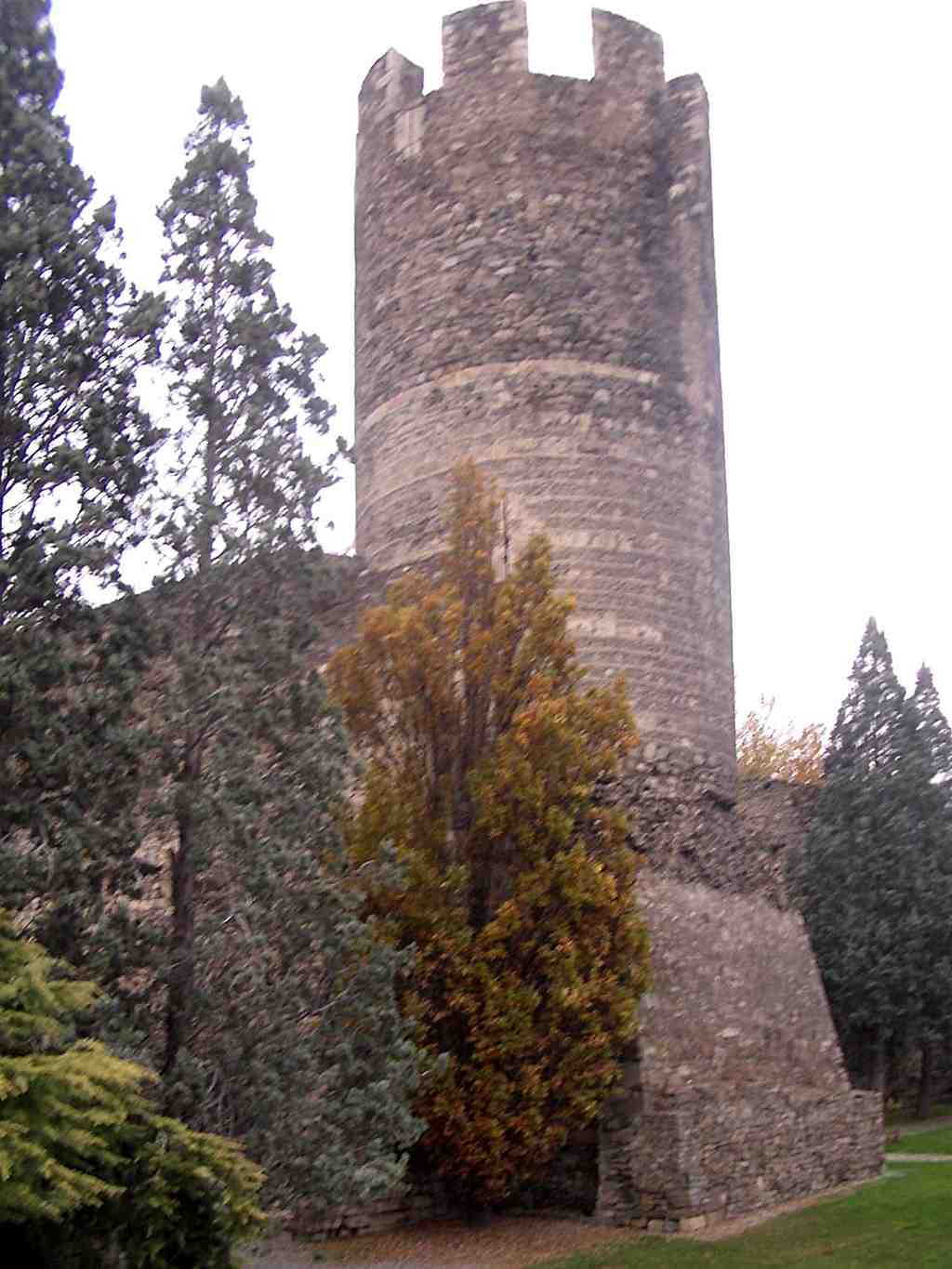
Look for a tall, round stone tower with jagged battlements at the top, rising beside some evergreen trees and a patch of autumn-colored leaves-this is Bramafam Castle, standing right at the corner of Via Bramafam and Viale Carducci, along the old Roman wall.
Standing here, picture the clang of armor and the shuffle of medieval boots as you gaze up at these ruins. The castle of Bramafam was once the pride of the noble Challant family, perched high over the ancient Roman fortifications. Don’t let its battered appearance fool you! That massive, brickwork main building and its sturdy, round tower once guarded the “main right gate” into the ancient city. Imagine windows with graceful twin arches-the kind that would make any medieval architect jealous-and a grand arched doorway where a drawbridge once rattled up and down, probably causing headaches for anyone who forgot their keys!
Beneath your feet, and on the southern face, peek for traces of the original Roman wall, still stubbornly clinging to life after all these centuries. The tower's top bristles with that classic “Guelph” crenellation-perfect for yelling at invaders, or, perhaps, at neighbors who played their lutes too loudly. Uniquely, this castle boasted an above-ground water cistern on its southern side, a feature so unusual you’d almost expect to find someone trying to grow tomatoes out of it.
The story of Bramafam isn’t just about stones and walls; it’s a tale of heartache, betrayal, and long-forgotten drama. The first tower was already here in the early 1200s, named after Beatrice of Geneva, who was both a newlywed and a bit of a trendsetter. The Challant family, masters of the city’s southwest corner, held sway here until the castle was plundered by Giacomo di Quart in 1253-yes, even castles sometimes go on unwanted diets. By 1295, the property was passed over to Count Amadeus V of Savoy in exchange for a feudal estate, but the Challants hung on to their castle rights until the 1700s, renting out the ruins and defending every last stone with almost comical persistence.
Why is it called Bramafam? The name comes from the local dialect for “crying out for hunger.” One legend claims a jealous husband locked away his wife in the tower, leaving her to starve. Another, more community-minded version says hungry townsfolk gathered outside, shouting to the lords above for something to eat-talk about food delivery gone wrong!
By the 1500s, Bramafam was already little more than a shell, its vaults and rights handed over from viscounts to notaries as power shifted and the world moved on. So, standing here today, you can admire both medieval design and a dramatic tale, with Bramafam’s jagged crown keeping watch over centuries of hunger, hope, and history.


