
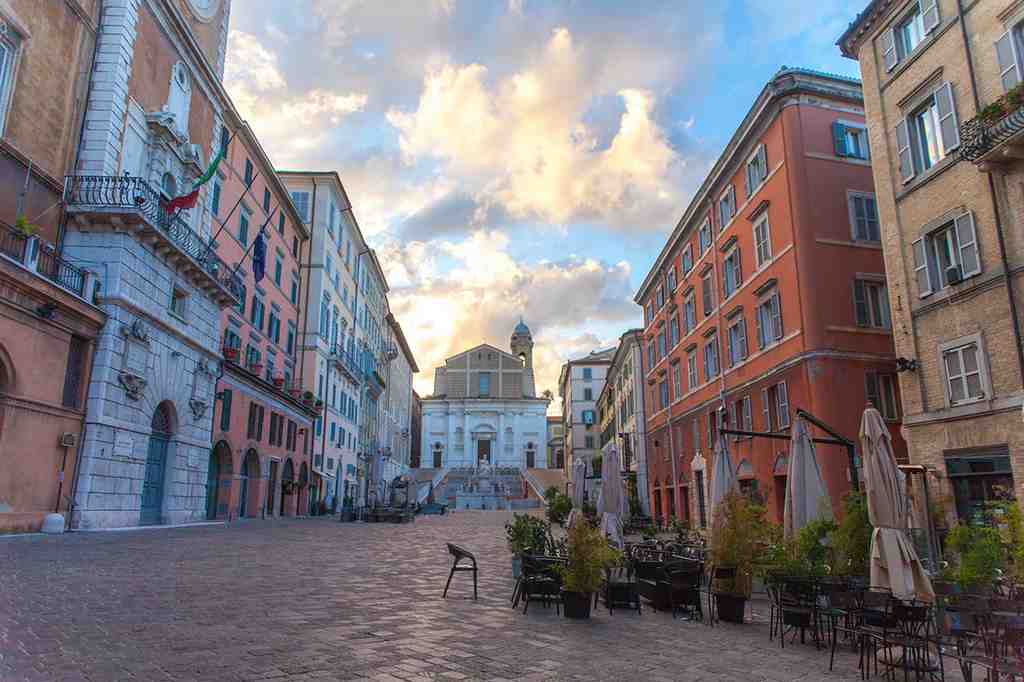
As you walk forward, look for a long, rectangular square with elegant old buildings on both sides, a large staircase and monument at the far end, and the grand white facade of the Church of San Domenico towering above-you're in the right spot if you see café tables scattered across wide, cobbled paving.
Welcome to Piazza del Plebiscito, or as the locals affectionately call it, Piazza del Papa! Take a good look around-this isn’t just a square, it’s practically the beating heart of old Ancona, and trust me, if these stones could talk, you’d hear centuries of drama, intrigue, and a bit of papal pride echoing between these walls. Imagine the year is 1418: the air is thick with dust from the demolition of the old church of Sant’Egidio, replaced by what’s now the stately Palazzo del Governo to your left. This very piazza was once known as Piazza Grande-picture residents from every neighbourhood converging in this spot, their voices mingling in a lively tapestry of market gossip and city affairs.
Now, lift your gaze to the center, where Pope Clement XII raises his marble hand as if blessing the whole city-or maybe just making sure you don’t spill your espresso. His statue has been here since 1738, a token of gratitude from the townsfolk for bringing Ancona back to life by reviving the city’s port. Originally, this impressive monument was meant to stand majestically atop a grand arch at the harbor, greeting sailors-but, legend has it, those plans were sunk by the fear that the arch would collapse under all that marble weight! So, Pope Clement ended up right here in the piazza’s heart, and the locals quickly dubbed this place Piazza del Papa.
But don’t let the tranquil scene fool you-this square has seen its share of excitement. In the 1400s, it was already the main crossroads of Ancona’s three old districts, and in the centuries since, it's hosted public executions, secret revolutionary gatherings, and more than enough debates over who makes the best lasagna. Just imagine: in 1532, after a failed uprising, three young rebels lost their heads (literally) here, and their legacy lives on in the nearby “Fountain of the Decapitated.” Look closely at the stone faces carved above the fountain and see if you spot those brave-well, now headless-defenders of Ancona’s freedom watching you.
As you stroll around, notice how the square is multi-layered, connected by staircases and ramps that zigzag up to the church. That’s no accident-the dramatic levels were part of an 18th-century face-lift meant to make this piazza feel like a true stage for the city’s most important moments. Just above, the Church of San Domenico looms with its unfinished facade, a silent monument to changing tastes and turbulent times. Inside, priceless treasures await, with works by Titian and Guercino-art so beautiful, you might just forget to look at anything else.
And to your left, the Palazzo del Governo stands proud, with its distinctive tower topped by a 16th-century clock. If you visit at noon, you might catch the sweet chime of a historic carillon ringing out over the rooftops-a sound that has marked the middle of every Ancona day for centuries.
As you explore, imagine the piazza packed with stalls from the old herb market, or buzzing with the San Ciriaco fair before its move in the 1970s. Today, Piazza del Papa is still a vibrant gathering point, filled with laughter and clinking glasses in the evening, as the city’s past and present blend together. Don’t blame me if you suddenly crave a gelato or a bit of local gossip-after all, this is where Ancona comes alive!
Exploring the realm of the church of san domenico, government palace and civic tower or the statue of clement xii? Feel free to consult the chat section for additional information.


