
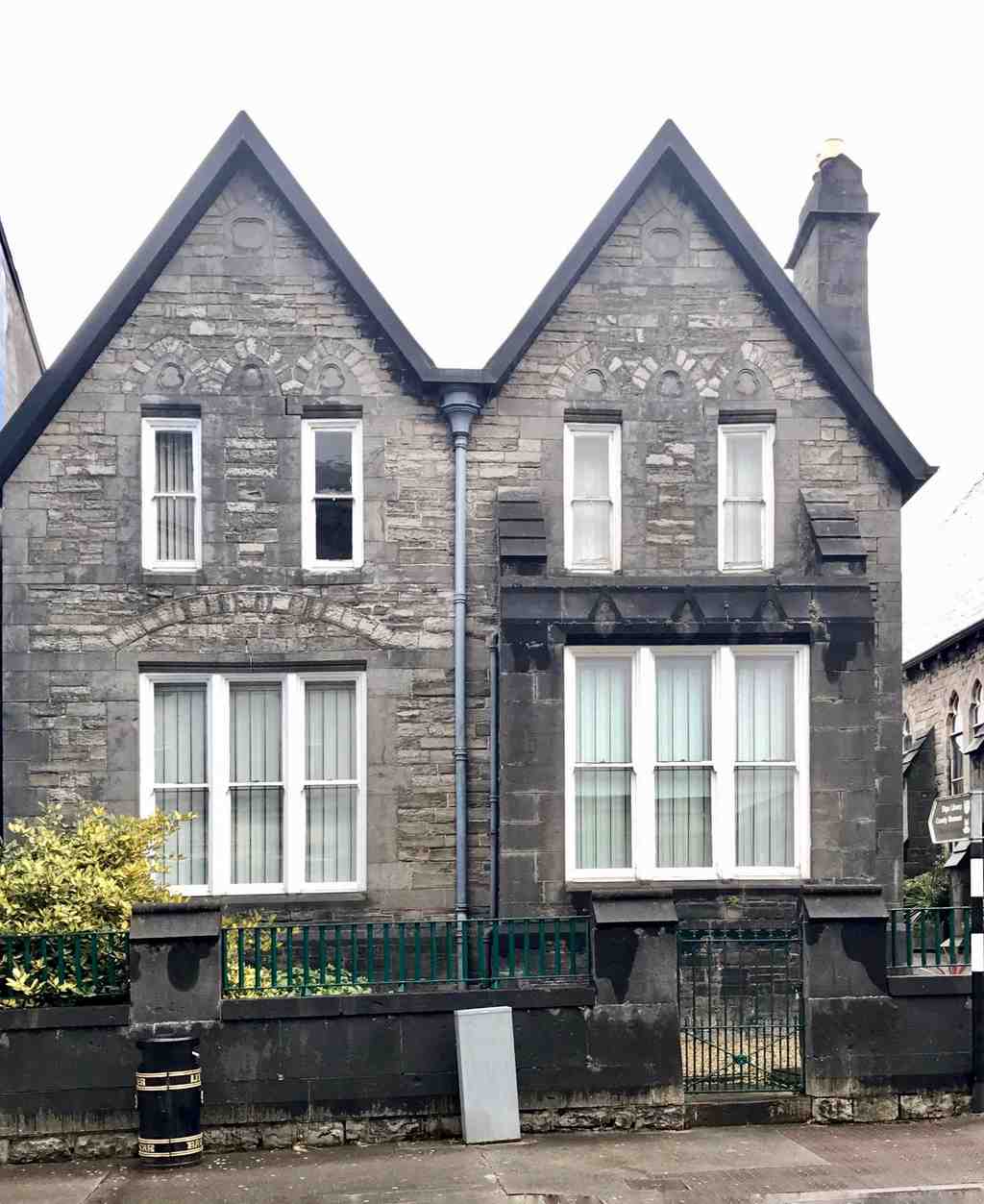
Look ahead for a distinctive grey stone building with two steep, pointed rooftops-it’s the one right in front with large white-framed windows and a small black gate behind a low stone wall.
Welcome to Sligo County Museum, where the walls have seen so much history, they probably know more than your average local pub storyteller. Imagine yourself in 1867-the building you’re standing before was just completed, not as a museum, but as a cosy manse for a clergyman tied to the Congregational church. Picture horse-drawn carts rattling along Stephen Street while sermons drift through the lane, and just next door, that gothic church became the Sligo Library in 1954. But in 1955, things really got exciting-this house turned into a museum, and it’s been the guardian of Sligo’s secrets ever since.
Step into its story: inside, you’ll find everything from Stone Age relics to the 21st century. One exhibit that tends to steal the show (and possibly your appetite) is a 100-year-old firkin of bog butter-imagine stumbling on a forgotten tub of butter in a bog, unearthing it generations later, and thinking, “Now that’s a spread with character!” But beyond quirky treasures, Sligo’s connection to W. B. Yeats shines brightest here. You can almost feel the poet’s spirit as you gaze at a replica of his Nobel Prize or artwork from his brother, Jack Butler Yeats. There are even belongings from the revolutionary Countess Markievicz and her sister, Eva Gore-Booth, offering a glimpse into Ireland’s fight for independence. As you wander, don’t miss the tales of World War I-rescued photographs share haunting stories of Sligo’s sons and daughters who braved the front lines.
And here’s a twist: in the early 2000s, a new museum was planned-money raised, ground broken, but just as dreams grew big, construction stopped. The original manse, with all its quirks and scars, still stands watch over Sligo’s story-a reminder that history is as much about what could have been as what was. So take a deep breath, listen to the old stones, and imagine the layers of life lived within these walls.


