
Look for a broad, straight street framed by multi-storey stone and concrete commercial blocks, running from the solid span of Sarsfield Bridge toward the junction at O’Connell Street.
Sarsfield Street is one of those places whose identity has been revised in public, and more than once. It began as Brunswick Street, then in the early twentieth century the city gave it a different patron: Patrick Sarsfield, first Earl of Lucan, the Jacobite commander who fought for King James the Second during the Siege of Limerick in sixteen ninety, and then helped arrange the Treaty of Limerick. Even the name tells you this street does not stand still. It gets relabelled to suit the story a city wants to tell about itself.
But the harder story here is commercial. Before the ring road and newer bridges diverted the flow, this was the start of the main road toward Galway, a proper working artery through the city. In eighteen twenty-nine, John Spillane opened a tobacco factory here, later remembered as the House of Garryowen. By nineteen twenty-nine, it was among the last large tobacco factories left in Limerick. And William Spillane, who owned it later, also served as mayor. That is how tightly business and civic power could fit together on one street.
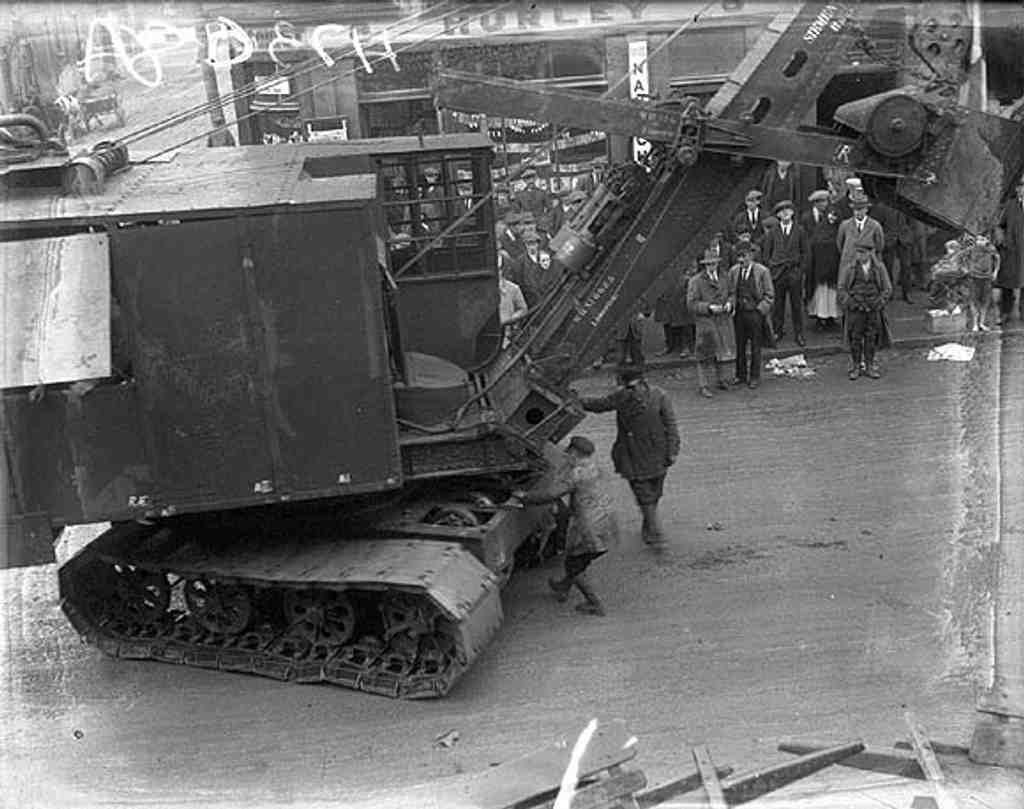
Locals know something most visitors miss: the tobacco handled here did not simply come from nearby fields. Limerick traders brought leaf from the United States, Egypt, and Turkey as well as from Irish growers. So this apparently ordinary city street sat inside a supply chain that stretched across oceans. If you glance at the image on your phone, the steam shovel passing Hurley’s Tobacconists in nineteen twenty-eight catches that mood exactly: commerce first, sentiment later. Then came the familiar urban turn. Roches Stores bought premises here in nineteen thirty-seven, suffered a fire in nineteen forty-seven, and reopened on O’Connell Street in nineteen fifty-one. Decades later, Dunnes Stores shut its large complex here in two thousand and eight and moved to Henry Street. Debenhams, formerly Roches Stores, closed in two thousand and twenty when the company collapsed in Ireland. What looked like a single retail loss was really the latest round in a long habit of opening, burning, moving, closing, and starting again.
The street’s fragility showed itself brutally in Storm Darwin in February two thousand and fourteen. Part of a building collapsed outside Sullivan’s pharmacy. The boathouse next door lost its roof. Fire crews evacuated a University of Limerick student after the door blew off her fourth-floor apartment. Part of the old Dunnes frontage also came down onto a car at the lights.
And yet, even that shell found a second use. In two thousand and nineteen, the University of Limerick bought the former Dunnes building for eight million euros, then turned it into a city-centre campus and Fab Lab, a workshop for design and digital making. In two thousand and twenty-three, the rezoning made it official: this street would not simply wait for the next shop tenant.
From here, walk about four minutes to Ormston House, where another kind of reinvention waits.




