
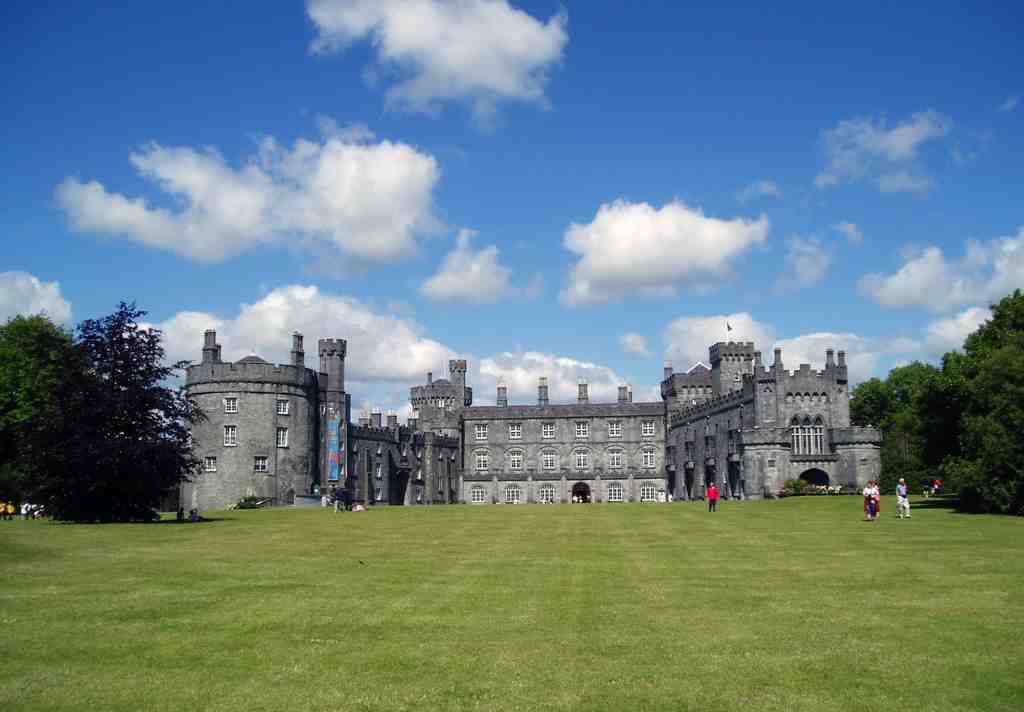
Look ahead for a sprawling grey stone castle with three massive round towers, tall battlements, and an enormous green lawn stretching out in front-if you see a fortress that looks like it could handle a dragon or two, you’ve found Kilkenny Castle!
Alright, take a moment to appreciate this view-standing here, you’re right where power, intrigue, and a fair bit of ambition shaped the story of Kilkenny. If you squint, you might even spot a time-traveling knight looking for his charger. Let’s rewind to the twelfth century, when this ground hummed with activity. The very first castle here was more wood than stone, planted by Strongbow himself-Richard de Clare, a Norman with a very dramatic nickname-after he swooped in as part of the Norman invasion. Over the next century, this place was fortified with thick stone walls and corner towers, a formidable statement to all who dared take on its inhabitants.
By 1260, the stone castle was completed, and you can see three of its original four towers still standing guard. Imagine the clang of armor and the kerfuffle of defenders in the Parade, which was once a huge defensive ditch.
The castle changed hands-via a bit of family drama and royal intrigue-from the de Bohun family to the Butlers in 1391. Now, the Butlers may sound like a particularly well-dressed football team, but in fact, they were a dynasty with lands stretching across Ireland, England, Wales, and even as far as France. Under their stewardship, the castle became more than just a military stronghold. It was home to births, deaths, alliances…and even a bit of royal scandal. Lady Margaret Butler was born here, and she went on to become the grandmother of none other than Anne Boleyn-yes, that Anne Boleyn, ill-fated wife of King Henry VIII.
Fast forward to the 1600s-the castle became an unlikely seat of revolution. The Butler in charge was loyal to King Charles I (he was even a Protestant, rare for his family), but his ancestral home was taken over by the Catholic rebels of Confederate Ireland. In these rooms, their secretive "Supreme Council" plotted and planned, their voices bouncing off thick stone walls even as cannons, and one very bad-tempered Oliver Cromwell, battered the east wall. The castle took a bruising, with one of its towers blown apart and later rebuilt in the style of a French château. Talk about a dramatic renovation project.
The centuries rolled on and tides of fortune ebbed. By the 1800s, parts of the castle became quite shabby-“gentle decay” might be the polite phrase. Yet thanks to the wealthy Anne Wandesford, a new era of repairs began. Eventually, the Butlers even hosted a royal visit-King Edward VII dropped in, probably for the scones.
But times grew tougher. The estate dwindled from tens of thousands of acres down to just the 95 you see today. By the early 1900s, the Butler’s income was shrinking fast; perhaps that’s why Lady Ormonde startled her fancy guests by announcing, “we are very poor” (though, let’s be honest, “poor” is relative when you live in a castle with seventeen servants).
There was one more wave of drama during the Irish Civil War. The Ormondes, stoic as ever, watched the chaos from their bedroom above the great gate while machine guns rattled outside the door. After further struggles, the family finally sold the castle-furniture and all-and abandoned it for thirty years, while the walls gathered more dust than secrets.
But don’t worry! In 1967, the people of Kilkenny bought the castle for the princely sum of £50. That’s right, £50! There was singing, a swanky handover party, and, for reasons only rock stars can explain, Mick Jagger and Marianne Faithfull showed up looking to “loon about.”
Today, the castle and its enchanting gardens belong to the people. Its halls have seen Norman knights, rebel councils, and just maybe, a wandering ghost pondering if Mick Jagger ever found what he was looking for here. Take a wander-this castle’s stories are always looking for a new listener.
Interested in knowing more about the butler gallery, excavations or the burials in the crypt


