
Dublin Audio Tour: Landmarks, Legends, and Melodies
A shining needle pierces the Dublin sky while ancient columns whisper secrets below—this city is layered with bold dreams, rebellion, and unexpected twists. Trace Dublin’s wild spirit on a self-guided audio tour that plunges you into stories and corners most travelers overlook. What crack of thunder tore the silence when an icon was obliterated in O’Connell Street? Who risked everything behind the General Post Office’s battered columns as bullets flew and revolution flared? Which ceremony left Dubliners debating if their cathedral was a gem or just not grand enough—and why do musical notes linger like ghosts beneath its vaulted ceiling? Stride through political upheavals, fires, fierce debates, secret symbols, and sly nicknames as every step unlocks untold drama. Feel the energy shift as lost legends, daring schemes, and heroic voices echo along bustling streets. Raise your gaze to the clouds—Dublin’s hidden history is waiting for you to press play.
Tour preview
About this tour
- scheduleDuration 30–50 minsGo at your own pace
- straighten3.1 km walking routeFollow the guided path
- location_on
- wifi_offWorks offlineDownload once, use anywhere
- all_inclusiveLifetime accessReplay anytime, forever
- location_onStarts at Spire of Dublin
Stops on this tour
If you look straight down O’Connell Street, you can hardly miss it: a super tall, silvery, needle-like monument shooting high into the clouds, towering above everything…Read moreShow less
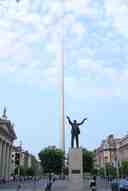
If you look straight down O’Connell Street, you can hardly miss it: a super tall, silvery, needle-like monument shooting high into the clouds, towering above everything else! Welcome to the foot of the Spire of Dublin-the giant pin that pierces the sky! If you ever wondered how you’d spot it, just look up. If it’s cloudy, look for the place where the clouds seem to get poked! Now, standing here on O’Connell Street, you’re at the exact spot where history has come and gone, and come back again-almost like Dublin’s very own magic trick. But let me take you on a little journey back in time. Picture the year 1966: the street is packed, there’s a tense hush in the air, and suddenly-boom! The great Nelson’s Pillar, which had stood here for years, was blown up by former IRA members. Six days later, any wobbly remains were knocked down in a more controlled demolition, leaving this spot in a bit of a messy limbo. For decades, the heart of Dublin was marked by an empty space-a sort of ghostly echo where proud stone once stood. Nobody could quite agree on what to do with the site. For years, Dubliners argued and puzzled and, honestly, scratched their heads over it. Finally, there was a brief experiment: the Anna Livia monument, a celebration of the city’s Millennium in 1988. But even that was swept away when, in 1998, Dublin decided it was time for a grand makeover. Back then, O’Connell Street wasn’t quite the lively, buzzing place it is today. There were too many fast-food joints, flashy plastic shop fronts, a bit too much derelict space-and the trees along the road had grown so thick, they blocked the view of almost everything! The city council hatched a big plan: out with the old image and in with a new family-friendly atmosphere. That meant-brace yourself-cutting down a century’s worth of trees, moving statues around, and telling shopkeepers to replace tacky signs. It wasn’t everyone’s cup of tea, and, honestly, those trees had more than a few vocal supporters. In the middle of all this, a competition was held to choose a new monument for the street. Fancy international architects sent in their ideas, each wilder than the last. In the end, a sleek, shining spire, designed by Ian Ritchie, won the day. "Elegant and dynamic simplicity," he called it-and when you look up at the 120-metre-tall Spire, you have to admit: it’s like the world’s most optimistic knitting needle pointing skyward. But that’s not all! Some folks loved it, some thought it looked like a giant toothpick, and the city’s clever wits quickly started giving it nicknames-from “the stiletto in the ghetto,” to “the stiffy by the Liffey,” or my personal favorite, “the pin in the bin.” You can’t go wrong with a rhyming joke! Building the Spire wasn’t exactly a walk in St Stephen’s Green, either. Construction was delayed by court cases, environmental studies, and even the odd grumble from people who just thought it was a bit wobbly. It’s made of eight huge hollow steel cone sections, stacked one atop another, and inside, there are even tuned mass dampers designed by heroic engineers-so it doesn’t sway dramatically every time the wind blows. At dusk, the base glows, and the tip twinkles through thousands of tiny holes, almost like a secret message lighting up the city’s evening sky. Here’s a fun secret for you: the spiral patterns at the bottom aren’t just art-they’re inspired by the DNA double helix and the actual rock found beneath this very spot. So, Dublin’s story is literally written into the metal beneath your feet. And, just when you think it couldn’t get any more futuristic, a “Portal” was opened here in May 2024. It’s a live video stream connecting Dublin’s Spire with New Yorkers at the Flatiron Building, so wave up at the top-you might end up on the world’s biggest video call! For some, The Spire stands for Ireland’s hopes and new ambitions during the big economic boom known as the Celtic Tiger. For others, it’s a wild, shiny statement in the middle of Dublin-a bold spike of optimism, silliness, controversy, and imagination. Now, take another look up and marvel. From Nelson’s destroyed pillar to this shimmering needle of light, Dublin keeps finding new ways to surprise us. To delve deeper into the construction, reception or the award nominations, simply drop your query in the chat section and I'll provide more information.
Open dedicated page →Look ahead for a grand stone building stretching along O’Connell Street, topped with three statues and marked by a row of towering columns forming a striking portico-if you see…Read moreShow less
Look ahead for a grand stone building stretching along O’Connell Street, topped with three statues and marked by a row of towering columns forming a striking portico-if you see six tall, fluted columns and an Irish flag waving above, you’ve found the General Post Office. Standing here on O’Connell Street, let your imagination slip back through time to the early 1800s, when this street would have echoed with the clatter of horse hooves and the bustle of carriages. The grand building before you is the General Post Office, or GPO, one of Dublin’s proudest landmarks and a silent witness to Ireland’s most dramatic moments. Designed by Francis Johnston, this was the very last of the grand Georgian public buildings to rise in Dublin, its foundation stone set in 1814 with great ceremony. Lord Lieutenant Charles Whitworth must’ve been in a good mood-he brought not just dignitaries, but two Earls to mark the occasion. Hard to believe that in just three years, with an eye-watering bill somewhere between £50,000 and £80,000 (depending on who you ask!), this immense structure was finished. As you look up, you’ll notice the building’s mighty granite and mountain stone façade. Those six enormous Ionic columns-you could probably hide an entire rugby team behind each one-hold up a portico that’s 80 feet wide. If you follow the line to the top, you’ll see a trio of statues laid out by John Smyth. On the left, Mercury raises his Caduceus and purse-perhaps eyeing up some speedy mail delivery-while Fidelity, with her loyal hound and sturdy key, takes the right, and in the center stands Hibernia, the personification of Ireland, clutching her harp like the world’s most serious busker. In its earliest days, the GPO was Dublin’s pulsing hub for the written word. But before settling here, the post office had a wandering spirit. It hopped from High Street to Fishamble Street, then Sycamore Alley, and even to a chocolate house in Fownes Court-imagine collecting your post with a side of hot cocoa! It finally opened its gleaming doors on Sackville Street (now O’Connell Street) in 1818. Now, prepare yourself for a whiff of gunpowder and the crackle of history. In 1916, this building wasn’t just delivering letters-it delivered a revolution. During the Easter Rising, the GPO was commandeered by rebels who planted themselves right where you’re standing now, determined to change Ireland’s destiny. Picture the street thrumming with tension, smoke drifting through broken windows, acrid and sharp. Outside these columns, Patrick Pearse read the Proclamation of the Irish Republic, his voice shaking the air and the hearts of everyone who could hear. The building was battered by the fighting-flames devoured the inside, but the granite façade clung on stubbornly, refusing to fall. It wasn’t rebuilt until 1929, when a new Ireland was trying to find its feet. Even after the ashes cooled, the building’s scars became part of its story. Inside, a statue of the mythical hero Cúchulainn, created by Oliver Sheppard, found a home. It’s a dramatic sight-Cúchulainn slumped, heroic but fatally wounded, every inch a symbol of sacrifice. On the 50th anniversary of the Rising, he made it onto the Irish ten shilling coin-proof that legends and spare change sometimes cross paths! The GPO hasn’t only been a post office. For years, it was home to Ireland’s national radio station, 2RN (later Radio Éireann), so maybe if you strain your ears, you’ll catch the faintest echo of a jolly broadcast from decades past. Prize Bonds are drawn here every Friday; who knows, maybe fortunes have been made over the same marble counters where rebels planned their fates. Just around the back, you’ll find the GPO Arcade-a slice of Art Deco that practically begs for a hat and a jazz band. On this very street, Nelson’s Pillar once stood tall nearby before meeting a rather explosive end in 1966, only to make way for the Spire you saw earlier. In more recent times, the GPO’s museum was transformed into the “GPO Witness History” center, where you can step straight into the sound and chaos of 1916. An Post, Ireland’s own postal service, kept its headquarters here until 2023, but the heart of the GPO still beats with the rhythm of Dublin-steady, proud, and always delivering a bit more than just the mail. So, as you stand before those columns and busy doors, you’re not just outside a post office. You’re brushing up against the living, breathing story of a nation-whether it’s the thunder of rebellion or the quiet hope held in a simple letter. Forward we go on our Dublin adventure-let’s keep delivering the stories!
Open dedicated page →To spot St Mary’s Pro-Cathedral, just look for the impressive row of tall, white stone columns and the statues perched above the triangular roof right at the corner of Marlborough…Read moreShow less
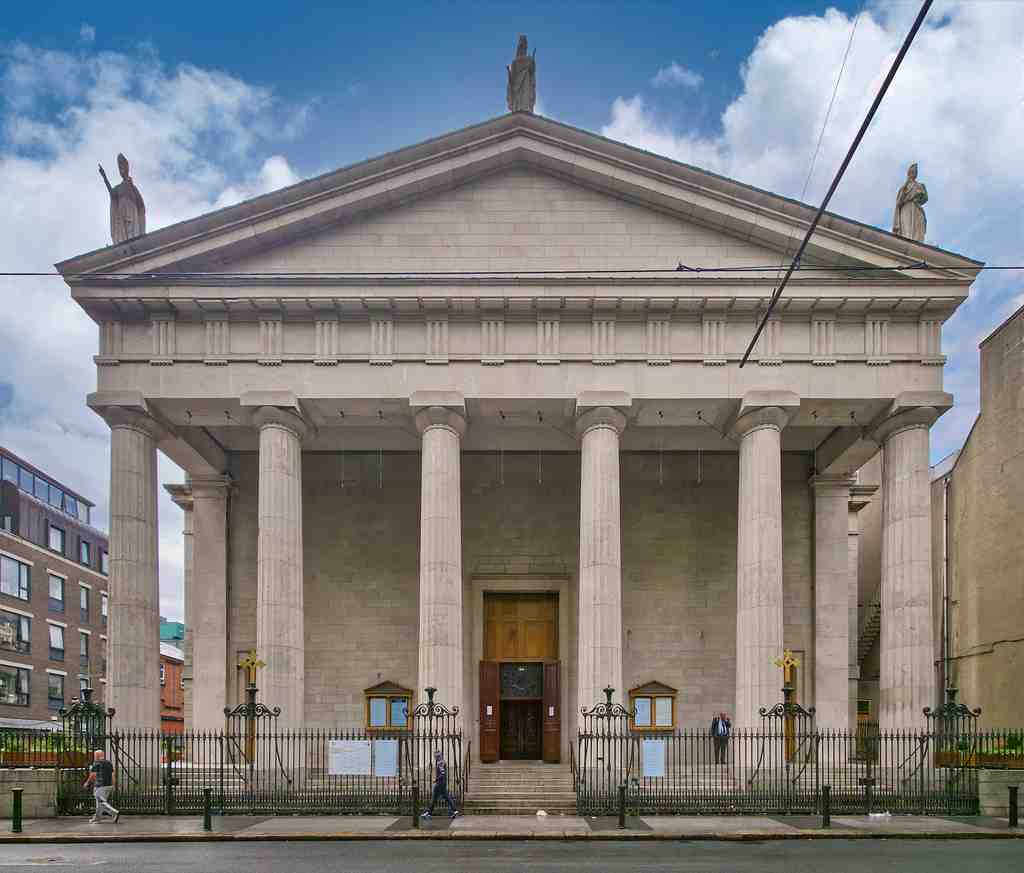
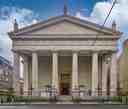
To spot St Mary’s Pro-Cathedral, just look for the impressive row of tall, white stone columns and the statues perched above the triangular roof right at the corner of Marlborough Street-it’s hard to miss, especially since it looks a bit like something you’d expect in ancient Greece and not smack in the center of Dublin! Now, imagine you’re standing here in the early 1800s: Dublin is bustling and noisy, but Catholics like you are sneaking down narrow, twisty lanes just to find a hidden chapel, because for centuries, the law said Mass was strictly off-limits. But things are changing. The Penal Laws, which for generations made Catholic life downright miserable, are crumbling away like old plaster. With a burst of hope (and probably a sigh of relief), Archbishop John Thomas Troy nabs the land beneath your feet from a grand townhouse, and a decade later, this grand building begins to rise, all stone and columns and possibility. It’s not a “real” cathedral-at least not by Vatican paperwork standards. The title here is “pro-cathedral,” which means, well, provisional, a stand-in. Dublin has two official cathedrals, but they belong to the Church of Ireland, not the majority Catholic community. Bit awkward, right? Picture a centuries-long game of religious musical chairs, with Christchurch holding the top spot-by papal decree, no less-since St Laurence O’Toole’s time back in the 12th century. But here’s where the Pro’s story gets really lively. It opened its doors in 1825, a swirl of Greek Revival pillars outside, with an interior inspired by grand Parisian churches. Dublin’s Catholics could finally worship in public again-no more hiding in shadowy alleyways or glancing nervously over their shoulders. As you stand by the great steps, imagine the crowd on Daniel O’Connell’s big day: Dublin’s first Catholic Lord Mayor in centuries, tumbling out of a grand carriage to music and cheers and the echo of church bells. When O’Connell died, his body lay in state here, and the city lined up to pay their respects. The Pro-Cathedral wasn’t meant to stick around forever, but every grand plan for a full Catholic cathedral fizzled out, from wild ideas about rebuilding the fire-scarred shell of the General Post Office to snatching up a chunk of Merrion Square gardens. Dubliners, ever practical, decided they preferred their green space and the pro-cathedral, like an understudy who never got replaced, just kept shining in the spotlight. Step inside, and you’ll notice that not everything matches-the classical columns outside, the Renaissance style within. It’s been called both an “artistic gem” and, let’s be honest, an “eyesore.” In the 1970s, things were shuffled around: the grand old altar with its Victorian reredos was pulled out, altar rails vanished, and if you look up, you might spot the space where an epic fire in the 1990s almost snatched a piece of history. They saved the building, but for weeks the smell of smoke haunted the walls. And the music! The organ you might hear-its pipes soaring above-is a collage of craftsmanship dating back to Dublin’s own John White in the 1800s, fine-tuned over the decades by the best in the business. Organ lovers and world-famous recitalists have all taken their turn here, the keys echoing during every state funeral or ceremony. For something sweeter, there’s the Palestrina Choir, born from a band of schoolboys over a century ago, filling the sanctuary each Sunday with angelic voices soaring up to the stained-glass Virgin Mary. From presidential inaugurations to papal visits (yes, even Pope Francis in 2018 made the trek), the Pro-Cathedral has seen it all: triumph, tragedy, and a lot of spirited debate over architecture. It might be “provisional,” but after two centuries, it’s clear Dubliners have fallen for their not-quite-cathedral. And who can blame them? Walking past these columns, with the city humming around you, it’s easy to feel the weight of history-and the starts and stops, near-misses, and everyday miracles that brought Dublin’s Catholics into the light. Intrigued by the status, layout or the music? Make your way to the chat section and I'll be happy to provide further details.
Open dedicated page →

Show 8 more stopsShow fewer stopsexpand_moreexpand_less
 5
5Liberty Hall
Buy tour to unlock all 15 tracksTo spot Liberty Hall, look for a tall, boxy skyscraper with rows of shiny glass windows reflecting the sunlight-it’s the unmistakable building standing high above the rest just by…Read moreShow less
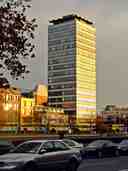
To spot Liberty Hall, look for a tall, boxy skyscraper with rows of shiny glass windows reflecting the sunlight-it’s the unmistakable building standing high above the rest just by the river, right across the road from the busy Eden Quay. Now, as you stand here, let your imagination whisk you back in time, because Liberty Hall is no ordinary office block-it’s been at the epicenter of Irish drama, courage, and politics for over a century. Today, it’s the nerve center of the SIPTU union, but its roots stretch all the way back to the early 1900s, when this spot was humming with something a little more revolutionary than paperwork. Once upon a time, before it shot up to be one of Dublin’s tallest buildings, this was the Northumberland Hotel. But soon, it became the bustling heart of the Irish Transport and General Workers Union and the Irish Citizen Army. Imagine the clang of footsteps, the low murmur of conspiratorial plans, and the smell of ink from “The Irish Worker” newspaper pressing hot off the machines, dripping with news the British administration would rather see silenced! That’s right-Liberty Hall was the secret printer of not just one, but three seditious newspapers, fueling defiance despite one ban after another. James Connolly himself edited “The Workers’ Republic” right inside, bravely penning the ideas that would change a nation. Feeling a chill yet? Keep listening. In 1913, while other buildings carried on with business as usual, Liberty Hall was running a soup kitchen, its doors flung open by Maud Gonne and Constance Markievicz themselves. The air would be thick with the scent of hot broth and the sound of hungry children, their parents battered by the Lock-out but standing together in solidarity. As the clouds of World War One gathered, a great banner was unfurled across the building’s face, declaring “We Serve Neither King nor Kaiser, But Ireland.” That took guts-maybe not as much as what happened next. Liberty Hall became a makeshift munitions factory, its rooms echoing with the clatter of makeshift weapons, all prepared for the 1916 Easter Rising. Picture the leaders of the Rising stepping out those very doors, the energy crackling as they marched off to the GPO, leaving only one man behind-Peter Ennis, the caretaker, holding the fort while Dublin erupted in revolt. The British, not realizing Liberty Hall was empty, shelled it first, shaking the ground you’re now standing on. The building was battered, but just like the spirit inside it, Liberty Hall was rebuilt. Fast forward to the 1960s: a new Liberty Hall rose up, designed by Desmond Rea O’Kelly, scraping 59 meters into the air-Dublin’s tallest building at the time! Its original windows, meant to be crystal clear, were shattered in a UVF car bomb blast in 1972, replaced now with slightly mysterious, reflective glass. So next time you see the sun bounce off its windows, don’t just think “office block”-think of all the secret meetings, the bans, the soup kitchens, the homemade bombs, and the stubborn, shining hope that once filled Liberty Hall, making it as mighty in spirit as in height. And hey, if it ever feels a bit out of place, just remember-Dublin tried to replace it in 2012, but Liberty likes to stick around. Some buildings just refuse to lose their story!
Open dedicated page →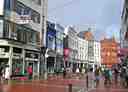 6
6Grafton Street
Buy tour to unlock all 15 tracksRight ahead of you, you’ll see a bustling pedestrian street lined with shops and colorful facades, with a striking red-brick building on your right-a sure sign you’ve arrived at…Read moreShow less
Right ahead of you, you’ll see a bustling pedestrian street lined with shops and colorful facades, with a striking red-brick building on your right-a sure sign you’ve arrived at the heart of Grafton Street. Welcome to Grafton Street-where the beat of Dublin pulses through every cobblestone! Take a breath and look around; you’re standing on one of the liveliest stretches in the city, where history and modern life dance together like two buskers trading tunes for coins. It’s hard to believe now, with the hum of shopping bags and the sound of laughter, but Grafton Street began as a sleepy laneway in the early 1700s. Back then, you might have come across the odd horse and carriage or a fashionable Dublin family peering out their parlor window. But, thanks to a little river called the Steyne-now hiding beneath your feet-this street was shaped into what you see today, winding its way from the heights of St Stephen’s Green down to the busy buzz of College Green. Now, if you think Grafton Street has always been this glitzy, I have a tale to surprise you! Once named after the 2nd Duke of Grafton, who, funnily enough, was an illegitimate grandson of King Charles II (family reunions must’ve been interesting), the area was, at first, a place for the city’s well-to-do. But Dublin has a way of mixing things up-once the street was linked to the grand Carlisle Bridge in the late 1700s, it started changing from cozy homes to busy shops and taverns, quickly becoming the cross-city artery you’re standing on now. By the 1800s, Grafton Street wasn’t looking her best. Broken windows patched up with paper, tired old buildings tilting together, and a reputation that might raise an eyebrow or two. In fact, the street was so infamous for its “nighttime activity” that tourist guides gave it a cheeky mention, warning the ‘virtuous’ women of Dublin to stick to shopping before sundown! Somehow, even with a reputation that would make your granny blush, it still managed to be a fashionable destination-don’t ask me how, maybe it’s the charm of the Irish. But Dubliners, ever resilient, have a way of turning things around. By the late 19th and early 20th centuries, shops like Switzer’s, Brown Thomas, and Weirs Jewellers sprang up, sowing the seeds of Grafton’s rise as a shopping mecca. Fun fact: the city’s first Woolworth’s opened here in 1914, followed by Ireland’s first McDonald’s in 1977-giving Dubliners cheeseburgers to go with their coffee from the famous Bewley’s Café, which opened its doors to cocoa-lovers in 1927. Anybody fancy a coffee and a Big Mac with some Georgian architecture? By the 1960s, Grafton Street had another problem-traffic jams! Cars and buses clogged the cobbles. Then, after much debate (and probably a few arguments worthy of an Irish pub), the street began pedestrian-only trials. Some folks worried this would cause trouble, but instead, it became the stage for one of Dublin’s grandest changes: a street made just for people, festive lights, window shopping-and Dublin’s best buskers. Bonus point: if you stroll here in December, the Christmas lights turn the whole street into a twinkling wonderland, with over 300,000 bulbs lighting the way. That’s enough sparkle to guide Santa himself! And speaking of buskers, you’re standing on sacred ground for musicians. The likes of Bono, Glen Hansard, Damien Rice, Rodrigo y Gabriela, Hudson Taylor, Paddy Casey, and even Chris Martin have played here. Maybe you’ll catch a melody that stops you in your tracks-just be sure to drop a euro in the guitar case! Street performers have to earn a special license and can only play at each spot for an hour before giving someone else a chance. Busking on Grafton Street isn’t just a pastime; it’s a tradition, especially on Christmas Eve, when the “big busk” raises money for those in need. You never know who you might see-famous faces are no strangers to these cobblestones. Literature and song have walked these bricks, too. Grafton Street appears in James Joyce’s writing, Irish folks songs, international tunes by Nanci Griffith and Dido, and even Ed Sheeran’s “Galway Girl.” There’s even a Monopoly square named for it! Look up and spot Bewley’s with its art-deco stained glass, or say hello to Phil Lynott’s bronze statue just off the street-he’s affectionately known as the “Ace with the Bass.” There’s no other street in Dublin where every step is a story, and who knows, maybe today you’ll become part of Grafton’s legendary tapestry. So, soak it in-sights, sounds, and maybe an overpriced latte-and imagine all those who walked here before you. If only these cobblestones could talk… but for now, you’ve got me. Ready to delve deeper into the name, properties or the monuments? Join me in the chat section for an enriching discussion.
Open dedicated page →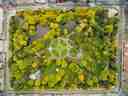 8
8St Stephen's Green
Buy tour to unlock all 15 tracksLook ahead for a large rectangular park, bordered by tree-lined paths and a patchwork of green lawns and winding water, with a small playground and a formal circular garden right…Read moreShow less
Look ahead for a large rectangular park, bordered by tree-lined paths and a patchwork of green lawns and winding water, with a small playground and a formal circular garden right at its heart-this beautiful oasis is St Stephen’s Green. Welcome to St Stephen’s Green, where Dublin’s hustle and bustle suddenly gives way to a sea of leaves, laughter, and the sound of ducks splashing in their own private lake. If you let your mind wander, you might hear the distant echo of horses’ hooves or the rustle of silk skirts from many years ago-because this patch of green has been at the centre of city drama, joy, and the occasional duck-feeding ceasefire for centuries! Can you believe that right where you stand, this was once a marshy, watery common on the edge of town? It was so soggy that only cows and the bravest (or most desperate) of Dubliners would trek across it. In 1663, the city decided to cash in: they fenced off the centre and sold those juicy bits around the edge to would-be homeowners. Suddenly, what had been a wandering ground for geese began its transformation into Dublin’s most fashionable address. People built houses-at first, small and simple, later increasingly grand as the century marched on. Imagine 18th-century elites strolling “Beaux Walk” to the north or gossiping on “Leeson’s Walk” to the south! But, as can happen in cities, gates and fences went up, and unless you owned a plot or could pass as a resident’s distant cousin, you weren’t getting in. For two centuries it was a private garden, jealously guarded by the wealthy who looked out on its 27 acres of carefully planned perfection. It was only thanks to Sir Arthur Guinness-the famous brewer and, as it turned out, a champion of city dwellers’ rights-that the gates finally swung open to everyone in 1877. Three cheers for beer-not only does it refresh, but apparently it can also open parks! As you stroll, look out for details that run deep with history. That statue of Lord Ardilaun, our park-opening hero, faces the Royal College of Surgeons. There’s a W.B. Yeats memorial garden, a bust of James Joyce staring back at his old university, and a tribute to Countess Markievicz, a revolutionary who, like the city itself, didn’t care much for taking “no” for an answer. But don’t be fooled by the calm. In 1916, just past where those ducks glide, rebels of the Irish Citizen Army dug trenches and set up roadblocks during the Easter Rising. They thought the open park would give them the advantage-but the British Army thought otherwise and took sniper positions in the Shelbourne Hotel, which still towers at the northeastern corner. Eventually, the rebels withdrew, but not before both sides called a temporary truce... just so the park’s kindly groundskeeper could feed the ducks. Even in a revolution, Dubliners have their priorities! Stand for a moment and let your senses take over. The perfume of a hundred different flowers drifts past, mixed with the earthy scent from the garden for the blind-where every plant is hardy enough to be touched and labelled in Braille. Catch the sound of city students laughing or a street musician’s notes drifting across the open lawns near the bandstand where crowds have gathered for generations. If you notice some grand red-brick houses or even the odd modern office, you’re spotting the changing face of the Green. Many buildings date from Dublin’s Georgian heyday, others sprouted more recently-look out for the Stephen’s Green Shopping Centre, meant to look like a grand conservatory but often just known as “the big glassy one” by locals. Around the edges, you’ll see reminders of the park’s legacy-memorials to rebels, famine victims, poets, soldiers, and even the ducks, who quite possibly, have the best-kept secret in Dublin. As you walk its winding paths lined with lime trees, think how this green heart of Dublin has meant everything from posh resort to rebel outpost to lunchtime escape. So, take a breath, listen for history’s whispers, and if you hear quacking, be sure to give the ducks my regards. They, like the rest of us, are just enjoying the ever-welcoming St Stephen’s Green. To delve deeper into the park, architecture or the transport, simply drop your query in the chat section and I'll provide more information.
Open dedicated page → 9
9The Mansion House
Buy tour to unlock all 15 tracksTo spot the Mansion House, just look for the stately cream-colored building with a grand entrance, three flagpoles flying proudly on its roof, and a symmetrical row of windows…Read moreShow less
To spot the Mansion House, just look for the stately cream-colored building with a grand entrance, three flagpoles flying proudly on its roof, and a symmetrical row of windows topped with a decorative crest right above the central door, all perched along Dawson Street. Welcome to the Mansion House, where history, politics, and the occasional royal drama have played out for over three centuries! Picture yourself back in 1710, standing on what was once a marshy patch of land outside Dublin’s medieval walls. Now, right before you, rises this elegant Queen Anne-style house, with its seven perfectly lined-up windows across the front. Built by Joshua Dawson, a merchant with more vision than a fortune teller, it wasn’t long before the city snapped it up in 1715 as the grand residence for Dublin’s Lord Mayor. In those early days, just imagine horse-drawn carriages rumbling up to the entrance, the Mayoral chain glinting as Dublin’s finest swept up the steps. And as time rolled on, this house became a guestbook of the city’s biggest moments. In 1821, with the arrival of King George IV, they built the famous Round Room just to give him a royal welcome. The drama didn’t stop there-Queen Victoria herself was honored here in 1900, marked by a stained glass window on the staircase sparkling in the evening sun. But hang onto your hat, because politics were brewing inside these walls! In 1919, if you had peeked into the Round Room, you’d have caught the first-ever Dáil Éireann gathering to boldly proclaim Irish independence. Just two years later, the same room saw the heated debates and ultimate ratification of the Anglo-Irish Treaty. At times, this stately house nearly met its end-plans popped up in the 1930s to bulldoze the block for a shiny new City Hall. Thankfully, the Mansion House dodged the wrecking ball, the government setting up its Department of Industry and Commerce nearby instead. And here’s a twist worthy of a detective novel: in 1981, the Mansion House was swept by a security frenzy when a claim surfaced that a bomb had been planted during a Sinn Féin conference decades earlier. The Gardaí and army combed every corner-you can almost hear the echo of their footsteps and anxious whispers. Spoiler alert: no bomb was ever found! Today, the Mansion House still stands, sturdy as ever, and continues to host proud occasions, like the centennial session of the Dáil in 2019. Now, as you stand here with the hum of Dawson Street behind you, imagine the layers of history echoing off these old walls. Not every day you get to meet a house with a resume like this, is it?
Open dedicated page → 11
11Leinster House
Buy tour to unlock all 15 tracksLook ahead for a grand grey stone building with many tall windows, columns, and a triangular pediment centered above its entrance-it’s standing proudly at the top of Kildare…Read moreShow less
Look ahead for a grand grey stone building with many tall windows, columns, and a triangular pediment centered above its entrance-it’s standing proudly at the top of Kildare Street. Now, as you stand before Leinster House, take in its stately silence and imagine the lives and secrets cradled within these elegant stone walls. Once upon a time, this wasn’t the bustling seat of Irish politics but the plush palace of the Dukes of Leinster-those were the days of sparkling chandeliers, ball gowns swishing along marble floors, and horse-drawn carriages rumbling across the forecourt. In fact, back in 1745, when James FitzGerald, the ambitious Earl of Kildare, had this house built, people thought he’d lost the plot-who’d want to build a palace out here on the “unfashionable” side of Dublin? But he had a vision, and sure enough, the city’s upper crust soon followed, filling Merrion Square and Fitzwilliam Square with their grand residences too. Picture heavy velvet curtains, the smells of roasting game from the kitchens, and a long line of carriages arriving for lavish parties. The Earl became the first Duke of Leinster in 1766, and the house took on its legendary name. No other mansion in Dublin could match it for size or glamour. Some say its first and second floors inspired Irish-born architect James Hoban’s design for the White House in Washington, D.C-so, you’re looking at the “blueprints” of the White House right here! At one point, Lord Edward FitzGerald, the Duke’s rebellious son and unlikely hero of the 1798 Rebellion, even roamed these halls, harboring dreams of revolution. But the grandeur didn’t last forever. After the Act of Union in 1800, Ireland’s parliament was dissolved, the lords and ladies drifted off to London, and houses like this began to gather dust-or in less lucky cases, turn into slums. By 1815, the 3rd Duke sold Leinster House to the Royal Dublin Society, whose famous Spring Show and Horse Show brought crowds spilling onto the lawn facing Merrion Square. The gentle thump of hooves and the cheers of the crowd, can you imagine it? Leinster House has worn many hats. In 1853, it hosted the Great Industrial Exhibition, and the Natural History Museum rose next door a few years later. Elegant new wings sprouted up to house the National Library and National Museum-so the place just kept getting busier. Fast-forward to 1922: the Irish Free State is born, and Michael Collins is in a dash to find a home for its brand-new parliament. Plans to settle into the grand Royal Hospital Kilmainham were scuppered-the British Army hadn’t yet packed their bags. So Leinster House, with its spacious former lecture theatre, was “temporarily” rented for the Oireachtas. And, as with so many good Irish arrangements, the temporary soon became permanent. Parliamentarians adapted the ballroom into a Senate chamber-a bit more dramatic than a typical office, but who could resist? Over the years, the place grew in all directions, with extra wings, modern offices, committee rooms, and even a few handy bars for thirsty politicians. During the 1960s, new blocks were slapped on, and the 2000s saw further upgrades to keep up with the swelling ranks of TDs and senators. There’s even a variety of offices scattered around nearby streets, so if you think Irish politics is contained inside these walls, you’d be mistaken-it tends to spill onto the pavements as well. Look closely at the gardens on the Merrion Square side, and you’ll spot a monument jam-packed with Irish history-a triangular tribute to Arthur Griffith, Michael Collins, and Kevin O’Higgins: three giants of Ireland’s fight for independence and early government, their legacy as weighty as the stone beneath your feet. And if you feel a sense of déjà vu in front of those columns, it might be because, once upon a time, a huge statue of Queen Victoria glowered over the entrance-imagine the parliamentarians dodging her icy stare! It’s said her statue was shipped off to Australia in 1987, a sign of Ireland leaving its colonial days behind. Leinster House has even hosted world leaders-from John F. Kennedy to French president François Mitterrand-a parade of history-makers all gathering beneath these timeless columns. Yet, this grand building has its own troubles. A 2008 report warned of creaky floors and dodgy wiring-a house with as much drama as any parliament! Thankfully, after a massive restoration wrapped up in 2019, it’s standing stronger than ever. Picture the entire building wrapped in scaffolding and plastic, like a birthday present waiting to be unwrapped, while the city watched anxiously for its rebirth. So, next time you hear the words “Leinster House” in the news, remember: it’s more than a building-it’s a living, breathing stage for centuries of Irish ambition, high society, rebellion, and democracy, where today’s big decisions echo through the same halls that once held lavish balls and secret debates. Now, how’s that for a final act on our Dublin tour? Yearning to grasp further insights on the extensions, structural concerns and restoration or the legacy and inspirations? Dive into the chat section below and ask away.
Open dedicated page →
Frequently asked questions
How do I start the tour?
After purchase, download the AudaTours app and enter your redemption code. The tour will be ready to start immediately - just tap play and follow the GPS-guided route.
Do I need internet during the tour?
No! Download the tour before you start and enjoy it fully offline. Only the chat feature requires internet. We recommend downloading on WiFi to save mobile data.
Is this a guided group tour?
No - this is a self-guided audio tour. You explore independently at your own pace, with audio narration playing through your phone. No tour guide, no group, no schedule.
How long does the tour take?
Most tours take 60–90 minutes to complete, but you control the pace entirely. Pause, skip stops, or take breaks whenever you want.
What if I can't finish the tour today?
No problem! Tours have lifetime access. Pause and resume whenever you like - tomorrow, next week, or next year. Your progress is saved.
What languages are available?
All tours are available in 50+ languages. Select your preferred language when redeeming your code. Note: language cannot be changed after tour generation.
Where do I access the tour after purchase?
Download the free AudaTours app from the App Store or Google Play. Enter your redemption code (sent via email) and the tour will appear in your library, ready to download and start.
If you don't enjoy the tour, we'll refund your purchase. Contact us at [email protected]
Checkout securely with 


