
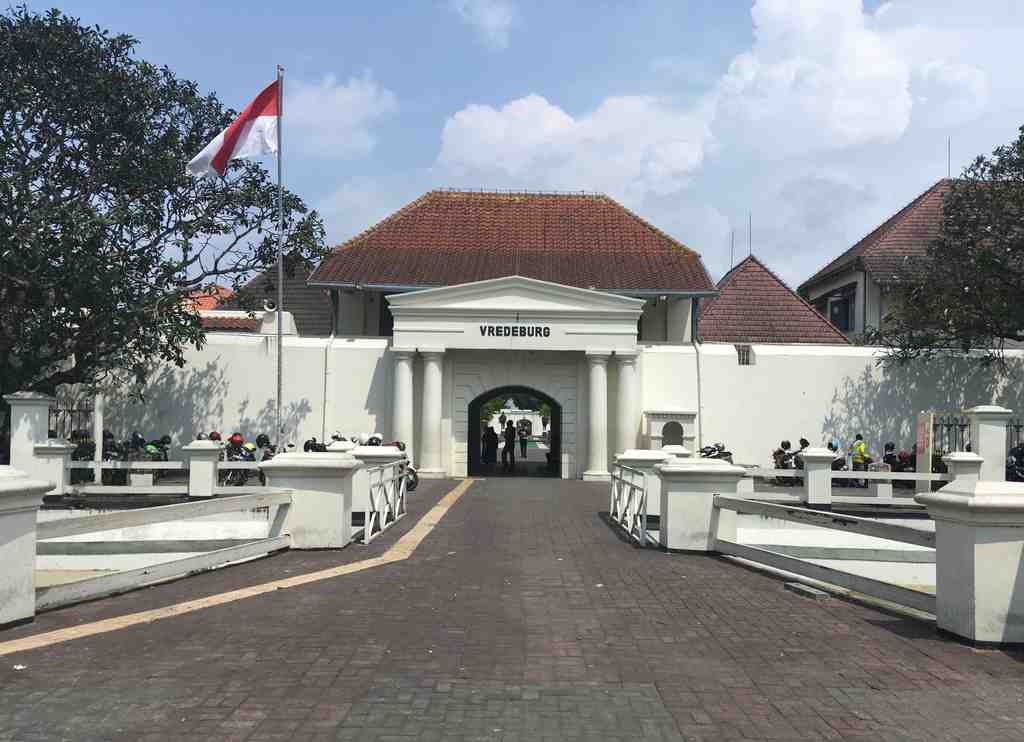
Originally built in 1760 at the request of Dutch governor Nicolaas Harting, the fort was constructed on land provided by Sultan Hamengkubuwono I. The initial fort was a relatively simple structure made of wood, with four bastions, or, in simpler terms, four corners where they could look out and say, “Hey, who's that approaching?”
Fast forward to 1767, and the wooden fort gets a major makeover, becoming a more permanent structure supervised by Dutch architect Frans Haak. Then in 1787, it got a new name: Fort Rustenburg, meaning "resting fort," which sounds almost like a spa for soldiers!
But hold your horses (or cannons)! In 1867, an earthquake decided the fort needed another makeover and completely destroyed it. When it was rebuilt, it was renamed Fort Vredeburg, or "peace fort," which given its history, may have been a bit optimistic!
During World War II, the Japanese took over the fort, turning it into a headquarters and prison. After Indonesia declared independence in 1945, the fortress served as a military post, barracks, and later, a prison for suspected communists.
In 1947, a pivotal event occurred here honoring the 40th anniversary of Budi Utomo. Ki Hadjar Dewantara suggested converting the fortress into a cultural institution. The fort then embarked on another chapter as major renovations were completed in 1982. By 1992, it officially opened as a museum chronicling Indonesia's struggle for independence.
Now, Fort Vredeburg Museum boasts an impressive collection of old photographs, historical artifacts, and dioramas. These dioramas turn history into three-dimensional scenes that immerse you in events from the capture of Pangeran Diponegoro in 1830 to Sukarno's return in 1949.
So, whether you’re a history buff or just here for the Instagram shots, Fort Vredeburg has something for everyone. Ready to march on to the next stop? Onward!


