
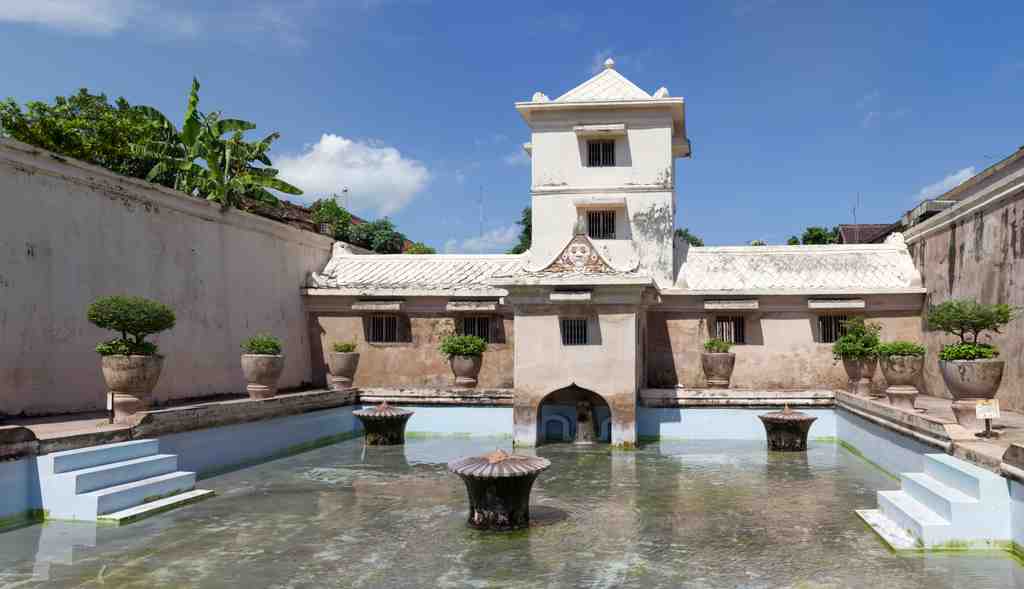
Imagine this: over 200 years ago, you'd find a complex of four main areas. One part had a large artificial lake with islands and pavilions in the west, another had a bathing complex in the center, a set of pavilions and pools in the south, and a smaller lake in the east. Today, only the central bathing complex remains preserved. The rest has been taken over by the Kampung Taman settlement.
Here's a fun fact: the name Taman Sari comes from Javanese words meaning 'beautiful garden'. And yes, it was as pretty as it sounds-filled with vibrant flowers and lush greenery. The Dutch even called it a "water castle" because, by shutting the water gates, the gardens could become immersed, transforming the area into a magnificent aquatic fortress.
The construction began during the reign of Sultan Hamengkubuwono I and saw its completion under Sultan Hamengkubuwono II. The place was masterfully designed with European influences-thanks to Tumenggung Mangundipura's trips to Batavia (modern-day Jakarta) to study European architecture.
The British invasion in 1812 caused significant damage to the structure, but don't let that dampen your spirits! The remaining buildings still reflect the beauty and grandeur of a time when the Sultan would come here to relax and meditate after a hectic war-filled life.
You can almost imagine Sultan Hamengkubuwono I saying, "I need a break," and thus Taman Sari was born-a royal retreat for relaxation, with a dash of defense and a sprinkle of meditation. The relaxing pools, which once were maintained with intricate hydraulic works, are a beautiful reminder of the past.
So, take a breath, imagine the splendor of bygone eras, and maybe splash a bit of imaginary water as you walk around. And remember, it's not just a water castle-it's a testament to royal ingenuity and a place where history floats beautifully!
Yearning to grasp further insights on the etymology, buildings or the around taman sari? Dive into the chat section below and ask away.


