
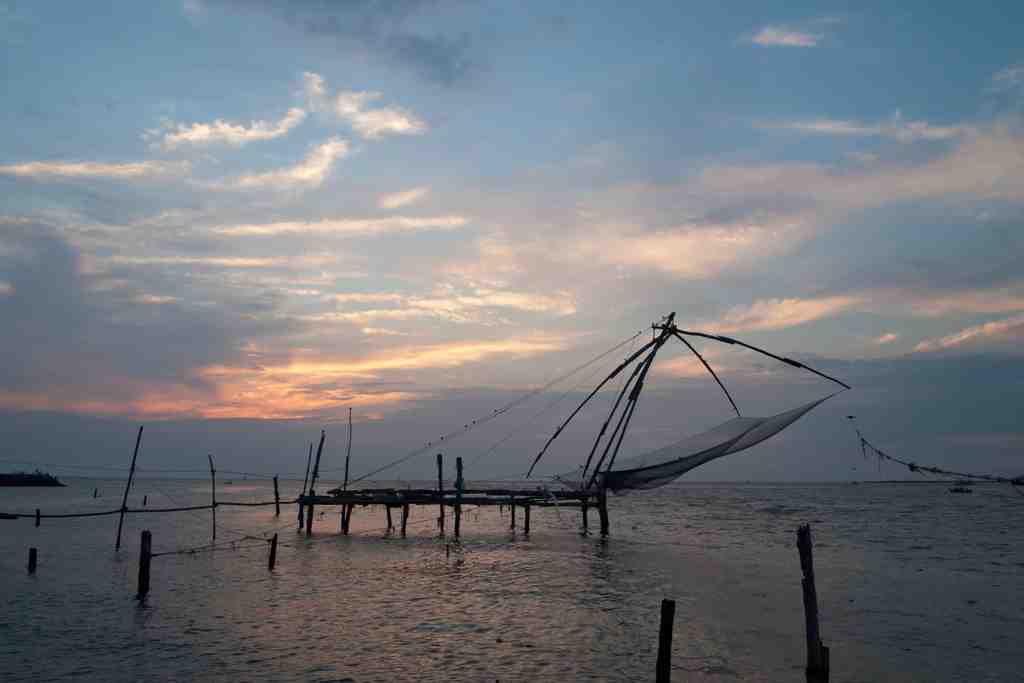
Now, Fort Kochi is not just your ordinary neighborhood. It's actually part of a group of water-bound islands and islets, collectively known as Old Cochin or West Cochin. It's like a little slice of paradise surrounded by water, and adjacent to it is the lively locality of Mattancherry.
Speaking of Mattancherry, it's the nerve town of old historic Cochin. Back in the day, when Malayalam was spoken a little differently, it was called Maadan-cheri, meaning "town of Maad." Now, you might be thinking, what on earth is Maad? Well, it's actually the stamp of the Old Royal Fort of the Rajah of Cochin. And guess what? The rajah built his palace here after a gigantic tsunami hit the port of Kodungallur or Muziris in 1341 AD. Talk about making a stylish comeback!
But let's not forget the main star of the show, Fort Kochi itself. This place is steeped in heritage and culture, making it a popular destination for tourists from all around the world. In fact, it was even ranked ninth among the top 25 tourist destinations to explore in 2020 by National Geographic. So, you're in for a treat!
To reach Fort Kochi, you can either take the roadways or the waterways. There are private buses as well as government transport buses that travel from different parts of the city to this amazing neighborhood. And to cater to the high volume of tourists, the government introduced low floor Volvo buses specifically for this route. They're like the fancy ones, you know?
Now, let's dive into some history. Fort Kochi used to be a fishing village in the Kingdom of Kochi way back in pre-colonial Kerala. But everything changed when the Portuguese arrived on the scene in 1498 through the Age of Discovery. With their arrival at Kappad Kozhikode, they opened up a direct sea route from Europe to India. Talk about convenience!
The Portuguese were granted the territory that would later become Fort Kochi by the Rajah of Kochi in 1503. And as a thank you, the Portuguese built a fort called Fort Emmanuel near the waterfront to protect their commercial interests. But the Dutch weren't all that keen on the Portuguese having all the fun, so they came along in 1683 and captured Fort Kochi, destroying many Portuguese institutions in the process. They definitely knew how to shake things up!
Fast forward to 1795, and the fort changed hands once again, this time to the British. They must have been really eager to get their hands on it! And they held on to Fort Kochi until 1947, when India gained its independence. Talk about a roller coaster ride of foreign control!
Now, if you take a stroll through the streets of Fort Kochi, you'll find a mix of old houses built by the Portuguese, Dutch, and British during their colonial periods. It's like walking through a living museum, blending different architectural styles from around the world. But one structure that definitely stands out is the St Francis Church.
Originally built in 1503 by the Portuguese as a Catholic church, it has quite a remarkable history. In fact, the famous explorer Vasco da Gama was once buried here. Don't worry, he's not here anymore, but the church still stands as a national monument, now falling under the Church of South India.
And with that, we've come to the end of our tour here in Fort Kochi. I hope you've enjoyed exploring all the wonderful landmarks and learning about the rich history of this incredible neighborhood. If you have any more questions or if you'd like to hear another joke, I'm here to entertain you. Happy travels!


