
Jaipur Audio Tour: Jaipur tour
In Jaipur, every breeze whispers secrets through 953 windows and marble lanes that have witnessed kings, rebellions, and forbidden prayers. This self-guided audio tour pulls back the city’s famed pink veil so you can unlock hidden temples, royal palaces, and the stories outsiders rarely hear. Why did palace windows turn into silent witnesses during a scandalous uprising? Who buried an ancient idol and sparked centuries of speculation? What curious event led to a lone white horse being immortalized in stone in the heart of a temple? Venture beyond postcard views as you glide between dazzling facades and sacred shrines. Trace shadows of conspiracies, devotion, and imagination on foot while Jaipur unfolds its drama with every step. Ready to discover what secrets the city has guarded behind a thousand windows? Your journey begins now.
Tour preview
About this tour
- scheduleDuration 50–70 minsGo at your own pace
- straighten2.3 km walking routeFollow the guided path
- location_on
- wifi_offWorks offlineDownload once, use anywhere
- all_inclusiveLifetime accessReplay anytime, forever
- location_onStarts at Hawa Mahal
Stops on this tour
lock_open 3 free previews · 3 unlock with purchase
Now, let's talk about its impressive architecture. The Hawa Mahal is crafted from stunning red and pink sandstone, giving it that famous "Pink City" nickname. Its five floors…Read moreShow less
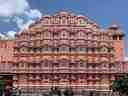
Now, let's talk about its impressive architecture. The Hawa Mahal is crafted from stunning red and pink sandstone, giving it that famous "Pink City" nickname. Its five floors resemble a honeycomb, with a whopping 953 small windows called Jharokhas. These windows are beautifully embellished with intricate latticework, making them a sight to behold. But here's the best part: these windows were not just for show! They were cleverly designed to let the royal ladies observe the vibrant street life and festive celebrations down below without being seen. Talk about having your cake and eating it too! And as if that wasn't cool enough, these windows also created a natural air conditioning effect. The Venturi effect allowed the breeze to pass through, making the palace a pleasant refuge from the scorching summer heat. Now, here's a fun fact for you: many people mistake the Hawa Mahal's backside for its front! It's like a sneaky palace playing hide-and-seek with you. In fact, the backside faces the street, offering a glimpse of its magnificent architecture to passersby. In 2006, the Hawa Mahal underwent some fancy renovations after a 50-year break. The corporate sector and the Unit Trust of India joined forces to preserve this historical gem. And let me tell you, it was totally worth it! The palace forms part of a larger complex and features stone-carved screens, small casements, arched roofs, and delicately modeled hanging cornices. It's a visual feast, my friend! As you step inside, you'll find yourself in a courtyard surrounded by double-story buildings on three sides. Ah, and let's not forget the archaeological museum nestled in this very courtyard. It's like stepping into a time capsule, filled with treasures from the past. Now, this might come as a surprise, but the top two floors of the Hawa Mahal can only be accessed by ramps. Guess those clever architects wanted to keep everyone on their toes! And who can blame them? They wanted to create a unique experience for visitors like you. So, get ready to be mesmerized by the exquisite beauty and architectural prowess of the Hawa Mahal. Don't forget to snap some photos to make your friends green with envy! Alrighty, time to move on to our next stop, the Kalki Mandir! Let's go, my adventurous friend!
Open dedicated page →Now, let me take you on a little tour of this amazing place. As we enter the temple yard, your eyes will be immediately drawn to a stunning white marble statue of a horse right in…Read moreShow less
Now, let me take you on a little tour of this amazing place. As we enter the temple yard, your eyes will be immediately drawn to a stunning white marble statue of a horse right in the center. Whoa, hold your horses! This horse looks absolutely royal, doesn't it? It's like a majestic White Stallion ready to gallop into our imagination! Inside the temple, you'll find statues of two important figures. One is Kalki, an avatar of Lord Vishnu, who is said to arrive on a mighty white horse to bring an era of peace and harmony. So, Kalki is basically here to save the day! The other figure is the goddess Lakshmi, the embodiment of wealth, fortune, and prosperity. She's like the banker of the gods, if you will. So, my friend, as we explore this intricate temple, let's soak in the divine vibes and appreciate the artistic beauty that surrounds us. Keep an eye out for the exquisite architectural details and the serene atmosphere that makes Kalki Mandir an enchanting place. Ready to continue our adventure? On to the next stop!
Open dedicated page →Legend has it that the deities of this temple were brought all the way from Vrindavan by Raja Sawai Jai Singh II, the founder of Jaipur. Now, that's what I call dedication! But…Read moreShow less
Legend has it that the deities of this temple were brought all the way from Vrindavan by Raja Sawai Jai Singh II, the founder of Jaipur. Now, that's what I call dedication! But here's a fun fact for you: the image of Govind Dev Ji is also known as "Bajrakrit" because it was created by Bajranabh, the great-grandson of Krishna himself. Can you imagine that? Talk about a family talent! Let me tell you a little story. Around 5,000 years ago, when Bajranabh was just 13 years old, he asked his grandmother, who happened to be the daughter-in-law of Krishna, what Krishna looked like. Based on her description, he made not one, not two, but three images of Krishna! The first image resembled Krishna's feet, aptly named "Madan Mohan ji." The second image portrayed Krishna's chest and became known as "Gopinath ji." And the third image had the perfect likeness of Krishna's face when he was on Earth, which we now call "Govind Devji." Quite the artistic talent, don't you think? Unfortunately, as time went by, these divine images were lost. But fear not, my friend! Around 500 years ago, the Vaishnavite saint and preacher, Sri Chaitanya Mahaprabhu, asked one of his disciples to excavate the buried idol of Govinda. You see, they wanted to protect it from invaders. Talk about a treasure hunt! For Vaishnavites, this temple holds immense importance. Outside of Vrindavan, it is considered one of the most significant temples. Devotees flock here to offer their prayers and enjoy the "Aartis" and "Bhog" offerings that happen seven times a day when the deities are unveiled for "Darshan." Can you imagine the energy and devotion that fills this place? It's truly awe-inspiring. Thousands of devotees visit the temple every day, and trust me, during Janmashtami, the number skyrockets even higher! So, my friend, prepare yourself to be enveloped in an atmosphere of devotion and spirituality as we step into Govind Dev Ji Temple. Let's go and experience a truly divine moment!
Open dedicated page →
Show 3 more stopsShow fewer stopsexpand_moreexpand_less
The construction of the palace took about 5 years to complete, and it's a mix of Mughal and Rajput architectural styles. You know, it's like combining the best of both worlds,…Read moreShow less
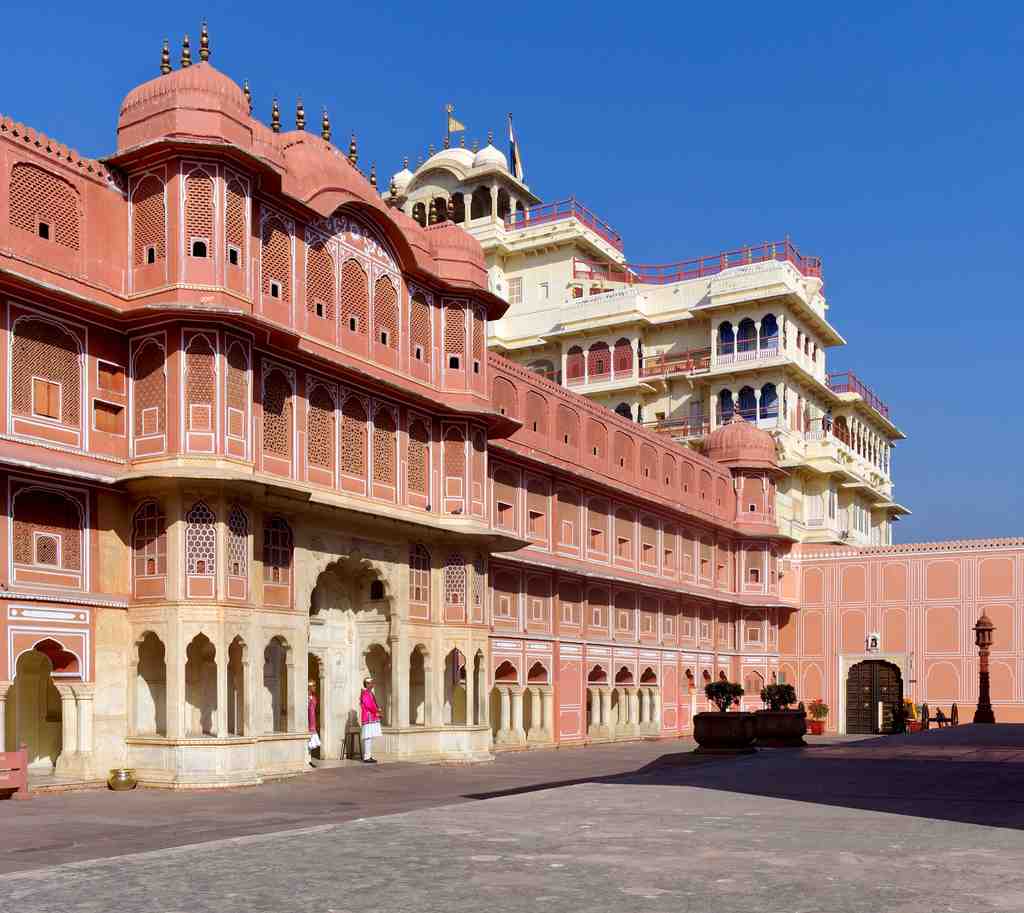
The construction of the palace took about 5 years to complete, and it's a mix of Mughal and Rajput architectural styles. You know, it's like combining the best of both worlds, just like having a pizza with extra cheese and extra toppings! They really wanted this place to be grand, so they followed all the rules of vastushastra, which is like the 'architectural bible.' Nowadays, the City Palace is home to the Maharaja Sawai Man Singh II Museum, which showcases all the fancy things the royal family collected over the years. Can you imagine having a museum in your house? I don't have room for a museum in my apartment, that's for sure! Speaking of the royal family, did you know they have around 500 personal servants? That's like having your own army of helpers! I wish I had even just one servant to do my laundry. Oh well, a tour guide can dream! The palace complex is huge, with different buildings, courtyards, galleries, restaurants, and even offices of the Museum Trust. It's like a little city within a city. And guess who heads the Museum Trust? It's Rajamata Padmini Devi of Jaipur, all the way from Himachal Pradesh. She must be a really busy lady! You know what's really cool? Princess Diya Kumari runs the Museum Trust too, and she also manages The Palace School and Maharaja Sawai Bhawani Singh School in Jaipur. Talk about being a multitasker! She's also an entrepreneur and founded the Princess Diya Kumari Foundation to help women in Rajasthan. Now that's what I call a modern-day princess! The City Palace is located in the heart of Jaipur city, surrounded by rocky hills. It used to be a hunting lodge, but the rulers decided to upgrade and turn it into a palace fit for kings and queens. And speaking of kings, Maharaja Ram Singh painted the entire city "pink" to welcome the Prince of Wales in 1857, and it's been the Pink City ever since. It's like the whole city decided to host a grand party just for him! Man Singh II was the last Maharaja of Jaipur to rule from the Chandra Mahal palace, and even after the Jaipur kingdom became a part of the Indian Union, the royal family still used the palace as their residence. Can you imagine living in a palace? I'd probably get lost in all those rooms! So, that's the City Palace, Jaipur for you. It's a place where history, royalty, and art come together. Let's keep the tour going and head to our next stop, the Tarkeshwar Nath Temple. I promise it's going to be a holy good time!
Open dedicated page →Picture this: It's the 18th century and our buddy Sawai Jai Singh, the founder of Jaipur, is like, "Hey, I want to build some super cool instruments to observe the stars and…Read moreShow less
Picture this: It's the 18th century and our buddy Sawai Jai Singh, the founder of Jaipur, is like, "Hey, I want to build some super cool instruments to observe the stars and planets." And that's exactly what he did! *inserts drumroll* The Jantar Mantar is like Sawai Jai Singh's ultimate science fair project. It's a collection of 19 mind-boggling astronomical instruments that were completed way back in 1734. Talk about being ahead of his time! Now, the highlight of this monument is the world's largest stone sundial. Yep, you heard that right! It's like the Goliath of all sundials. I'm pretty sure even the Sun takes a moment to appreciate its greatness. So, if you're ever in need of an accurate sunbathing schedule, you know where to come! So, what can you expect to see here? Well, these instruments are all about giving your naked eye a front-row seat to the astronomical action. They allow you to observe the positions of celestial objects without any fancy telescopes or gadgets. It's a true testament to the brilliance of ancient astronomers who didn't need all the fancy technology we have today. The Jantar Mantar is like a masterclass in celestial coordinate systems. We've got the horizon-zenith local system, the equatorial system, and the ecliptic system. It's like having a celestial GPS for all your star-gazing needs! But wait, it gets even cooler. One of the instruments, the Kanmala Yantraprakara, works in not one, but two systems! It's like the ultimate multitasker, allowing the transformation of coordinates directly from one system to another. Talk about convenience! Now, here's a fun fact: the name Jantar Mantar actually comes from Sanskrit. "Jantar" means "instrument" or "machine," and "Mantar" means "consult" or "calculate." So, it's basically a fancy way of saying "calculating instrument." I guess Jai Singh wanted to make sure everyone knew these instruments meant business! These instruments were so important that Jai Singh created astronomical tables called Zij-i Muhammad Shahi, which were used in India for more than a century. Although, I must admit, they didn't make much of a splash outside of India. But hey, we're all about representing our home turf, right? Over the years, the Jantar Mantar has had its ups and downs. It faced some damage in the 19th century, but luckily, a keen amateur astronomer named Major Arthur Garrett came to the rescue. He oversaw the restoration work and made our beloved instruments shine bright like the stars they observe. From gun factories to neglect, this place saw it all. But fear not! The Jantar Mantar was restored multiple times, thanks to the efforts of Ram Singh and Madho Singh II. They made sure these instruments stood tall and proud, ready to mesmerize visitors like us. So, get ready to step back in time and witness the ingenuity of Sawai Jai Singh. Explore the 19 instruments, be amazed by the precision, and who knows? Maybe you'll even unlock the secrets to the universe! That's it for the Jantar Mantar, my friend! Next up, we'll be heading to stop number 1, the beautiful Hawa Mahal. Get ready to be blown away by its intricate architecture and fascinating history!
Open dedicated page →


Reviews
Frequently asked questions
How do I start the tour?
After purchase, download the AudaTours app and enter your redemption code. The tour will be ready to start immediately - just tap play and follow the GPS-guided route.
Do I need internet during the tour?
No! Download the tour before you start and enjoy it fully offline. Only the chat feature requires internet. We recommend downloading on WiFi to save mobile data.
Is this a guided group tour?
No - this is a self-guided audio tour. You explore independently at your own pace, with audio narration playing through your phone. No tour guide, no group, no schedule.
How long does the tour take?
Most tours take 60–90 minutes to complete, but you control the pace entirely. Pause, skip stops, or take breaks whenever you want.
What if I can't finish the tour today?
No problem! Tours have lifetime access. Pause and resume whenever you like - tomorrow, next week, or next year. Your progress is saved.
What languages are available?
All tours are available in 50+ languages. Select your preferred language when redeeming your code. Note: language cannot be changed after tour generation.
Where do I access the tour after purchase?
Download the free AudaTours app from the App Store or Google Play. Enter your redemption code (sent via email) and the tour will appear in your library, ready to download and start.
If you don't enjoy the tour, we'll refund your purchase. Contact us at [email protected]
Checkout securely with 




