
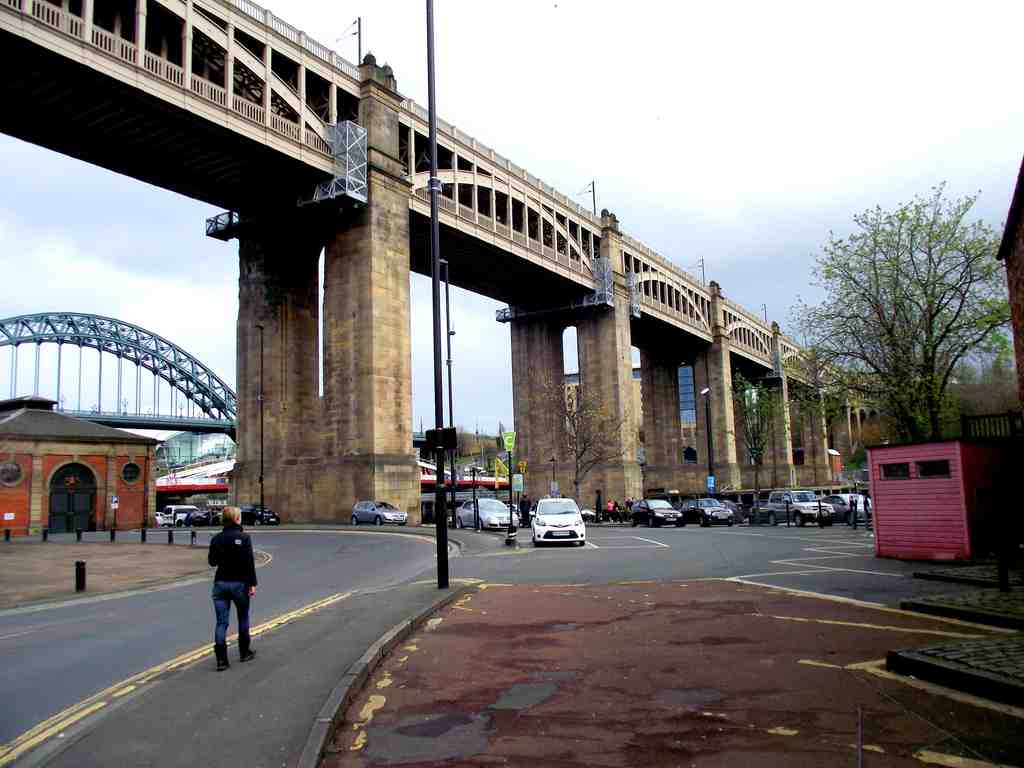
As you're coming up to the High Level Bridge, look for a towering stretch of pale stone pillars and a long row of iron arches above you. The bridge is seriously hard to miss - it’s huge, almost like a long, raised skeleton running from one riverbank to the other. Just tilt your head back, and you’ll spot the railings and upper roadways stretching far over your head. You’ll see another arched green bridge nearby too, but the High Level Bridge is the one with stone columns and boxy ironwork on top.
Now, picture yourself about 175 years ago: the River Tyne below, the clang of metalworks in the air, and the sight of brand-new iron bones rising above the water. This bridge was the dreamchild of Robert Stephenson and the Hawks family - you might say they really “bridged” the gap between Gateshead and Newcastle! Sorry, couldn’t help myself.
Queen Victoria herself came to open it, which probably meant the workers had to hide their lunch pies and shine their boots. The bridge's design was a real game-changer: it carries trains up top and cars and people below. Imagine the first steam trains rolling across, smoke pouring into the sky, while carriages and townsfolk strolled along just underneath.
It wasn't just clever engineering; this bridge played a starring role in connecting Newcastle to London and Scotland. Back then, railway companies were scrambling like kids after the last biscuit to control the best routes. Money problems, wild plans, and a fair bit of competitive scheming brought the bridge to life. They even planned to run trains up steep inclines with ropes and steam engines-just imagine that noise and commotion!
So as you stand beneath these iron arches, think about the ambition, the noise, and the excitement - and maybe be glad you don’t have to dodge bits of coal and steam as you walk by. Ready to head across or shall we stay and soak in the view a little longer?
For a more comprehensive understanding of the first bridge proposals, definite plans or the design, engage with me in the chat section below.




